Gnetum gnemon L.
Summary
Gnetum gnemon or melinjo is naturally distributed from Northeast India to Fiji, and has been cultivated for centuries in Indonesia and Malaysia as a shade plant both in yards and agroforestry systems. Its young leaves, flowering shoots, and seeds are processed into vegetables or crackers (emping), while its bark fiber is used to make traditional Sumba bowstrings. Traditionally, melinjo is also believed to be effective in treating bronchitis, asthma, and malaria.
Agroecology
Melinjo can grow well in open areas as well as partially shaded conditions in tropical and subtropical climates, rainforests, coastal forests, riverbanks, rocky islands, and headlands, up to elevations of 1,200 m asl. This plant prefers a full sun position. Prefers freely draining or well-drained soil conditions with a soil acidity level of slightly acidic to neutral or slightly alkaline.
Morphology
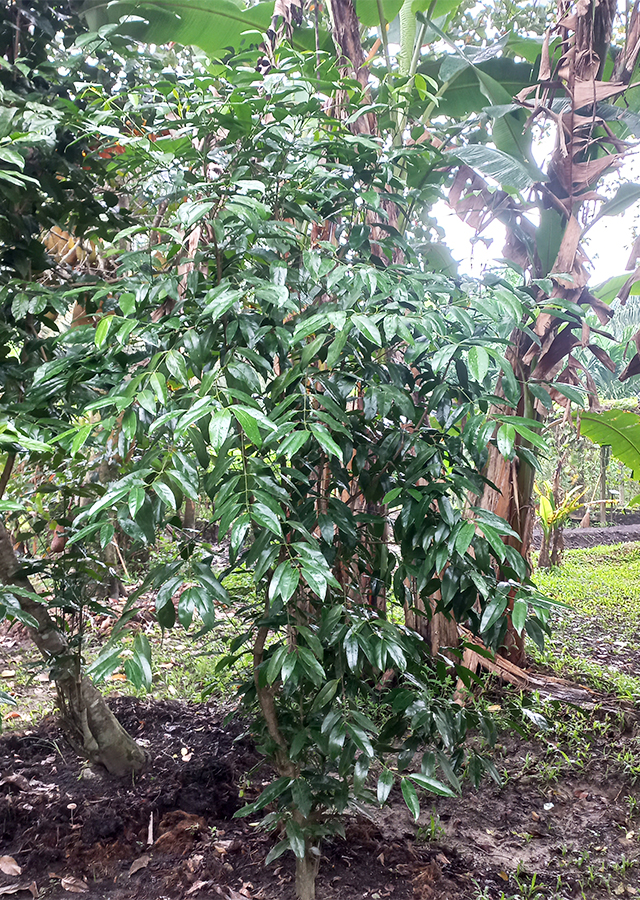
- Trunk single, straight, cylindrical, up to 40 cm in diameter. Outer trunk surface gray, marked with distinct rings. The trunk is wrapped with many whorls of branches down to the base. Branches thickened at the base.
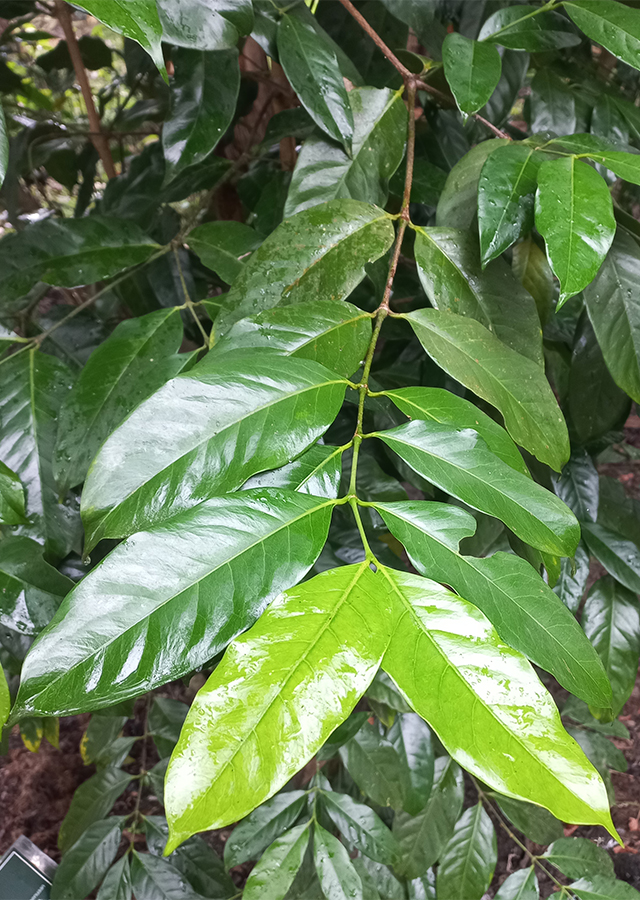
- Leaves simple, unifoliate, petiolate, ovate-oblong or elliptic shaped, about 10 to 20 cm long and about 4 to 7 cm wide, tip acute to sub-acuminate, margin entire, base acute, leaf arrangement (phyllotaxy) opposite, veins reticulate, leaf surface hairless and glossy, dark green with young leaves reddish purple.
- Flowers dioecious, producing male and female cones on separate trees in the leaf axils. Male cones branched or unbranched, 2.5-7.6 cm long, producing a whorl of small microsporophylls and deciduous ovules at each node. Female cones 5-13 cm long, containing 5-8 ovules at each node. The inflorescence is borne on young shoots and old branches. Inflorescence yellowish, 3-6 cm long, collar width 3 mm.
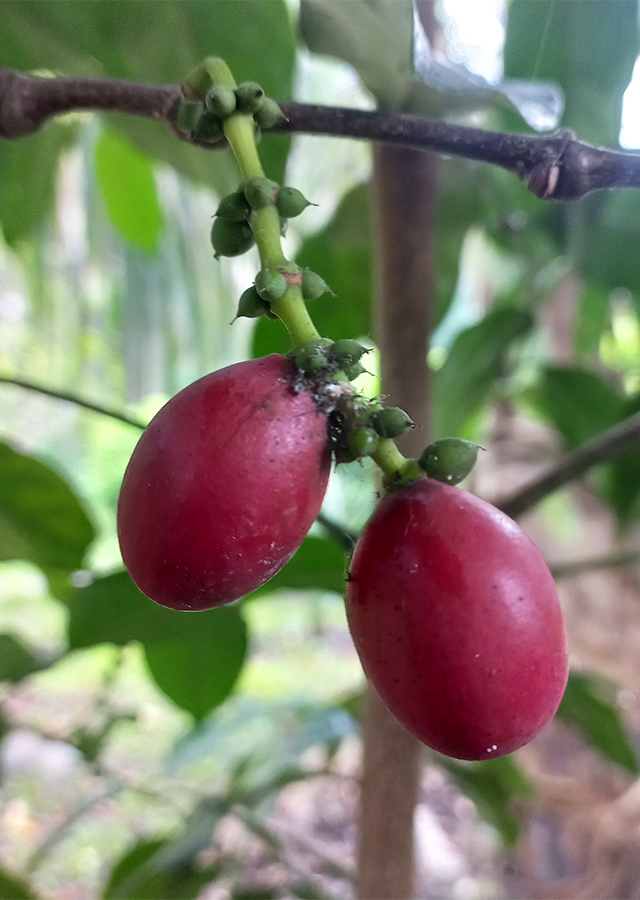
- Fruit has a fleshy layer then a hard husk surrounding the starchy interior. Fruit elliptic shaped, short apiculate, almost velvety. Young fruit green, turning yellow then orange and finally red when ripe.
- Seeds one per fruit, oblong shaped, glaucous. The seed coat is thin and brittle, easily separated from the seed.
Cultivation
- Plant propagation through seed and stem cuttings, where cuttings are first soaked for one hour in root stimulant.
- Seed takes several months to 1 year to germinate. The juvenile phase lasts 5-8 years.
Chemical Content
Saponins, tannins, flavonoids, resveratrol (stilbenoid) mainly in dimer form (gnetin C, gnemonoside A, gnemonoside D), five stilbene derivative compounds (isorhapontigenin, gnetin D, gnetifolin K, gnetol) and one lignan compound ((+)-lyoniresinol B).
Benefits
Treats bronchitis, arthritis, asthma, malaria, diabetes, cardiovascular disease, cleanses the stomach and prevents constipation, an antidote, and as first aid for treating wounds.
Local Names
Belinjo, Melinjo, Bagu, Bagoe, Blinjo, Eso, So, Trangkil.
Traditional Recipes
The following recipes reflect traditional knowledge passed down through generations, not a substitute for professional medical diagnosis or advice. Consult a healthcare provider before use.
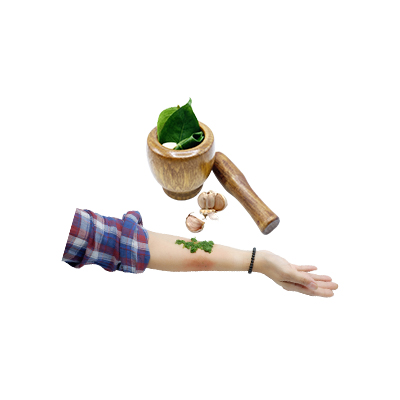
1. First aid for wounds
- Take an adequate amount of melinjo leaves and garlic.
- Pound both ingredients until fine.
- Apply to the wound.
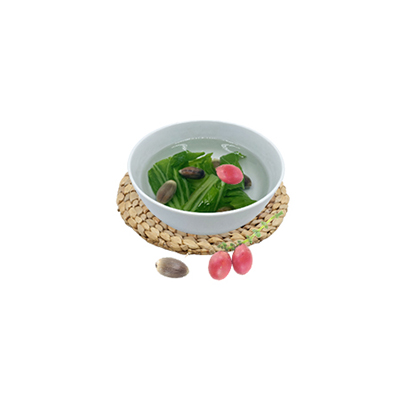
2. Cleanses the stomach and prevents constipation
- Take an adequate amount of melinjo fruit.
- Cooking in soup or eating it as a vegetable can cleanse the stomach and prevent constipation.
Reference Sources
- Royal Botanic Gardens. Plants of the World Online: Gnetum gnemon L.. https://powo.science.kew.org/taxon/urn:lsid:ipni.org:names:383520-1. 22-12-2022.
- Barua C. C., Haloi P, Barua I. C. 2015. Gnetum gnemon Linn. : A Comprehensive Review on its Biological Pharmacological and Pharmacognostical Potentials. International Journal of Pharmacognosy and Phytochemical Research, 7(3); 531-539.
- Flora Fauna Web. 2022. Gnetum gnemon L.. https://www.nparks.gov.sg/florafaunaweb/flora/2/9/2942. 22-12-2022.
- Plant Resources of South-East Asia. 2016. Gnetum gnemon (PROSEA). https://uses.plantnet-project.org/en/Gnetum_gnemon_(PROSEA). 22-12-2022.
- Stuartxchange. 2022. Philippine Medicinal Plants: Bago. http://www.stuartxchange.org/Bago. 22-12-2022.