Gomphocarpus physocarpus E.Mey.
Summary
Gomphocarpus physocarpus or balloon flower is native to South Africa, Swaziland, and Mozambique, and is now widely cultivated as an ornamental and cut flower. Besides being a food source for monarch butterfly caterpillars, its fiber is used to make nets, while in traditional African and Asian medicine this plant is used to relieve stomachache and headache.
Agroecology
G. physocarpus is generally found growing in tropical, warm subtropical, semi-arid regions from sea level up to 900 m asl in South Africa and up to 1,830 m asl in Hawaii. Usually grows as a weed in wastelands, disturbed sites, open forests, grasslands, wetlands, and along roadsides, and is also grown as an ornamental in gardens, yards, and parks. G. physocarpus is drought-tolerant and prefers growing in areas with full sun exposure, but is still tolerant of partial shade, and prefers well-drained acidic soil (pH = 5.6-6). For its optimal growth, this plant is suited to sandy soil.
Morphology
- Roots a taproot.
- Stem generally single, branching above, woody and fibrous below, young stems covered with soft short hairs. Branches pale yellowish green and hollow. Exudes milky sap when injured.
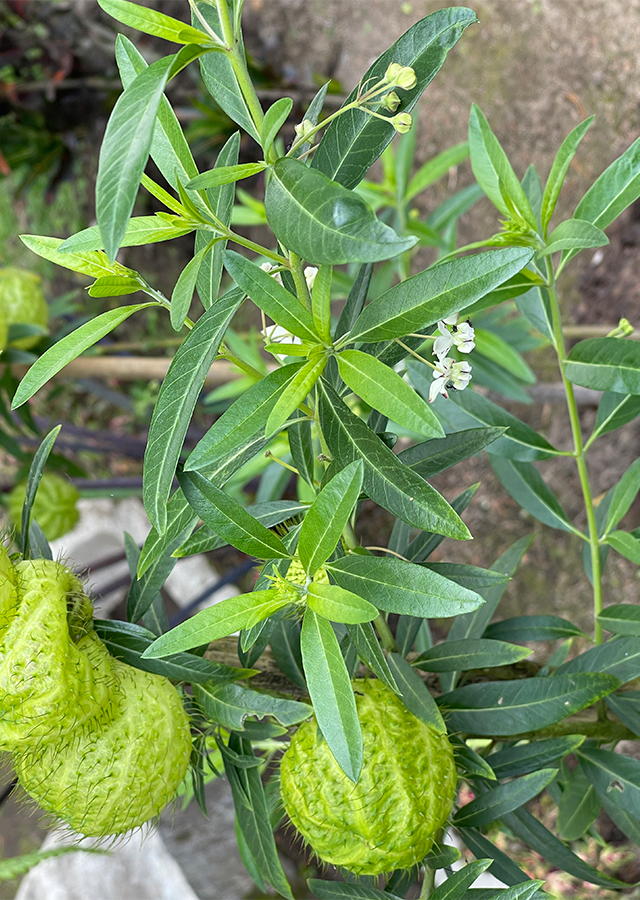
- Leaves light green, opposite, narrowly lanceolate or narrowly oblong to spear-shaped, puberulent on the upper (adaxial) surface, hairy on the lower surface along the midvein, tip pointed and base gradually narrowing, margin entire. Petiole about 1 cm. Exudes milky sap when damaged.
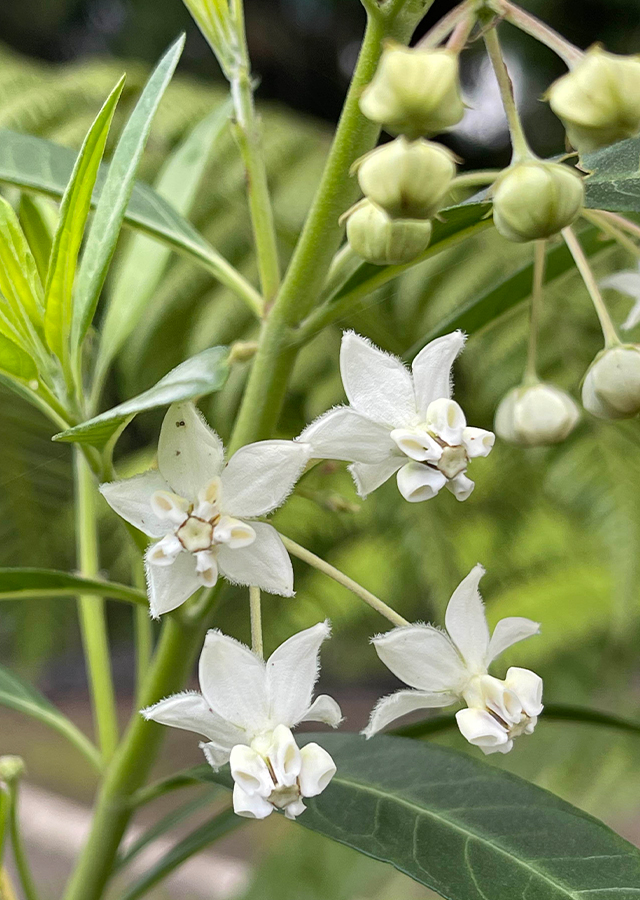
- Flowers in drooping clusters, with 5 white petals and a crown-like structure (corona) at the center that is white suffused with pink or purple. They are borne in small drooping clusters of 4-10 flowers near the branch tips, with individual flower stalks, all arising from the same point or center. Corolla about 1.4-2 cm in diameter, lobes ovate, margin finely hairy. Corona consists of five pouched lobes developing from the corolla. Flowers also have 5 small sepals and 5 stamens. The corona surrounds the stamens and carpels consisting of the ovary, style, and stigma. Stamen filaments fuse to form a staminal column enclosing the female parts. The female parts consist of two free carpels whose tips fuse and enlarge to form the stigma head. The anthers fuse with the stigma head.
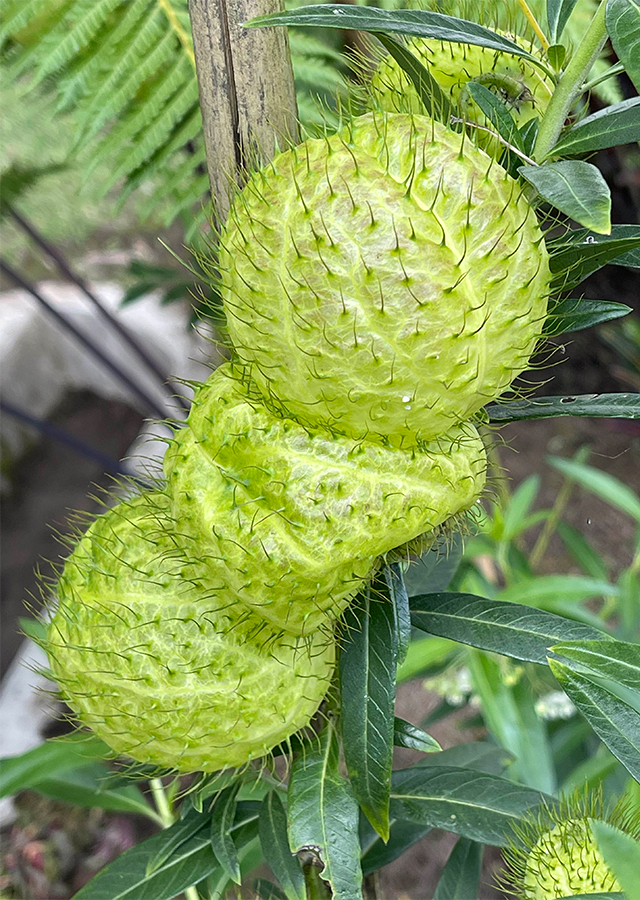
- Fruit a large, round, balloon-like inflated follicle, pale green and nearly translucent, covered with soft spines, tomentose when young, hairless when ripe, containing many seeds. The follicle turns yellowish, often tinged with red or brown, when ripe, and gradually splits open to release numerous seeds. The fruit often has a concave (i.e. indented) tip with a small beak.
- Seeds numerous per fruit, ovoid-oval shaped, flat, small, brownish black with a tuft of long, silky white hairs attached at one end.
Cultivation
- Plant propagation through seed, stem cuttings, or leaf cuttings.
- Controlled germination at temperatures between 21 and 23°C usually takes 14-21 days after planting.
- The plant produces seeds in large quantities that are easily dispersed by wind and water.
Chemical Content
Cardiac glycosides, steroids/terpenoids, alkaloids, and phenols.
Benefits
Treats stomachache, headache, warts, cough, strengthens the body, a sedative.
Simplisia
- Prepare balloon flower leaves, wash clean with running water then drain.
- Dry under direct sunlight for several days or with an oven at 40°C until the moisture content reaches 10%.
- Store the simplicia in plastic or a clean, airtight container.
Local Names
Kembang kapas, Kembang kanjut.
Traditional Recipes
The following recipes reflect traditional knowledge passed down through generations, not a substitute for professional medical diagnosis or advice. Consult a healthcare provider before use.
1. Treats stomach problems
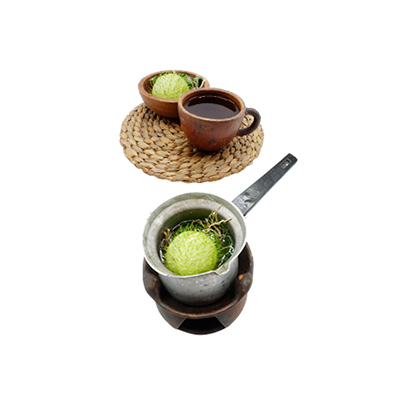
- Prepare the whole balloon flower plant and wash until clean.
- Boil the ingredients until it boils.
- Let it cool to warm/cold.
- Strain then drink.
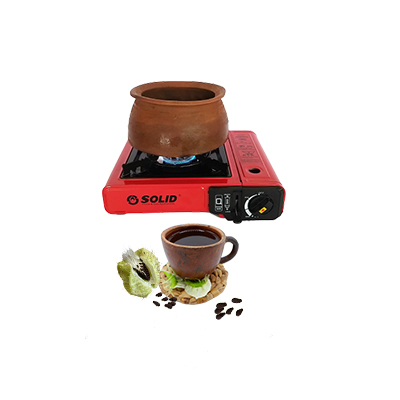
2. Cough
- Take balloon flower seeds and wash until clean.
- Boil the ingredients until it boils.
- Let it cool to warm/cold.
- Strain then drink.
Reference Sources
- Royal Botanic Gardens. Plants of the World Online: Gomphocarpus physocarpus E.Mey.. https://powo.science.kew.org/taxon/urn:lsid:ipni.org:names:97670-1. 12-05-2022.
- CAB International. 2022. Invasive Species Compendium: Gomphocarpus physocarpus (balloon cotton bush). https://www.cabi.org/isc/datasheet/114618#tosummaryOfInvasiveness. 12-05-2022.
- Plantamor. 2022. KEMBANG KAPAS (Asclepias physocarpa). http://plantamor.com/species/info/asclepias/physocarpa#gsc.tab=0. 12-05-2022.
- Weeds of Australia. 2016. Gomphocarpus physocarpus E. Mey. https://keyserver.lucidcentral.org/weeds/data/media/Html/gomphocarpus_physocarpus.htm. 12-05-2022.
- Thieme E-Books & E-Journals - Planta Medica. 2022. Laticifers in the leaves and stems of Gomphocarpus physocarpus: Distribution, structure and chemical composition. https://www.thieme-connect.com/products/ejournals/abstract/10.1055/s-0035-1565636. 12-05-2022.
- Wisconsin of Extension. 2022. Balloon Plant, Gomphocarpus physocarpus. https://hort.extension.wisc.edu/articles/balloon-plant-gomphocarpus-physocarpus/. 12-05-2022.