Gomphrena celosioides Mart.
Summary
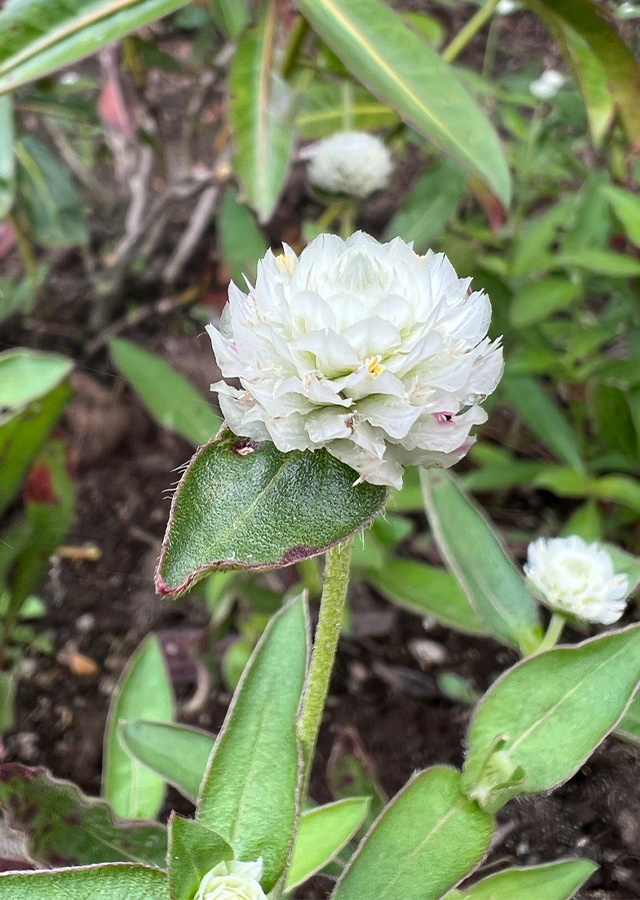
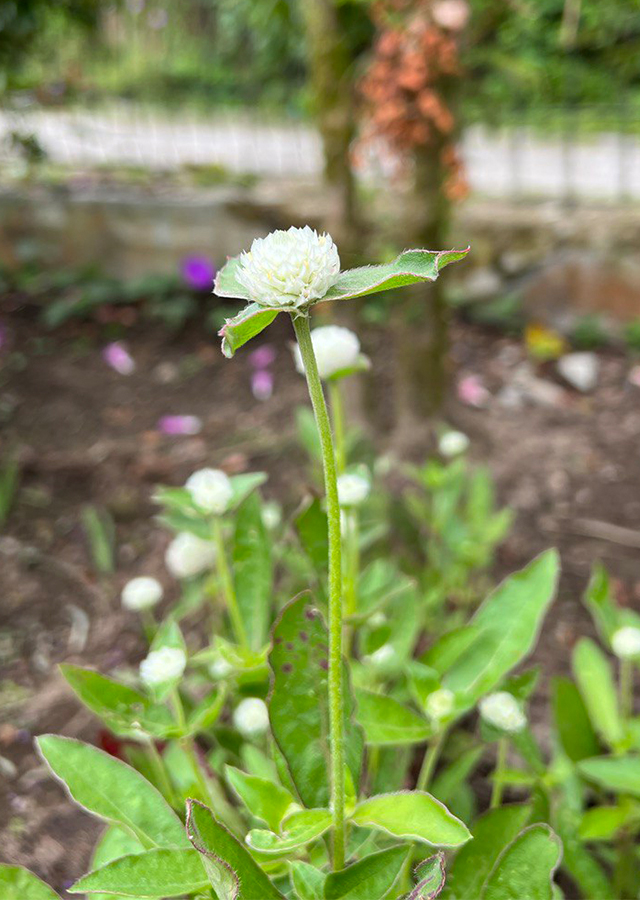
Bunga kenop putih (Gomphrena celosioides) is an annual herb up to 25 cm tall from the Amaranthaceae family that originates from Argentina and Brazil. In Southern Nigeria, this plant is used to treat skin diseases and worm infections, while in South America it is used as an abortifacient and remedy for gangrenous wounds. Bunga kenop putih is also popular as an ornamental ground cover in gardens and pots.
Agroecology
Bunga kenop putih grows at elevations up to 2,500 m asl, in all soil types in full sun or partial shade, air temperatures of 10-30 °C, and average annual rainfall of 1,000-3,000 mm. Its habitat is found in moist soil, such as near riverbanks.
Morphology
- Roots deep taproot often forming a strong mat.
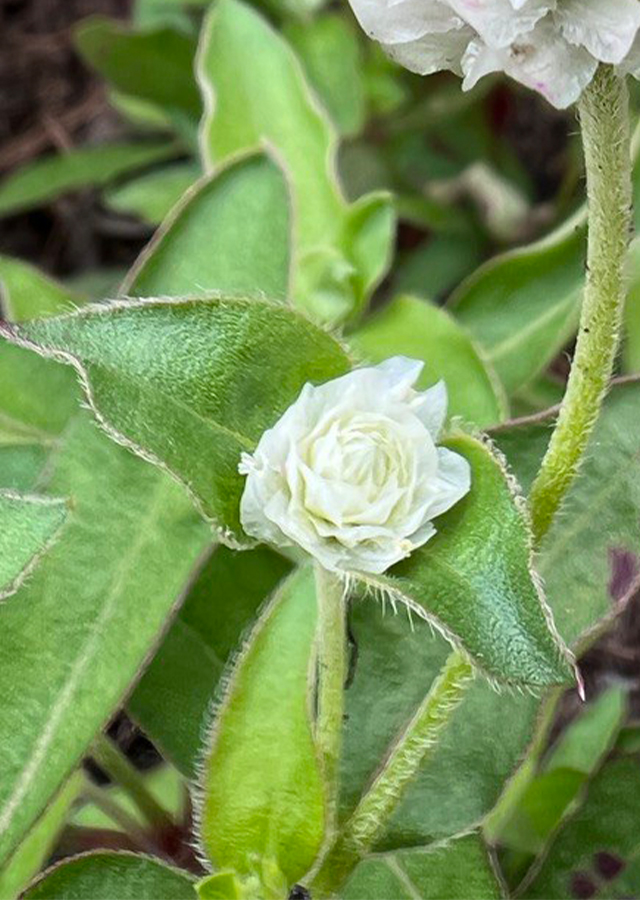
- Leaves opposite, elliptical with smooth margins (3-4 cm long, 1 cm wide). Pinnate venation, tapering base, tapering tip, smooth margin. Leaf color light green, dark green, yellowish.
- Flowers small yellow hidden among white petal-like bracts. Inflorescence initially round, but gradually elongating up to 3-4 cm and about 1 cm wide.
- Fruit dry, indehiscent, known as a utricle. Fruit approximately round and each containing one seed.
- Seeds glossy brown (1.5 mm long).
Cultivation
Propagation generatively through seeds and vegetatively by stem cuttings.
Chemical Content
Steroids, glycosides, alkaloids, saponins, tannins, urantiamide, auratiamide acetate, polyphenols, flavonoids, triterpenes.
Benefits
Treats skin diseases, worm infections, infectious diseases, abortifacient, gangrenous wounds, diabetes, hypertension, kidney problems, as a heart tonic, jaundice, sexually transmitted diseases, malaria, heals urolithiasis. Has antibacterial, antifungal, antioxidant, analgesic, anti-inflammatory, anthelmintic, hepatoprotective, nephroprotective, anti-ulcerogenic, anti-urolithiatic, anticarcinogenic, antioxidant, diuretic properties.
Simplisia
- Take fresh bunga kenop putih leaves and wash until clean.
- Dry the leaves under direct sunlight or using an oven.
- Once the leaves are completely dry, blend finely and sieve to obtain a powder.
- Store in a well-closed container protected from light to maintain the quality of the preparation.
Local Names
No information found. Further research needed.
Traditional Recipes
The following recipes reflect traditional knowledge passed down through generations, not a substitute for professional medical diagnosis or advice. Consult a healthcare provider before use.
1. Diabetes
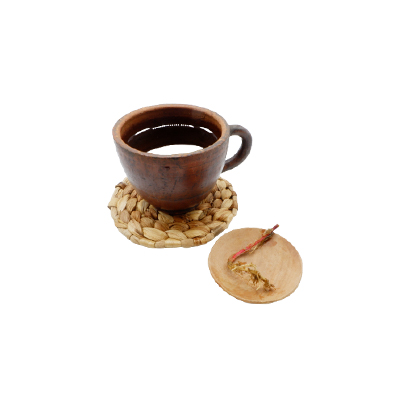
- Wash bunga kenop putih root with running water until clean.
- Boil the root until boiling.
- Let stand until warm/cool.
- Strain and drink.
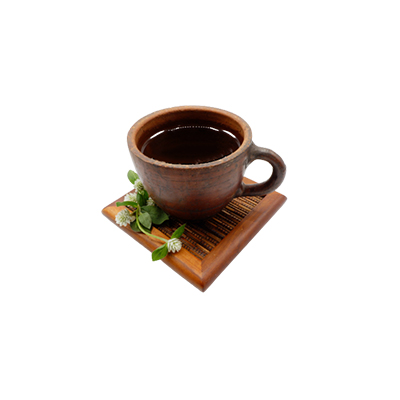
2. Sexually transmitted diseases
- Take bunga kenop putih leaves as needed and wash until clean.
- Boil the leaves with water until boiling.
- Strain the decoction.
- Drink while warm.
Reference Sources
- Royal Botanic Gardens. 2021. Plants of the World Online: Gomphrena celosioides Mart. http://powo.science.kew.org/taxon/urn:lsid:ipni.org:names:60397-1. 22-09-2021.
- The Plant List. 2013. Gomphrena celosioides Mart. http://www.theplantlist.org/tpl1.1/record/kew-2829071. 22-09-2021.
- Stuartxchange. 2018. Philippine Medicinal Plants: Botonsilyong gapang. http://www.stuartxchange.org/BotonsilyongGapang. 22-09-2021.
- Flora Fauna Web. 2019. Gomphrena celosioides Mart.. https://www.nparks.gov.sg/florafaunaweb/flora/6/6/6613. 22-09-2021.
- Eko Mas. 2020. Planter and Forester: Gomphrena celosioides Mart, Gulma Berbunga Cantik. https://www.planterandforester.com/2020/12/gomphrena-celosiodes-mart-gulma.html. 22-09-2021.