Gomphrena globosa L.
Summary
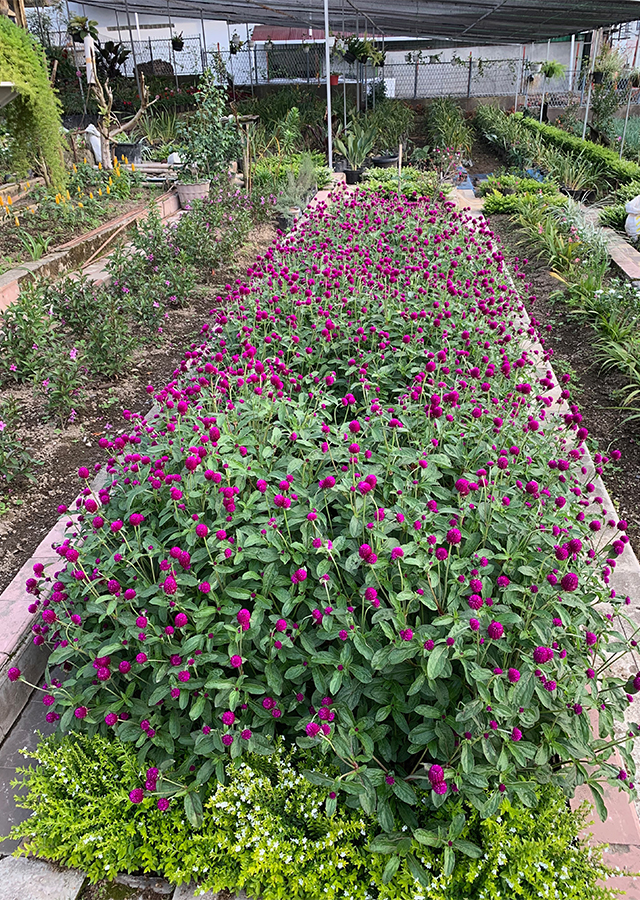
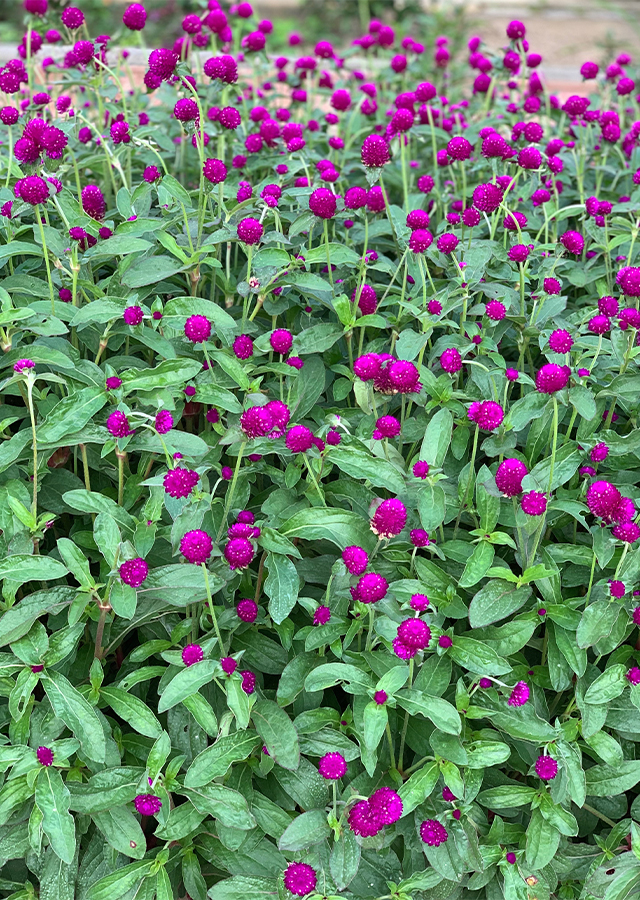
Bunga kenop (Gomphrena globosa) is an annual upright herb 20-60 cm tall of the Amaranthaceae family, originating from Panama, Brazil, and Guatemala. Its long-lasting, brightly colored flowers are used as a natural food coloring and also play a role in phytoremediation of arsenic-contaminated soil. Traditionally, bunga kenop is also believed to help lower high blood pressure and have antioxidant properties.
Agroecology
Bunga kenop can be found in tropical and subtropical regions at elevations of 1-1,300 m above sea level. Generally planted in yards and grows wild in places that get adequate sunlight.
Morphology
- Roots taproot, yellowish-brown in color.
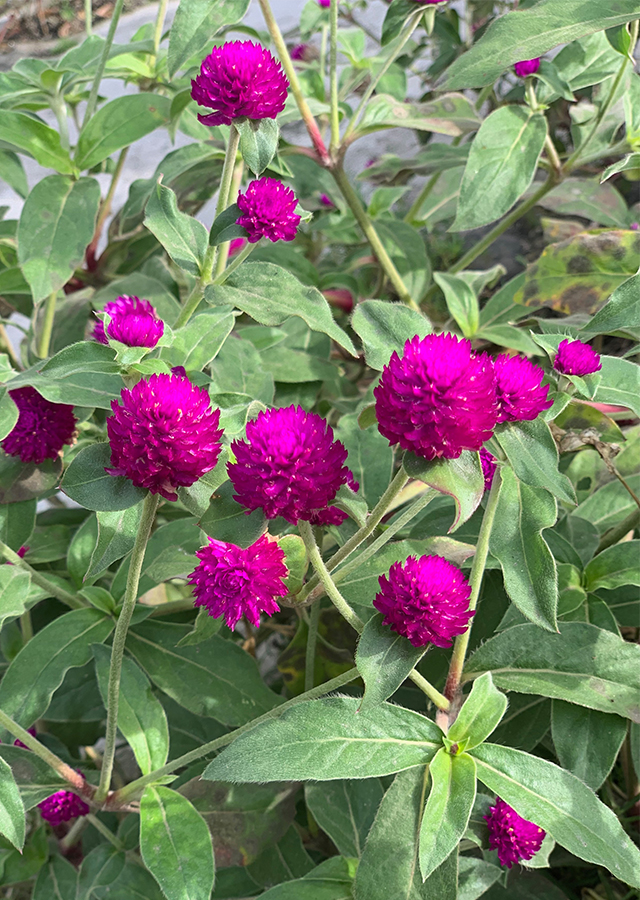
- Stem reddish-green, hairy, enlarged at the branching joints.
- Flowers button-shaped in shades of purple, pink, red, orange, magenta, blue, lavender to white.
- Leaves egg-shaped with a tapering tip. Upper surface white and rough hairy, underside finely hairy.
- Fruit triangular shaped, wrapped in a thin white layer, with a boxy seed.
Cultivation
Propagated by seed and stem cuttings.
Chemical Content
Saponins, polyphenols, betacyanin (amaranthin), essential oils, flavonoids, phenolics, gomphrenin I, II, III, V and VI, gallotannin, steroid/triterpenoid, coumarin.
Benefits
Fights cancer cells, detoxification, lowers high blood pressure, addresses prostate problems, prevents premature aging, antioxidant, antiasthmatic, anti-eye inflammation, antidiarrheal, shortness of breath, treats wounds, dim vision, bronchitis, and headache.
Simplisia
- Wash bunga kenop thoroughly, then wet-sort.
- Dry by drying bunga kenop in the sun or with an oven at 50 °C.
Local Names
Bunga kancing (Malay), Bunga ratna (Bali), Kembang gundul (Java), Bunga puter biru (Sunda), Taimantulu (Gorontalo).
Traditional Recipes
The following recipes reflect traditional knowledge passed down through generations, not a substitute for professional medical diagnosis or advice. Consult a healthcare provider before use.
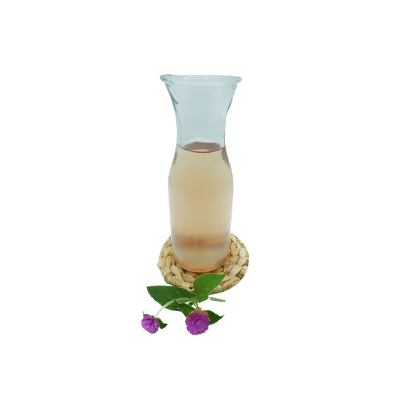
1. Bronchitis
- Wash 20 g of the whole fresh kenop plant, boil with 400 ml water until it boils for 15 minutes, and strain.
- Drink all at once once cool. Treat 2-3 times a day.
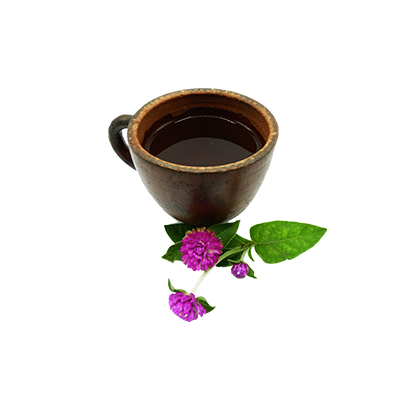
2. Headache
- Wash 10 g of the whole fresh kenop plant, boil with 200 ml water until it boils for 5 minutes, strain.
- Drink all at once once cool.
Reference Sources
- CABI. (2013) Invasive Species Compendium. Gomphrena globosa (globe amaranth). . https://www.cabi.org/isc/datasheet/25617. 28-08-2020.
- National parks. (2019). Flora Fauna Web. Gomphrena globosa L. https://www.nparks.gov.sg/florafaunaweb/flora/2/0/2037. 28-08-2020.
- Stuartxchange. (2018). Philippine Medicinal Plants. Botoncillo. http://www.stuartxchange.org/Botoncillo.html. 28-08-2020.
- Widyaningrum Herlina. 2019. Kitab Tanaman Obat Nusantara. Media Pressindo, Jakarta.