Grona adscendens (Sw.) H.Ohashi & K.Ohashi
Summary
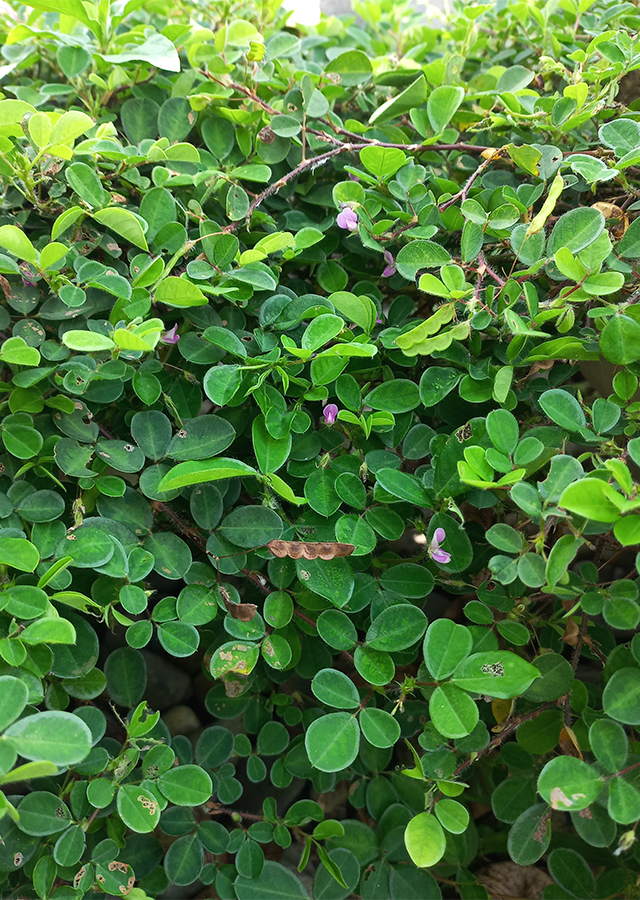
Grona adscendens, known in East Nusa Tenggara as tamala marada, is widely distributed across tropical America, the Caribbean, Africa, and Australia. In its native lands, this plant has long been used to relieve asthma and allergies, while in Mahaniwa and Praingkareha villages, local communities still rely on it as a go-to traditional remedy today.
Agroecology
Tamala marada is usually found and naturalized in grasslands, fields, and wastelands, sometimes found on open hillsides and along forest trails up to elevations of about 500 m asl. This species is also found growing in moist, shaded locations in swamp forests, rainforests, riverbanks, roadsides, and rice paddy embankments, at elevations of 200-1,000 m asl. In equatorial regions, this species is found at elevations of 200-1,000 m asl.
Morphology
- Roots a spreading taproot, with root nodules for fixing atmospheric nitrogen.
- Stem often much-branched from the base and can become somewhat woody, rooting near the base, striated, softly densely hairy.
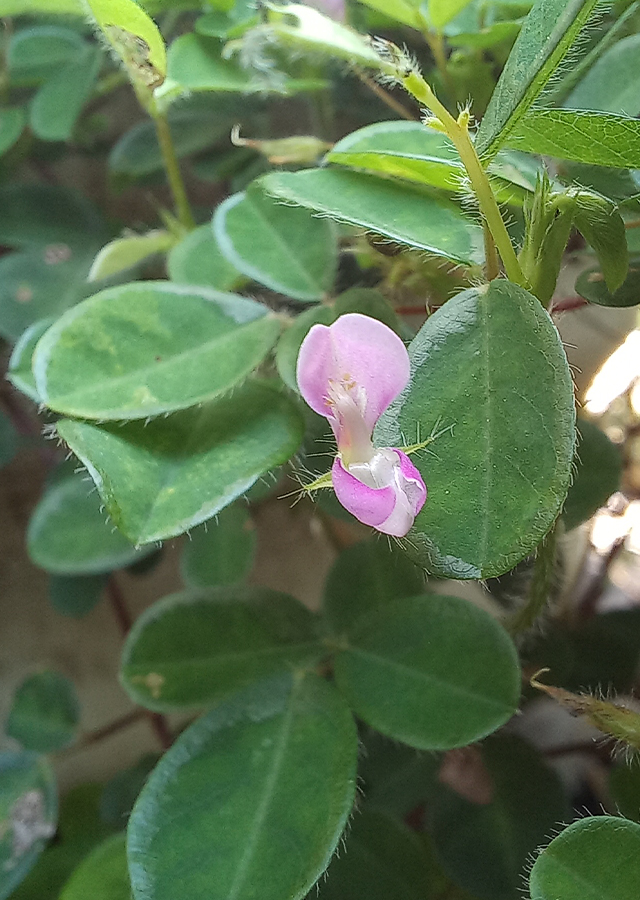
- Leaves usually with 3-5 leaflets, rarely only 1 leaflet, green, blade elliptic, lanceolate, ovate or obovate, terminal leaflet (1.5-)2-4(-5.5) cm × 1-3 cm, lateral leaflets smaller, pointed to rounded at the base, tip acute to blunt and emarginate, margin entire, upper surface hairless to sparsely puberulent, lower surface sparsely to densely soft-pilose. Petiole pilose.
- Flowers small, usually in pairs. Calyx covered with persistent long hairs, short-tubular, 2-lipped, teeth of both lobes pilose. Corolla white, purple, pink, and blue, standard obovate, short-clawed, keel-petal somewhat triangular, truncate at the tip gradually narrowing into a long claw. Stamens diadelphous (stamens fused to form two bundles), ovary short-haired, style hairless, stigma small. Bracts ovate with a long-tapering tip, densely puberulent. Inflorescence a raceme or panicle, terminal or axillary, about 4-20 cm long.
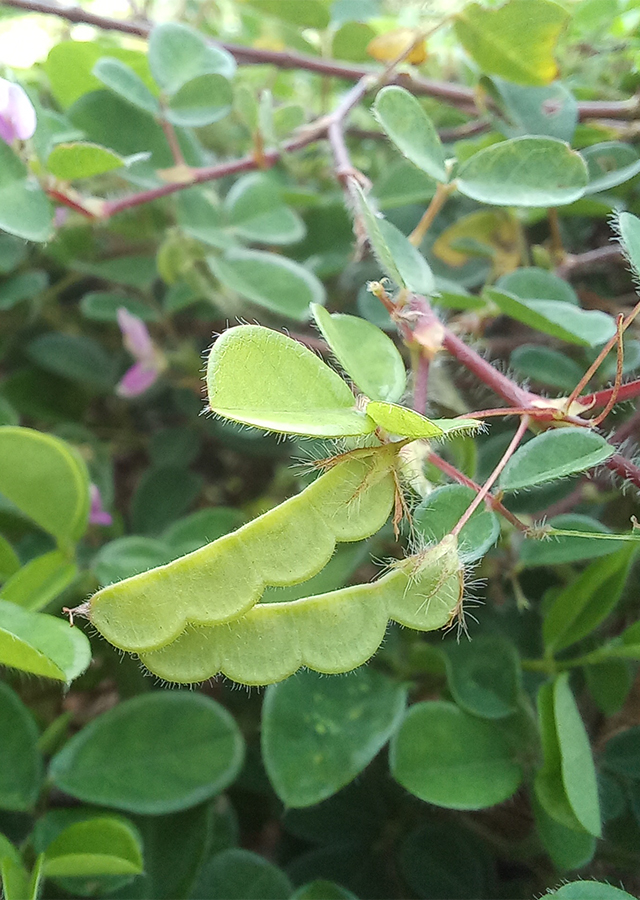
- Fruit a narrow, oblong pod, jointed into 3-6 segments, splitting along the lower suture, rarely short-stalked, slightly swollen at the seeds, densely covered with very short, hooked hairs.
- Seeds hard, flat, ellipsoid, 2.5-5.0 mm × 1.5 mm.
Cultivation
- Plant propagation is generative (seed) or vegetative (wood cuttings, root cuttings, and clump division).
- Seeds are best sown as soon as they are ripe. Stored seeds develop a hard seed coat, so scarification is needed before sowing to speed up and improve germination, by soaking for 12-24 hours in warm water. Seeds usually germinate within 1-4 months at 25°C.
Chemical Content
Flavonoids, alkaloids, soyasaponin, terpenoids, steroids, phenols, phenylpropanoids, glycosides, tannins, and a number of essential oils.
Benefits
Treats asthma and allergies, heartburn, infections, sexually transmitted diseases, wounds, eczema, tuberculosis, diarrhea, constipation, dysentery, colic, malaria, hepatitis, rheumatism, relieves muscle spasms and back pain, addresses anxiety, aids digestion, impotence, strengthens the kidneys, purifies the blood, detoxifies the body from environmental toxins and chemicals, cleanses the urinary tract, treats retracted male genitalia, ovarian and uterine problems (such as inflammation and irritation, vaginal discharge, and bleeding), clears the mother's breasts to promote breast milk flow. This plant is analgesic, antiasthmatic, anti-inflammatory, antispasmodic, antihypertensive, antitussive, bronchodilator, digestive, laxative, and calming.
Simplisia
- Prepare an adequate amount of tamala marada leaves, wash clean with running water.
- Dry under the sun or with an oven at 40°C until the moisture content reaches 10%.
- Grind using a blender until it becomes powder.
- Store in a clean, airtight container.
Local Names
Rumba hamala (Praingkareha-Sumba Timur).
Traditional Recipes
The following recipes reflect traditional knowledge passed down through generations, not a substitute for professional medical diagnosis or advice. Consult a healthcare provider before use.
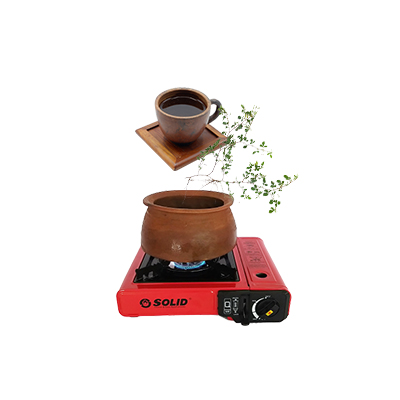
1. Treats heartburn
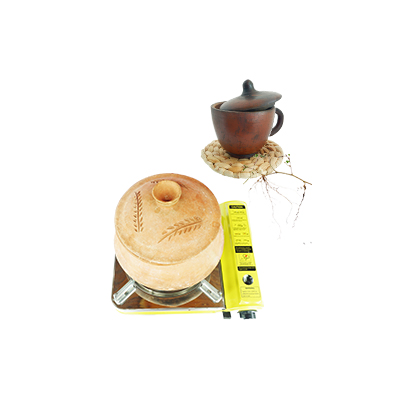
- Take a handful of tamala marada root and leaves and wash until clean.
- Boil using three glasses of water.
- Strain then drink once a day while warm.
2. Treats retracted male genitalia (scrotum)
- Take an adequate amount of the whole tamala marada plant.
- Boil with 2 glasses of water until 1 glass remains.
- Strain then drink morning and evening.
Reference Sources
- Royal Botanic Gardens. Plants of the World Online: Grona adscendens (Sw.) H.Ohashi & K.Ohashi. https://powo.science.kew.org/taxon/urn:lsid:ipni.org:names:77187388-1. 10-04-2022.
- Tropical Plants Database, Ken Fern. 2021. Desmodium adscendens. http://tropical.theferns.info/viewtropical.php?id=Desmodium+adscendens. 10-04-2022.
- Plants Resources of South-East Asia. 2016. Desmodium adscendens (PROSEA).https://uses.plantnet-project.org/en/Desmodium_adscendens_(PROSEA ). 10-04-2022.
- Kusumanegara A, dkk. 2020. Menyingkap Rahasia, Jenis-jenis Tumbuhan Obat di Taman Nasional Matalawa, Sumba - Nusa Tenggara Timur. Balai Taman Nasional Manupeu Tanah Daru dan Laiwangi Wanggameti.
- Seriki S. A., Odetola A. O., Adebayo O. F. 2019. Analysis of Phytoconstituents of Desmodium adscendens in Relation to its Therapeutic Properties. American Journal of Biomedical Science & Research, 2(4). AJBSR.MS.ID.000598. DOI: 10.34297/AJBSR.2019.02.000598.