Grona heterocarpos (L.) H.Ohashi & K.Ohashi
Summary
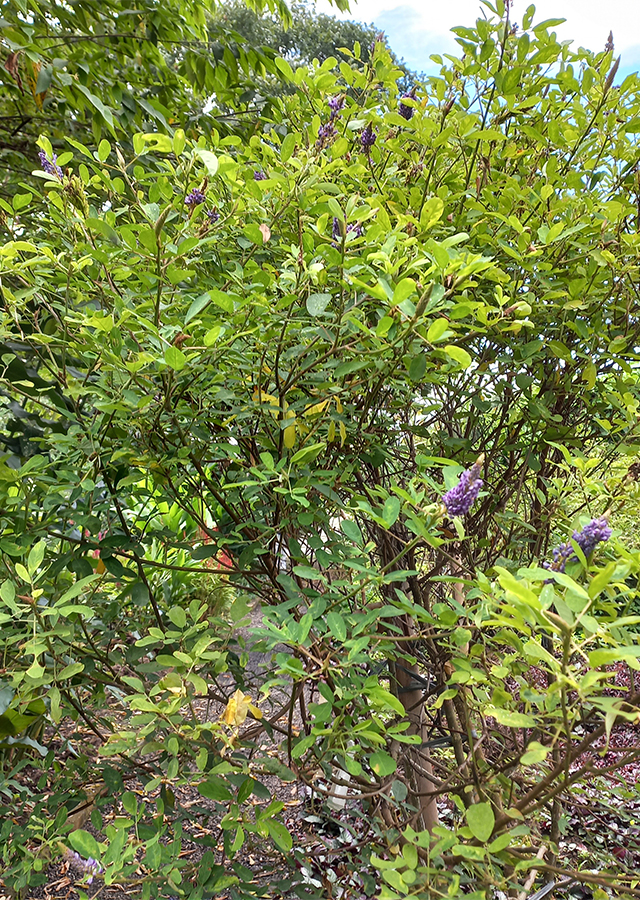
Buntut meyong sisir (Grona heterocarpos) is a creeping shrub 30-150 cm tall from the Fabaceae family spread from India to Australia. West Java communities use its root and leaves to reduce menstrual and postpartum pain. This plant also serves as a ground cover that stabilizes and restores soil.
Agroecology
Buntut meyong sisir can be found in grasslands, grassy slopes, riverbanks, thickets, and forests. In tropical regions, this species is found growing up to an elevation of 2,500 m asl. This plant grows best in areas where annual daytime temperatures are in the range of 14-24 °C, but can tolerate 4-34 °C, with average annual rainfall in the range of 2,000-3,000 mm, but can tolerate 1,000-4,000 mm, and a dry season no more than 3-4 months. Prefers a position in full sun, but can still tolerate fairly deep shade. The buntut meyong sisir plant also prefers soil conditions with a soil acidity (pH) in the range of 4.5-6.5. This plant has good adaptability to waterlogging and can grow in various soil types, also in soil conditions with low fertility and high aluminum or manganese content.
Morphology
- Stem woody, mostly much-branched at the base, branches somewhat angular and slender, nearly hairless to densely covered with short gray hairs.
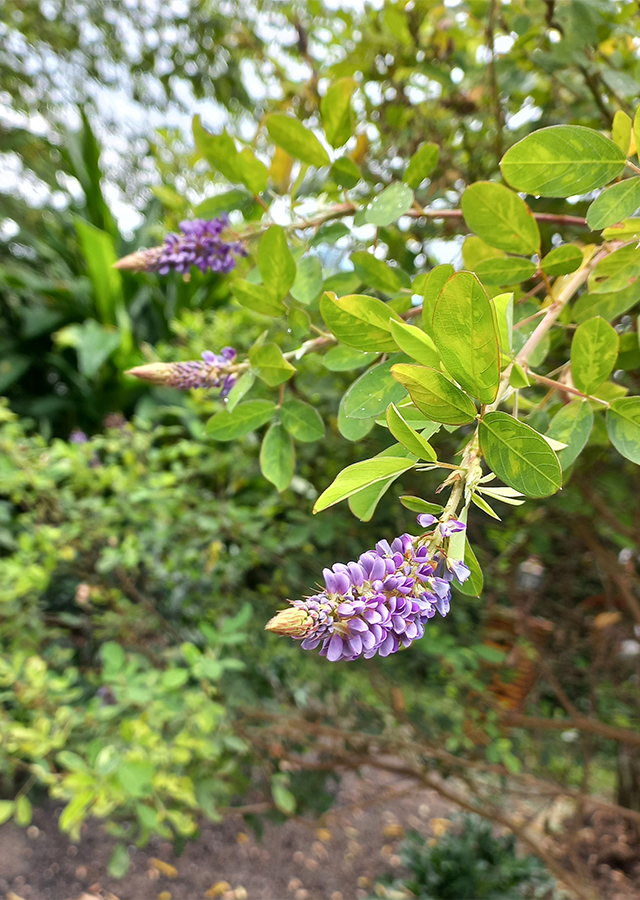
- Leaves have uni-trifoliate, unifoliate blades common in seedlings and located at the base of older stems, leaf blade elliptical, ovate or obovate, green, rarely covered with fine hairs on the upper surface while the lower surface is more densely covered with thin gray hairs.
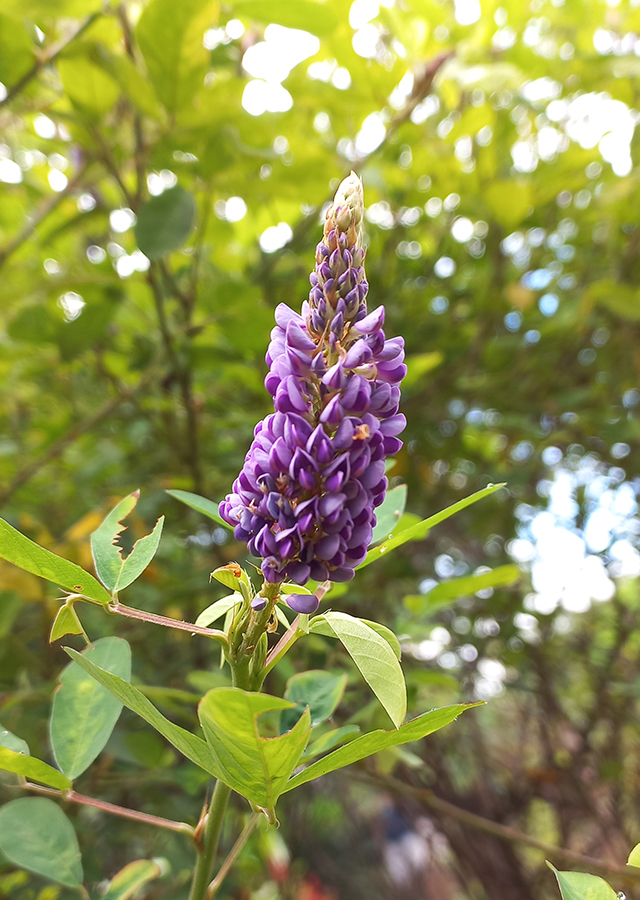
- Flowers pink, light purple, purple or white, generally paired.
- Fruit a pod, straight along the upper margin, wavy along the lower margin, hairless or hairy, green and turning dark brown when mature.
- Seeds oblong-round shape, cream to orange colored.
Cultivation
- Propagation is done generatively (seeds) and vegetatively (stem cuttings, root cuttings, and clump division).
- Seed sowing should be done soon after the seeds are mature. Seeds stored too long will make the seed coat hard, so scarification is needed before sowing to speed up germination by soaking seeds for 12-24 hours in warm water.
- Seeds usually germinate within 1-4 months at a temperature of 25 °C.
Chemical Content
Betulinic acid, friedelin, n-hexadecanoic acid, β-sitosterol, (Z,Z)-9,12-octadecadienoic acid, 1-hentetracontanol, octacosane, vitexin, isovitexin, 2-carboxy-dihydrostilbene glucoside, 2-carboxy-3,5,4′-trihydroxydihydrostilbene 3-O-β-d-glucopyranoside, lunularic acid 4′-O-β-d-glucopyranoside, (−)-epicatechin 3-O-β-d-glucopyranoside, and (−)-epi-afzelachin 3-O-β-d-glucopyranoside.
Benefits
Addresses coughs, a poultice for breast pain, women's issues, fainting and seizures, reduces fever, treats bruises and strains.
Local Names
Kaci (Java), Akar entimor (Belitung).
Traditional Recipes
The following recipes reflect traditional knowledge passed down through generations, not a substitute for professional medical diagnosis or advice. Consult a healthcare provider before use.
1. Fever
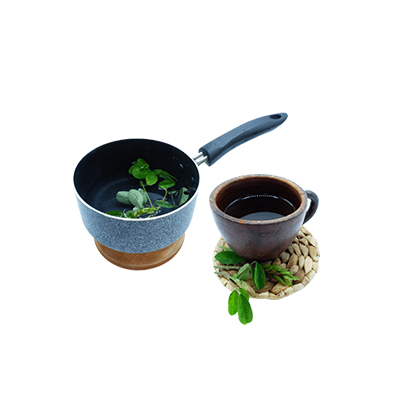
- Take buntut meyong sisir leaves and wash until clean.
- Boil the leaves until boiling.
- Strain the decoction.
- Drink while warm.
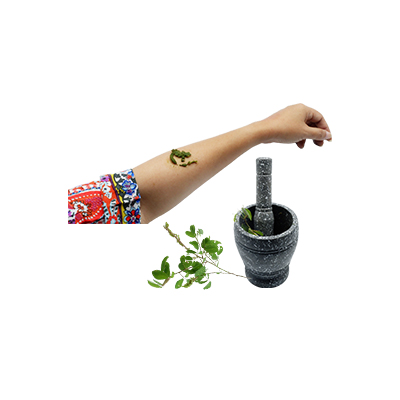
2. Treating bruises
- Take buntut meyong sisir leaves as needed.
- Wash clean with running water.
- Mash into a paste.
- Apply the paste to the bruised skin area.
Reference Sources
- Royal Botanic Gardens. 2021. Plants of the Word Online: Grona heterocarpos (L.) H.Ohashi & K.Ohashi. http://www.plantsoftheworldonline.org/taxon/urn:lsid:ipni.org:names:77187416-1. 09-11-2021.
- Useful Tropical Plants Database. 2021. Desmodium heterocarpon. http://tropical.theferns.inf /viewtropical.php?id=Desmodium+heterocarpon. 09-11-2021.
- PROSEA. 2016. Desmodium heterocarpon (PROSEA). https://uses.plantnet-project.org/en/Desmodium_heterocarpon_(PROSEA). 09-11-2021.
- Stuartxchange. 2019. Philippine Medicinal Plants: Mangkit-parang. http://www.stuartxchange.org/Mangkit-parang.html. 09-11-2021.