Hedera helix L.
Summary
Ivy (Hedera helix) is a woody liana up to 30 meters long from the Araliaceae family native to Europe and Western Asia, popular as an indoor ornamental plant that helps clean air pollutants such as formaldehyde. A decoction of its leaves is used to dye hair black, while its saponin content has been proven to have antibacterial and bronchodilator properties. Ivy is highly toxic, so its use as a cough remedy requires strict supervision.
Agroecology
Ivy grows in lowlands to mountains at elevations of 100-1,500 m asl. It is usually found growing in forests, on hedges, trees, walls, and over open ground or rocks. This species can grow in all soil types, but will grow well in heavy clay soil and prefers soil with lime content. This species can also grow in fully shaded, partially shaded, or open conditions with full sun. However, this plant may not be able to flower in a shaded position. This species prefers loose, fertile, well-drained soil and dislikes waterlogged soil conditions. It can tolerate temperatures down to about -25°C, and established plants are also drought-tolerant.
Morphology
- Roots taproot, cylindrical shaped, 3-5 cm in diameter, and blackish white in color.
- Stem round, woody, jointed, with small roots at each node, purplish green in color.
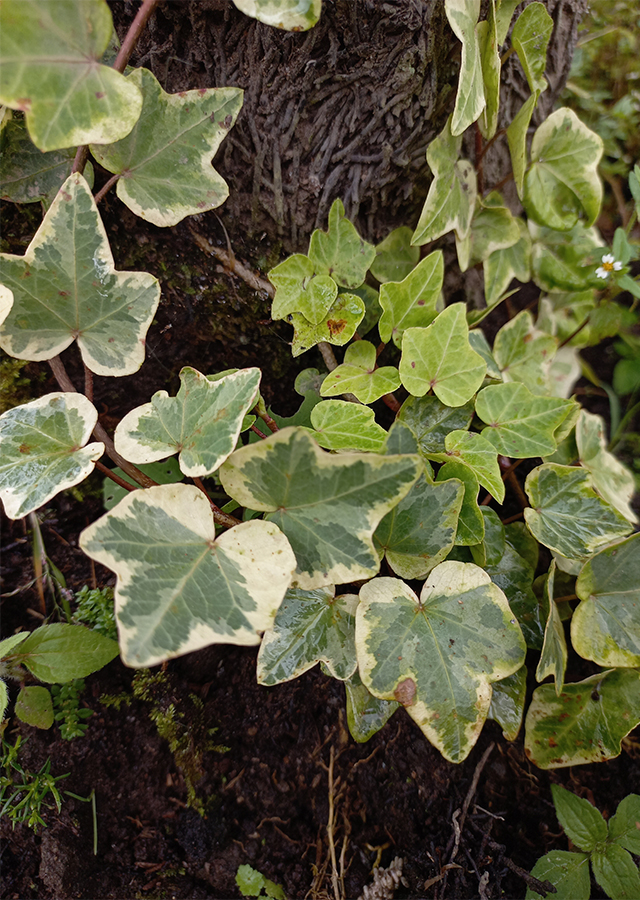
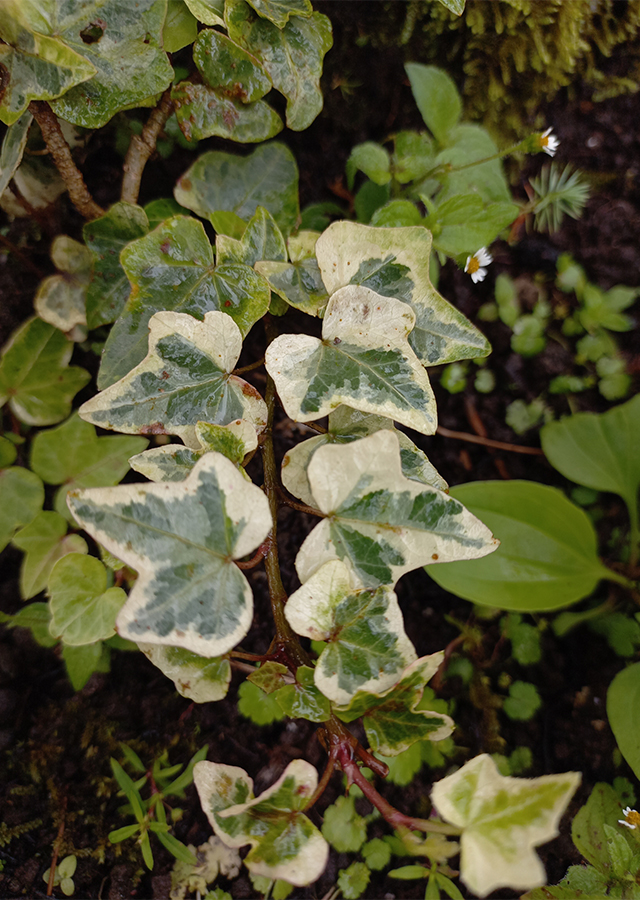
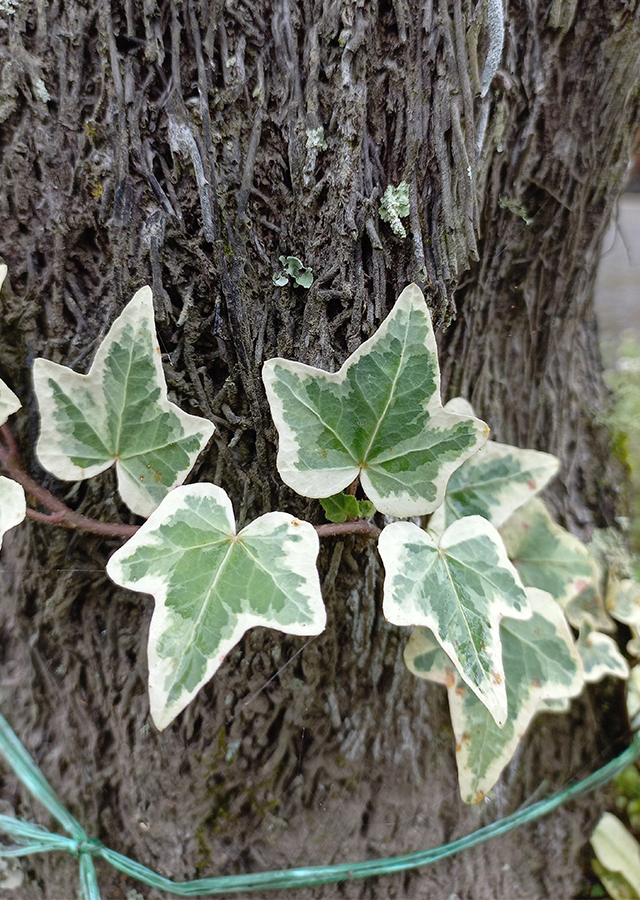
- Leaves simple, alternate, dark green, glossy, heterophyllous, and mostly palmate with 3-5 lobes on sterile stems while on flowering stems heart-shaped, rhomboid to ovate-lanceolate and larger. Has a strong smell when crushed.
- Flowers yellowish green, 5-7 mm in diameter, compound, umbel-shaped, clustered at the tip of the stem.
- Fruit a berry, green turning dark purple/black when ripe and containing 2-5 seeds.
- Seeds lanceolate shaped, blunt tip, and dark brown or blackish brown in color.
Cultivation
Propagation is done vegetatively through stem cuttings and generatively through seed.
Chemical Content
Sterols (cholesterol, campesterol, stigmasterol, sitosterol, α-spinasterol; 5α-stigma-7-en-3β-ol), tannins, phenolic compounds, terpenoids, glycosides, alkaloids (emetine), flavonoids (quercetin, kaempferol, rutin, isoquercitrin, astragalin, kaempferol 3-O-rutinoside), saponins, triterpene saponins, polyacetylenes (falcarinone, falcarinol, panaxidol), β-lectins, monodesmosides (α-hederin, hederagenin 3-O-β-glucoside), phenolic acids, coumarins (scopoletin 7-O-glycoside), amino acids, essential oil (germacrene B, β-elemene, γ-elemene (elixene), methylethyl ketone, methylisobutyl ketone, trans-2-hexanal, trans-2-hexanol, germacrene D, β-caryophyllene, sabinene, α-, β-pinene, limonene, furfural).
Benefits
Treats flu, cough, acute bronchitis, asthma, ringworm, scabies, rheumatism, gout, treats depression, diabetes, skin eruptions, swollen tissue, burns and pus-filled wounds, protects against cracked skin and insect bites. Has anti-inflammatory, analgesic, immunological, anticancer, antimutagenic, antimicrobial, antiparasitic, gastrointestinal, antibacterial, spasmolytic (muscle relaxant), mucolytic (phlegm thinner), bronchodilator (breathing relief), and antithrombin activity.
Simplisia
- Prepare an adequate amount of fresh ivy leaves and wash with clean water.
- Once clean, drain to remove the remaining wash water.
- Dry by air-drying in a place shielded from sunlight.
- Grind the dried leaves into powder then sift with a 60 mesh sieve.
- Store in a clean, airtight container.
Local Names
Tempilih lajanq (Kalimantan).
Traditional Recipes
The following recipes reflect traditional knowledge passed down through generations, not a substitute for professional medical diagnosis or advice. Consult a healthcare provider before use.
1. Burns
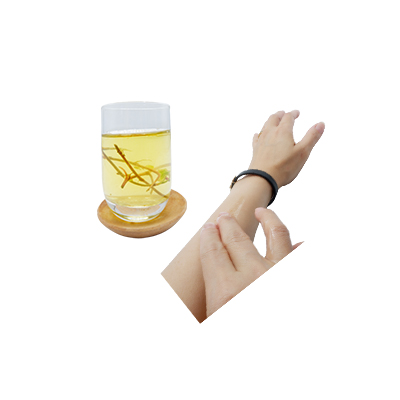
- Prepare oil and ivy plant twigs then wash until clean.
- Soak the twigs in the oil and let sit for a while.
- Apply the twig-infused oil to the burned skin.
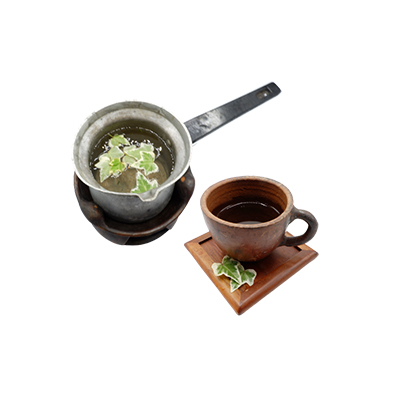
2. Cough
- Prepare an adequate amount of ivy leaves and wash until clean.
- Boil the leaves with water until it boils.
- Strain the decoction.
- Drink while warm.
Reference Sources
- Rotal Botanic Gardens. 2021. Plants of the World Online: Hedera helix L. http://powo.science.kew.org/taxon/urn:lsid:ipni.org:names:90723-1. 23-11-2021.
- Al-Snafi A. E., 2018. Pharmacological and therapeutic activities of Hedera helix- A review. IOSR Journal Of Pharmacy. 8(5): 41-53.
- IPBiotics. 2014. View TumbuhanObat #Hedera helix L. http://ipbiotics.apps.cs.ipb.ac.id/index.php/tumbuhanObat/655. 23-11-2021.
- Useful Temperate Plants Database. 2021. Hedera helix. http://temperate.theferns.info/plant/Hedera+helix. 23-11-2021.
- Flora Fauna Web. 2021. Hedera helix 'Glacier'. https://www.nparks.gov.sg/florafaunaweb/flora/1/4/1408. 23-11-2021.
- Hello Health. 2021. Hedera Helix. https://hellosehat.com/obat-suplemen/hedera-helix/. 23-11-2021.