Heliotropium indicum L.
Summary
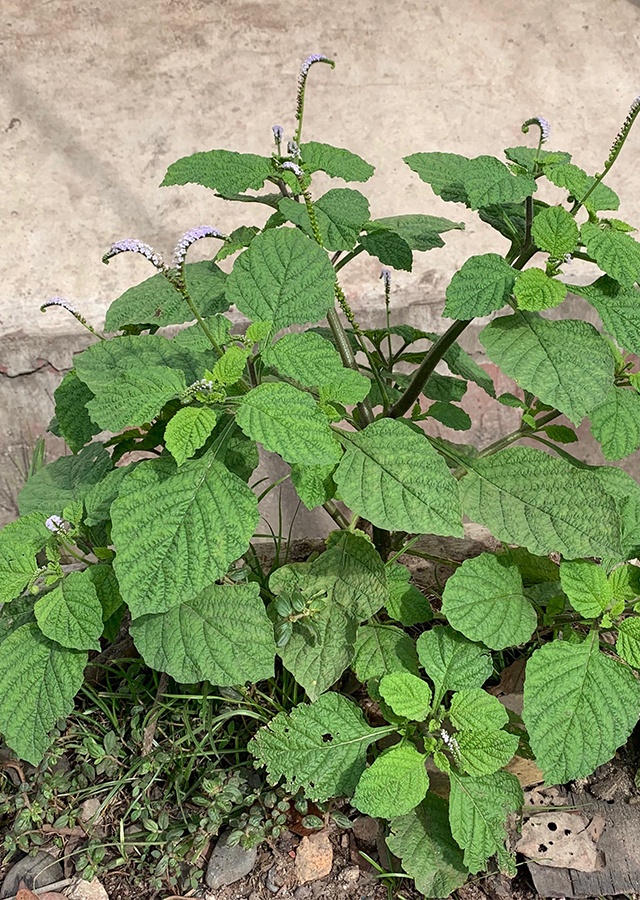
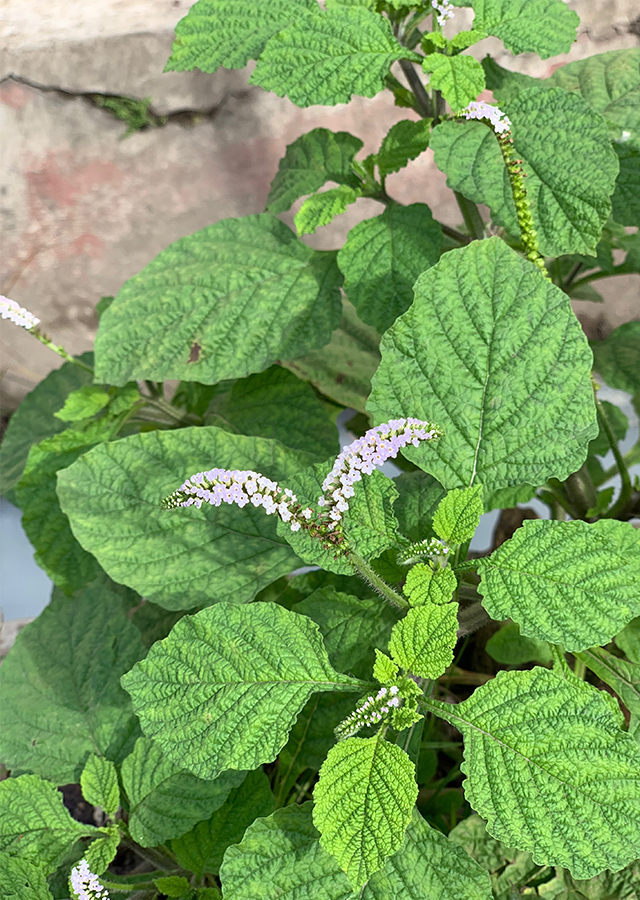
Buntut tikus (Heliotropium indicum) is an erect annual herb up to 1.5 meters tall of the Boraginaceae family, native to the Philippines and now widely distributed, including in Indonesia. Its name ("rat's tail") comes from the curved shape of its flower cluster, resembling a rat's tail. This plant has traditionally been used for generations as a remedy to relieve rheumatism, canker sores, and lung infections.
Agroecology
This plant grows in sunny areas, in waste and fertile soil, in dry ponds and ditches, as well as regularly in human-disturbed habitats, generally at elevations below 800 m above sea level. It is widely regarded as a weed of fields and grasslands.
Morphology
- Roots taproot.
- Stem hairy, with ovate to alternate-shaped leaf bases, to lanceolate-ovate.
- Leaves simple, scattered, without stipules, petiole round and grooved, coarsely hairy, green, toothed margins, blade oval, 10–18 cm long, 6–15 cm wide, both leaf surfaces finely hairy, pointed tip, blunt base, veins distinct and green.
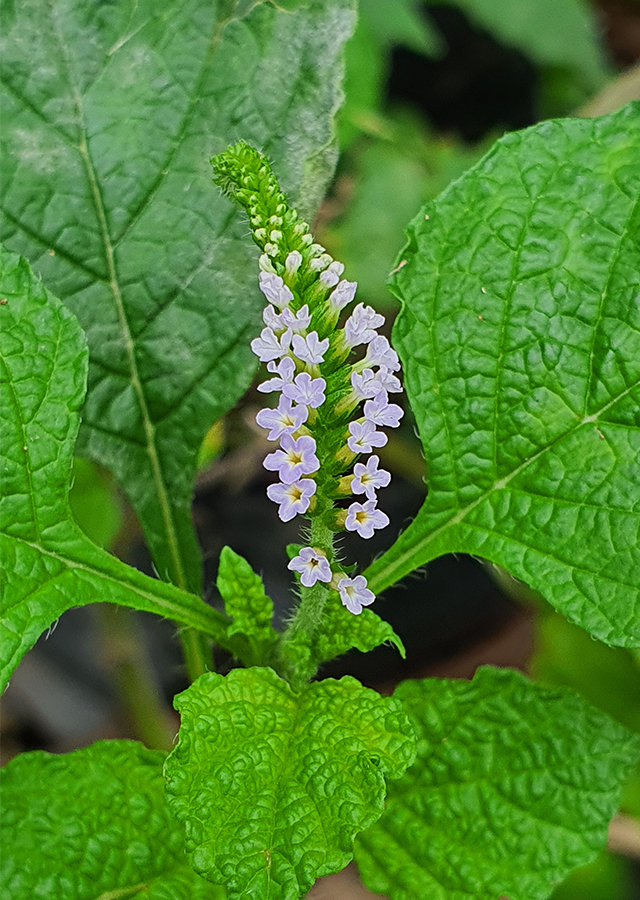
- Flowers small, white, with a green calyx, five stamens borne on the corolla tube, terminal style, and a four-lobed ovary.
- Fruit a schizocarp, round, ridged, hard, and green.
- Seeds small, round, and black.
Cultivation
Propagated generatively (by seed).
Chemical Content
Alkaloids (heliotrine, lasiocarpine, indicine, 12-acetylindicine, indicinine, indicine-N-oxide, retronecine, trachelanthamide, putrescine, spermidine, homospermidine, permine), cardenolides, and flavonoids.
Benefits
Treats rheumatism, canker sores, lung infections, dysentery, boils, testicular inflammation (orchitis); relieves pain; treats skin diseases (scabies, boils, eczema), diabetes, and diarrhea.
Simplisia
Not yet available
Local Names
Indian heliotrope, Scorpion weed
Traditional Recipes
The following recipes reflect traditional knowledge passed down through generations, not a substitute for professional medical diagnosis or advice. Consult a healthcare provider before use.
1. Canker Sores
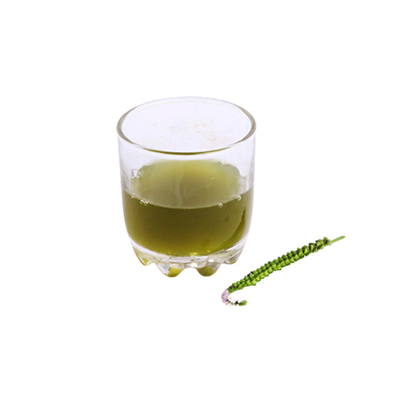
- Mash 1 handful of fresh buntut tikus leaves, add water as needed, then squeeze out the liquid.
- Use the liquid as a mouth rinse 4–6 times a day.
- Pregnant women should not use the seeds and flowers, as they may cause miscarriage.
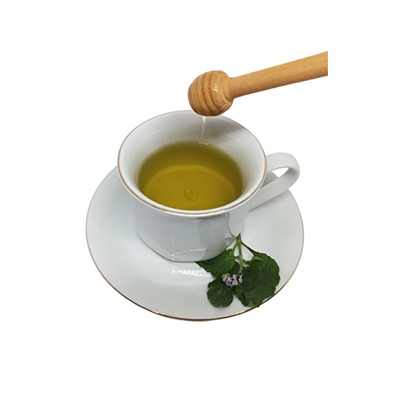
2. Lung Infection or Abscess and Empyema (Lung Tissue Infection)
- Wash 60 g of the fresh plant thoroughly, boil in 3 cups of water until reduced to 1 cup.
- Strain the decoction. Once cool, add 1 tbsp honey.
- Drink 1 cup of the mixture once a day.
Reference Sources
- Werkstruk Heliotropium Indicum (Buntut Tikus). Ramacahyati. 11-06-2012. https://ramacahyati8910.wordpress.com/werkstruk-heliotropium-indicum-buntut-tikus/. 09-09-2020
- Badrunasar Anas, SantosoHarry Budi. 2017. Tumbuhan Liar Berkhasiat Obat: Sariawan. Forda Press
- Rumahsehatherbaholistic.com. Infeksi dan Abses Paru-Paru dan Emyema (Infeksi Jaringan Paru) : https://rumahsehatherbaholistic.com/sangketan-heliotropium-indicum-l/ 28-05-2020
- INTERNATIONAL JOURNAL OF PHARMACEUTICAL SCIENCES AND RESEARCH. A REVIEW ON HELIOTROPIUM INDICUM L. (BORAGINACEAE). https://ijpsr.com/bft-article/a-review-on-heliotropium-indicum-l-boraginaceae/ 02-12-2020