Heptapleurum arboricola Hayata
Summary
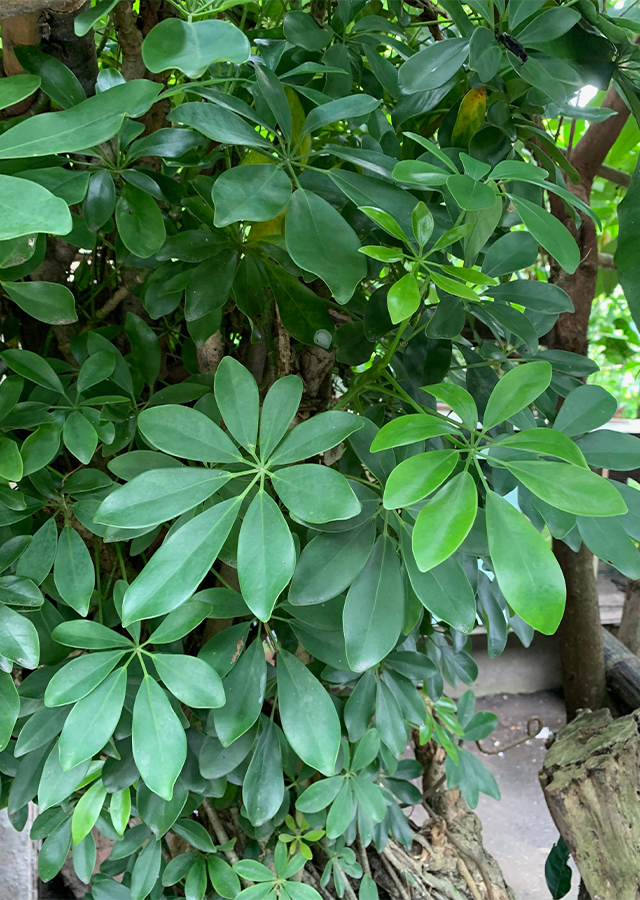
Wali songo (Heptapleurum arboricola) is a shrub up to 3-10 meters tall, sometimes growing as an epiphyte, of the Araliaceae family, originating from East Asia such as Hainan and Taiwan, and Australia. This plant is popularly shaped into bonsai or a living hedge and is believed to be effective at neutralizing cigarette smoke odor indoors. Traditionally, wali songo is also used to relieve rheumatism, sore throat, and help blood clotting.
Agroecology
Generally found along riverbanks, wet forests, sometimes epiphytic on other trees. Its growth requires sunlight, both under direct sun and under shade. Prefers moist soil, neither wet nor dry. Air temperature ranges between 30-35 °C.
Morphology
- Stem not large and without much branching, rough bark, easily broken.
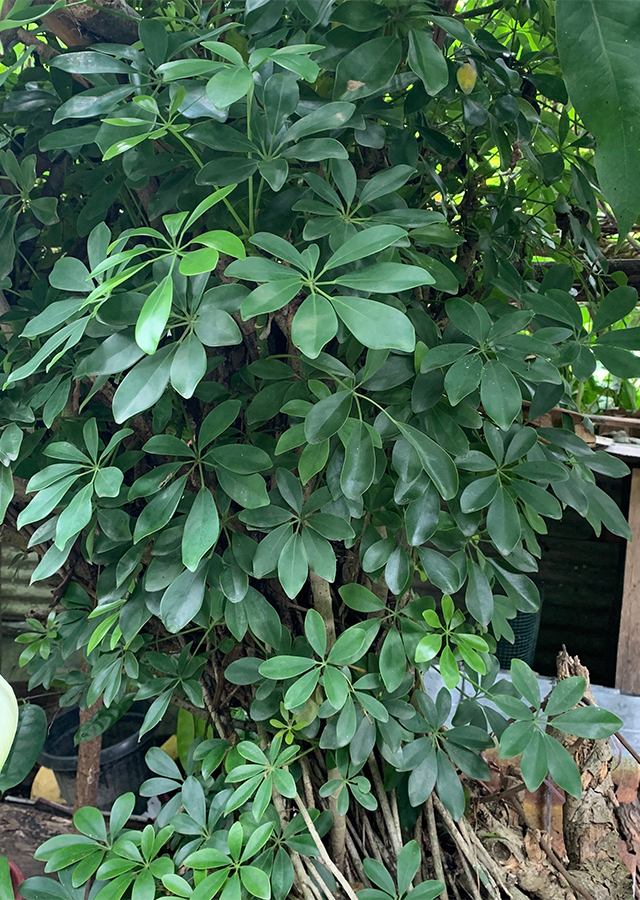
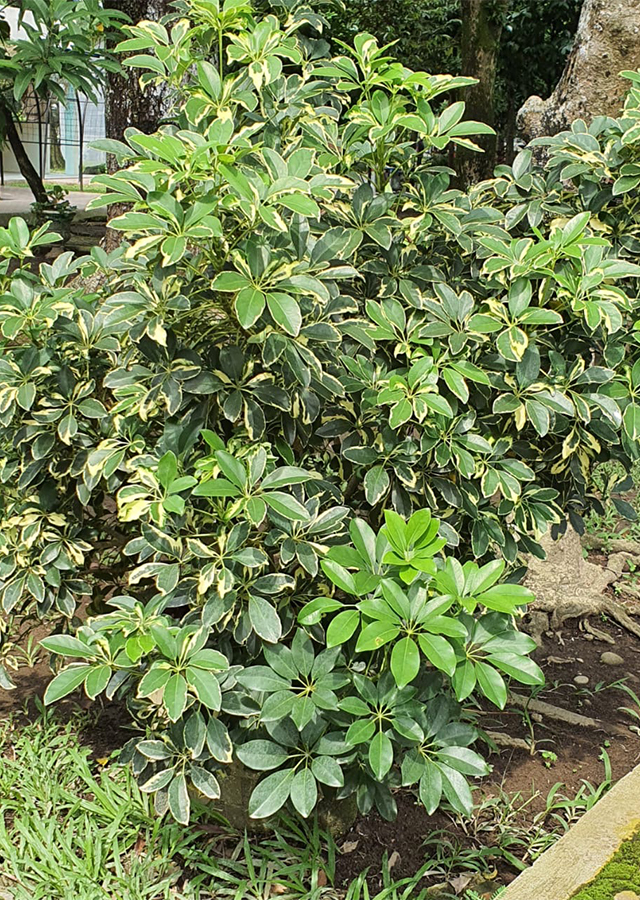
- Leaves compound, thick, glossy, palmate like cassava leaves, 7-9 leaflets shaped inverted egg to oblong, green in color.
- Flowers compound, arranged in a panicle, round, black in color.
- Fruit seeded, oblong nearly round with a diameter of 5 mm, fleshy.
- Seeds small in size, black in color.
Cultivation
- Propagated vegetatively (cuttings, air-layering). Tip cuttings are done by cutting a stem 15-30 cm long, from a healthy, not too old stem.
- Generative propagation (seed) by sowing seeds that have been dried first.
Chemical Content
Saponins, polyphenols, limonene, sesquiterpene hydrocarbons, β-caryophyllene, caryophyllene oxide, spathulenol, β-cubebene, humulene epoxide II, fumaric acid, gamma hydroxybutyric acid.
Benefits
Addresses rheumatism, sore throat, skin itching and ulcers, addresses nosebleeds, improves blood flow, relieves bone pain, prevents swelling, helps blood clotting, treats cough and colds. Has anti-inflammatory activity.
Simplisia
- Take fresh roots, stems, leaves, flowers and fruit then wash thoroughly with running water.
- Separate each part then dry in the sun or use an oven at 40 °C until the moisture content is below 10%.
- Pack in an airtight container whole.
Local Names
Pohon payung.
Traditional Recipes
The following recipes reflect traditional knowledge passed down through generations, not a substitute for professional medical diagnosis or advice. Consult a healthcare provider before use.
1. Stopping Bleeding from a Wound
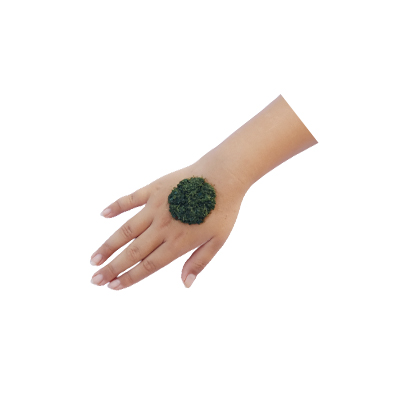
- Take an adequate amount of wali songo leaves then pound until fine into a paste.
- Place the paste on the bleeding wound.
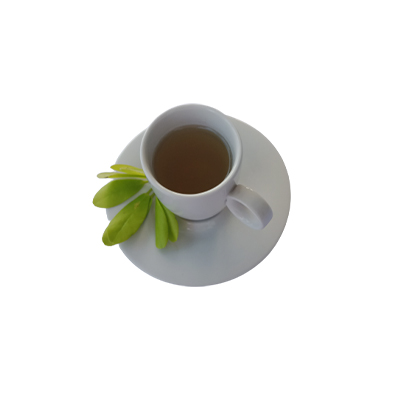
2. Treating Cough and Colds
- Take an adequate amount of wali songo stem and bark then boil with water until it boils.
- Drink the decoction while warm.
Reference Sources
- Tropical Plants Database, Ken Fern. tropical.theferns.info. Schefflera arboricola. http://tropical.theferns.info/viewtropical.php?id=Schefflera+arboricola. 25-01-2021.
- Lilianausvat.wordpress. Umbrella Tree or Schefflera and Chinese Medicine. https://lilianausvat.wordpress.com/2014/01/07/umbrella-tree-or-schefflera-and-chinese-medicine/.25-01-2021.
- Medicinal Plants. Umbrella Shrub. https://sites.google.com/site/medicinalplantshealing/list-of-plants/umbrella-shrub. 25-01-2021.
- T.K.Lim. Edible Medicinal and Non Medicinal Plants Vol 8, Flowers: Menghentikan pendarahan pada luka, mengobati batuk dan pilek. https://books.google.co.id/books?id=-nvGBAAAQBAJ&pg=PA391&lpg=PA391&dq=hibiscus+tiliaceus+bleeding+medicinal+uses&source=bl&ots=NJPqeqbPpe&sig=ACfU3U3pY_0kdZgmNFCq8Dy8Amj0T5yWWg&hl=id&sa=X&ved=2ahUKEwips73nnvDuAhUL8XMBHSKmDP84HhDoATAQegQIFBAC#v=onepage&q=hibiscus%20tiliaceus%20bleeding%20medicinal%20uses&f=false.30-10-2020.