Heterotis rotundifolia (Sm.) Jacq.-Fél.
Summary
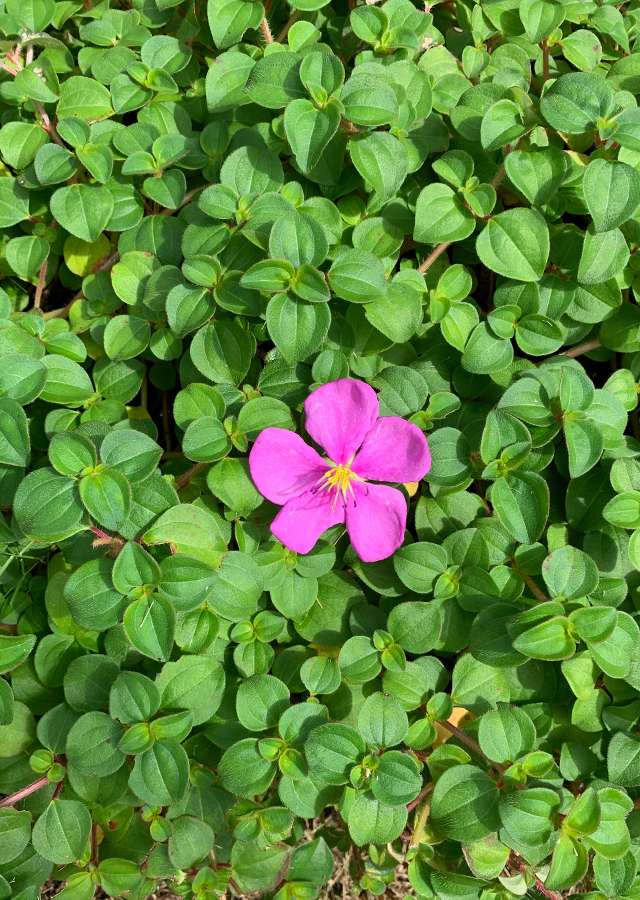
Embun pagi (Heterotis rotundifolia) is a short creeping plant, only about 20 cm tall, of the Melastomataceae family, native to tropical Africa including the Congo, Zimbabwe, and Mozambique, and now also found in Australia and Central America. Besides being grown as ground cover and an ornamental in tropical regions, embun pagi is traditionally used to relieve dysentery, rheumatism, and eye ailments.
Agroecology
Embun pagi is a fast-growing plant in open areas or beneath tree canopies, at elevations up to 1,400 m above sea level, and can survive at temperatures of 12–30°C.
Morphology
- Roots grow at every stem node, reaching over 20 cm long.
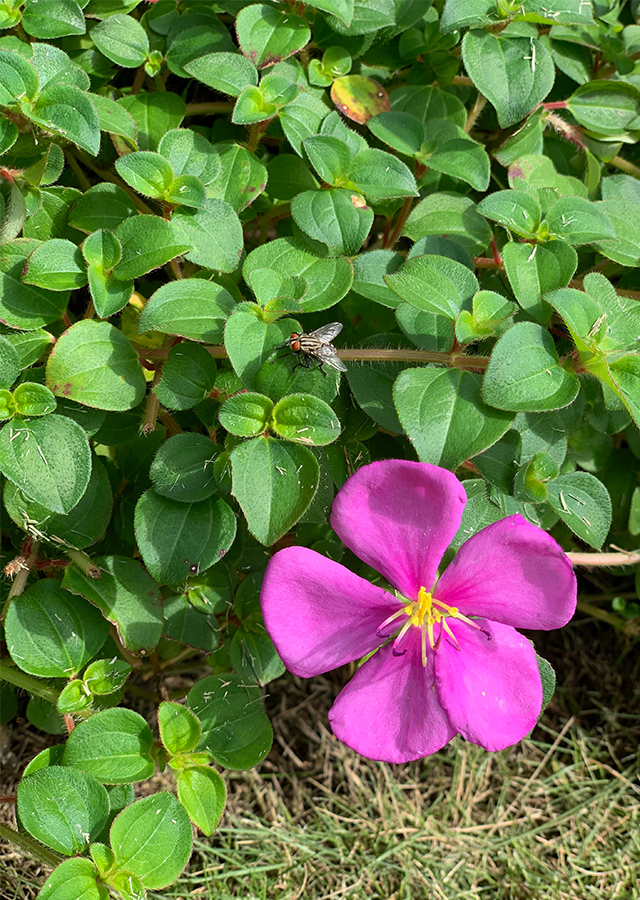
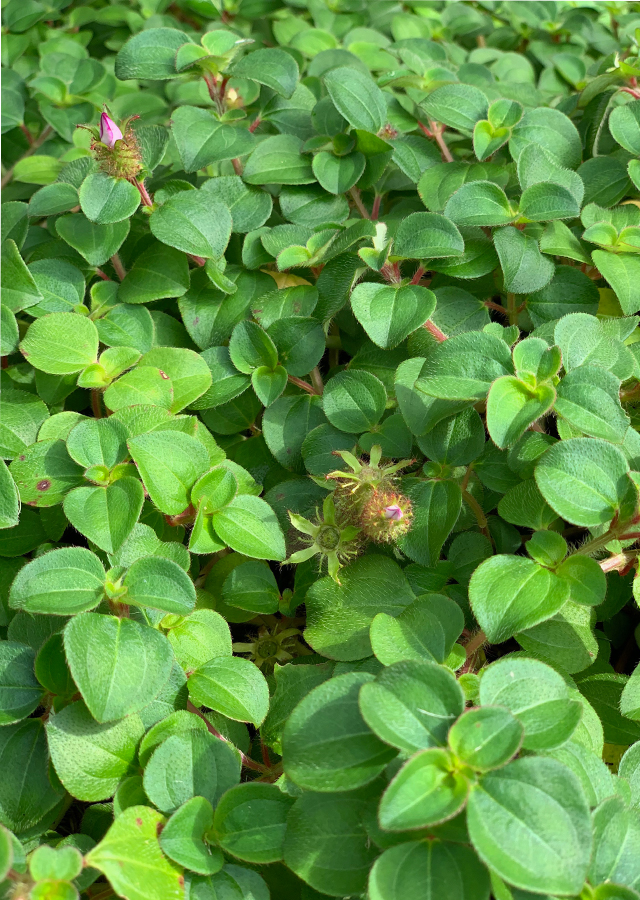
- Leaves elongated-oval with a pointed tip. Length and width between 1.5-7 cm and 0.8-4 cm. Three main pinnate veins, margins slightly hairy.
- Flowers bright pink, with a flower stalk 1.5-2 mm long and a floral tube 5-7 mm long.
- Fruit 1 cm long and 0.9 cm wide.
- Seeds dark-colored, 1 mm long.
Cultivation
- Propagated generatively (by seed).
- Propagated vegetatively (by stem cuttings): the stem should be at least 8 cm long and planted in loose soil. Adding root-stimulating hormone gives better results. Roots will grow and fully form within 4-6 weeks of planting. Once the roots are fully formed, the seedling can be transplanted elsewhere.
Chemical Content
- Flavonoids, phenols, polyphenols, alkaloids, tannins, cyanogenic glycosides, saponins, cardiac glycosides, and anthraquinones.
Benefits
- Treats dysentery, rheumatism, hookworm, conjunctivitis; improves blood circulation; treats African sleeping sickness; relieves stomach ache and eye pain.
Simplisia
- Clean the whole plant under running water, then dry in the shade for 21 days.
- Continue drying in an oven at 40°C for 2-3 hours.
- Once dry, grind the plant material into a powder and store in a closed container.
Local Names
-
Traditional Recipes
The following recipes reflect traditional knowledge passed down through generations, not a substitute for professional medical diagnosis or advice. Consult a healthcare provider before use.
1. Eye Ailment
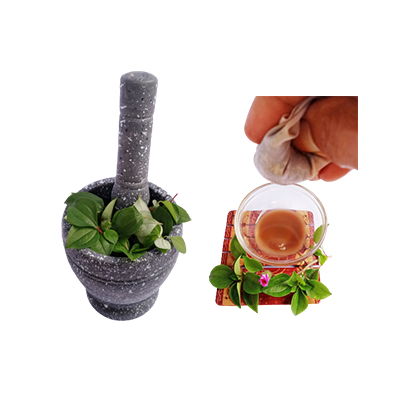
- Pound a sufficient amount of fresh leaves until smooth.
- Squeeze through a cloth, and the resulting liquid can be dropped into the affected eye.
Reference Sources
- Tropical Plants Database, Ken Fern. tropical.theferns.info. Dissotis rotundifolia http://tropical.theferns.info/viewtropical.php?id=Dissotis+rotundifolia 18-01-2021
- Macfoy Cyrus. 2013. Medicinal Plants and Traditional Medicine in Sierra Leone (untuk Sakit Mata). iUniverse LLC Bloomington https://books.google.com/books?id=tDGGAgAAQBAJ&pg=PA101&lpg=PA101&dq=dissotis+rotundifolia+medicinal+uses&source=bl&ots=Dbs2lznXup&sig=ACfU3U216au-z75ZCHdGW4bNqe8QxaXIQA&hl=id&sa=X&ved=2ahUKEwiqk5nH7bjsAhWDIbcAHeEKDPg4MhDoATAHegQIARAC#v=onepage&q=dissotis%20rotundifolia%20medicinal%20uses&f=false 19-10-2020