Hibiscus acetosella Welw. ex Hiern
Summary
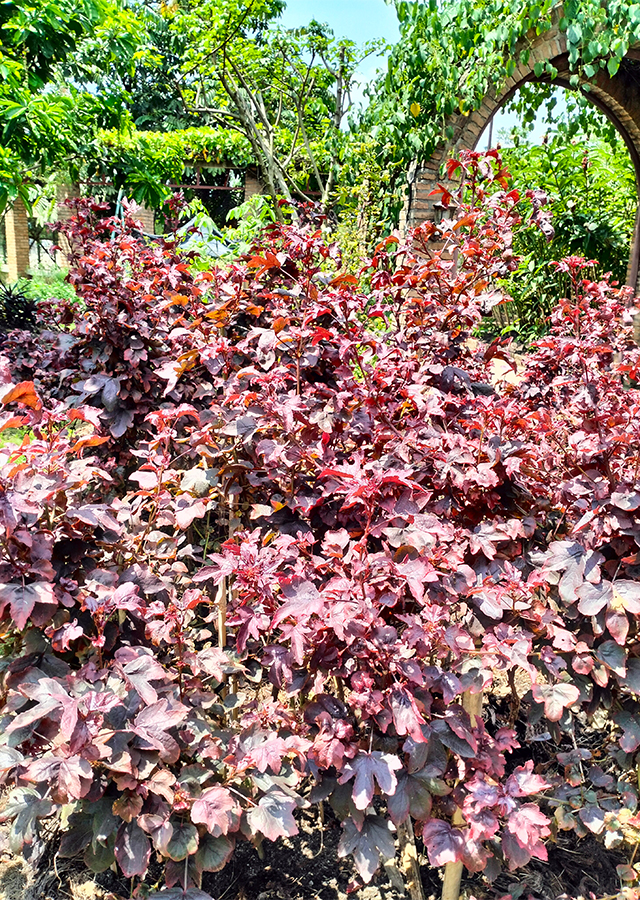
Hibiscus acetosella or red-leaf rosella is native to the southern tropical African region, from Burundi to Mozambique, and is thought to be a natural hybridization result between Hibiscus asper and Hibiscus surattensis. Introduced to Southeast Asia as a vegetable and colorful hedge plant, its sour-tasting, mucilaginous-textured leaves are commonly added to salads or soups, while its red flowers are brewed as tea. Traditionally, this plant is also used as a post-fever recovery tonic and treatment for anemia.
Agroecology
Hibiscus acetosella is found across a wide tropical African region, usually growing at low to medium elevations. This plant can also be grown as a perennial in warm climates. Grows best in areas with good rainfall. Succeeds in a sunny position, but prefers shade. Grows in all soil types but prefers fertile, well-drained, humus-rich soil.
Morphology
- Stem smooth to sparsely hairy.
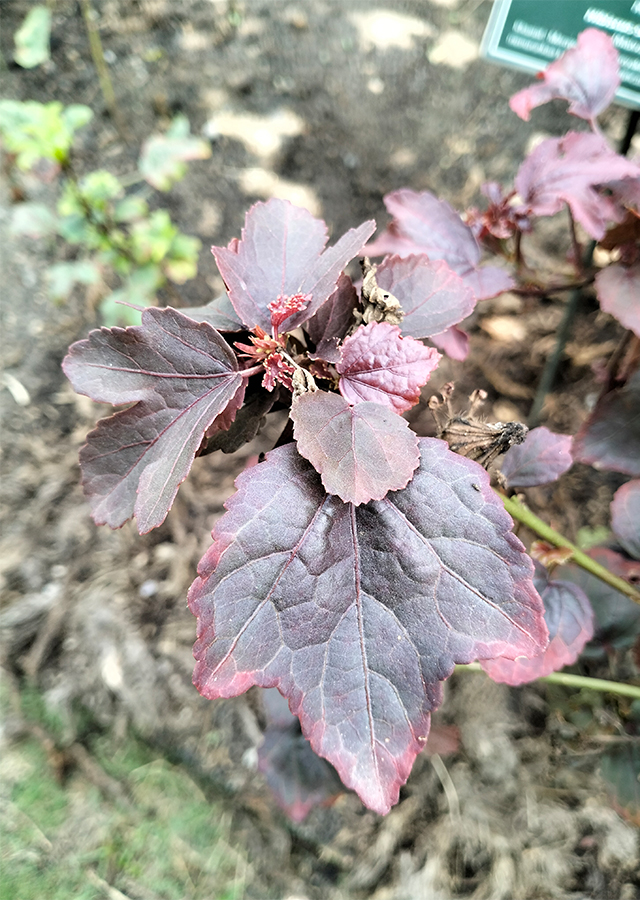
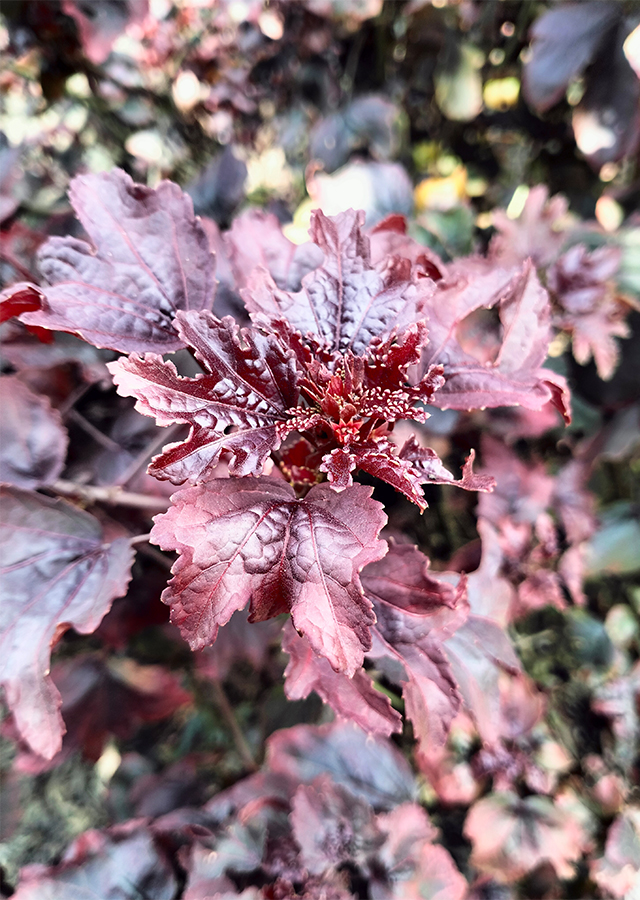
- Leaves alternate, simple, slightly glossy and puberulent, dark red, with the lower leaves usually shallowly to strongly palmately 3-5 lobed but the upper leaves becoming undivided, with distinct nectaries located at the base of the leaf blade. Petiole dark red.
- Flowers solitary and bisexual, located in the leaf axils with five pink petals and lasting only one day. The petals are wine-red with a dark purple center, giving the flower a distinctive "eye" in the middle. Self-pollination most often occurs in H. acetosella flowers but cross-pollination by insects can also occur.
- Fruit a red, ovoid, many-seeded capsule.
- Seeds reniform (kidney-shaped) becoming round, dark brown when ripe, and verruculose (finely verrucose, i.e. bearing wart-like protrusions on the surface).
Cultivation
- Propagated with seed and stem cuttings.
- Sow seed in place or in a container. Germination is usually fairly quick. Plant seedlings grown in containers into individual pots once large enough to handle, and plant out into permanent positions once 10 cm tall or more.
Chemical Content
Phenolic compounds, flavonoids, and anthocyanins.
Benefits
A post-fever tonic and treatment for anemia, body aches in children. Has anti-inflammatory, antimutagenic, antioxidant, and antibacterial activity.
Local Names
Informasi tidak ditemukan. Butuh penelusuran lebih lanjut.
Traditional Recipes
The following recipes reflect traditional knowledge passed down through generations, not a substitute for professional medical diagnosis or advice. Consult a healthcare provider before use.
1. Treats anemia
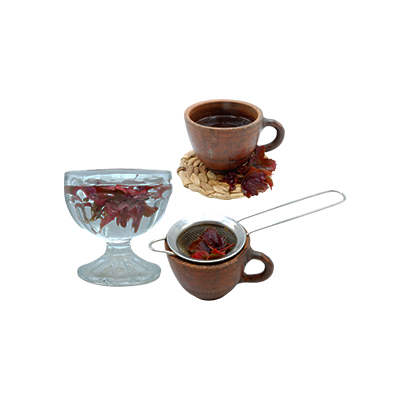
- Prepare an adequate amount of fresh red-leaf rosella leaves and wash until clean.
- Soak and wait for a while.
- Strain then drink.
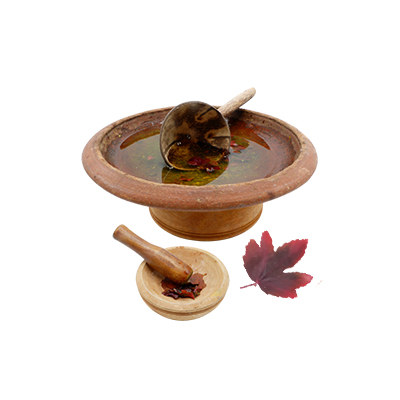
2. Treats sick children's bodies
- Take an adequate amount of fresh red-leaf rosella leaves and wash until clean.
- Grind until it becomes a paste.
- Put the leaf paste into cold water.
- Use to bathe babies and children with body aches.
Reference Sources
- Royal Botanic Gardens. Plant of the World Online: Hibiscus acetosella Welw. ex Hiern. https://powo.science.kew.org/taxon/urn:lsid:ipni.org:names:559896-1. 13-08-2022.
- Useful Tropical Plants. 2022. Hibiscus acetosella. http://tropical.theferns.info/viewtropical.php?id=Hibiscus%20acetosella. 13-08-2022.
- Flora Fauna Web. 2022. Hibiscus acetosella Welw. ex Hiern. https://www.nparks.gov.sg/florafaunaweb/flora/2/0/2090. 13-08-2022.
- PROTA. 2015. Hibiscus acetosella (PROTA) https://uses.plantnet-project.org/en/Hibiscus_acetosella_(PROTA).
- Jae Il Lyu, dkk. 2020. Phenolic Compounds in Extracts ofHibiscus acetosella (Cranberry Hibiscus) andTheir Antioxidant and Antibacterial Properties. September 2020. Molecules 25(18). DOI:10.3390/molecules25184190.