Hibiscus mutabilis L.
Summary
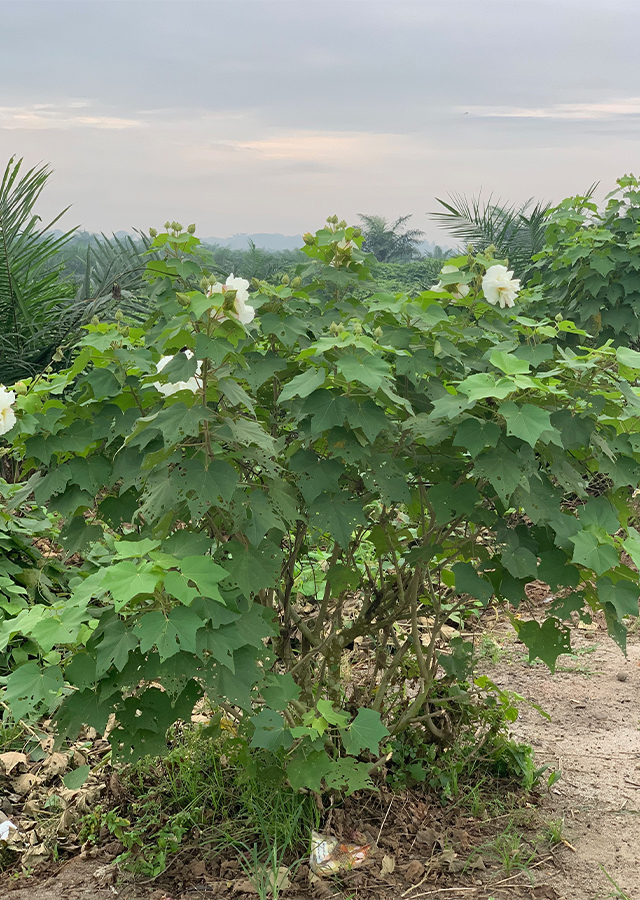
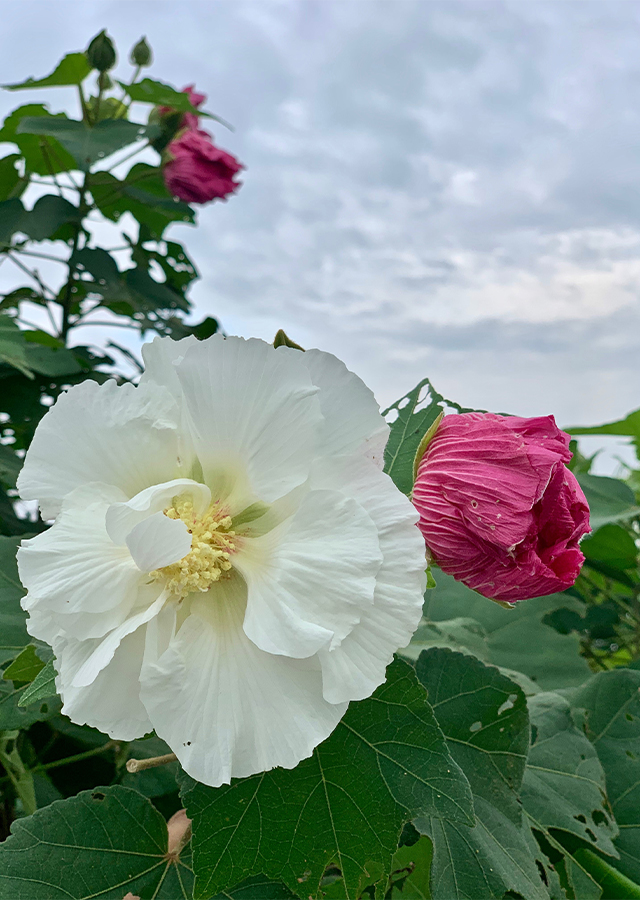
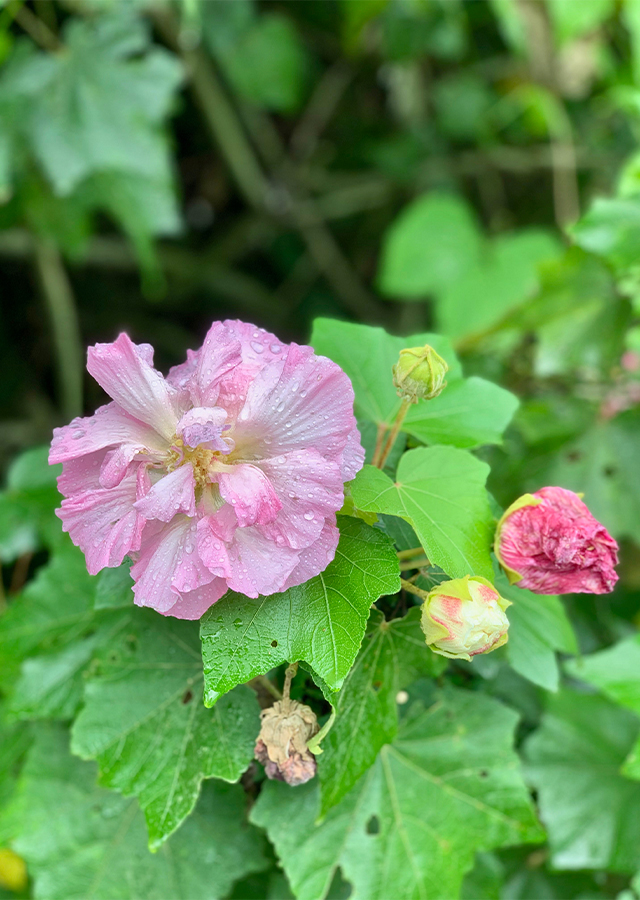
Waru landak (Hibiscus mutabilis) is an upright shrub 2-5 meters tall of the Malvaceae family, originating from China and now widely cultivated across Southeast Asia. Its unique flower can change color from white to pink within a day, making it an attractive ornamental and hedge plant. Waru landak is also traditionally believed to help purify blood and relieve cough.
Agroecology
Grows well in fertile, humus-rich soil with adequate moisture and full sunlight. Prefers warm but moist weather during winter. Grows wild in forests at elevations of 1-900 m above sea level.
Morphology
- Stem branching, finely grayish hairy.
- Leaves orbicular to ovate (egg-shaped), long-stalked, palmate leaf blade with 3-5 lobes, tapering tip, indented base, dull green, alternating position, coated with fine hairs.
- Flowers large, 10-12 cm, emerging from leaves clustered at the stalk tip. White or gray in the morning, turning red toward wilting in the evening.
- Fruit round and lobed, covered with coarse hairs.
- Seeds egg-shaped, hairy.
Cultivation
- Propagated generatively (by seed) and vegetatively (stem cuttings, offshoot separation).
- Plant seeds in a polybag, once about 10 cm tall, the seedling is transplanted to a permanent location.
Chemical Content
Flavonoids, flavonol glycosides, anthocyanins, quercetin, quercemeritrin, quercetin-3-xyloside, quercetin-3-sambubioside, isoquercetin, meratrin, hybridin, kaempferol, hyperin, guaijaverin, cyanidin-3-xylosylglucose, cyanidin-3-monoglucoside, hibiscones, hibiscoquinones, β-sitosterol, β-carotene.
Benefits
Has antibiotic and anti-inflammatory activity. Purifies blood, removes swelling, stops bleeding, reduces fever, treats cough and lung complaints.
Simplisia
- Prepare fresh leaves, wash thoroughly with running water.
- Dry the leaves under a shelter until the moisture content is below 10%.
- Once dry, grind the leaves into powder.
- Store in a clean, airtight container.
Local Names
Waru landak (Java), Bunga waktu besar (Malay), Bunga balik cahaya, Saya ngali-ngali (Ternate), Si buyung, Bunga pagi sore.
Traditional Recipes
The following recipes reflect traditional knowledge passed down through generations, not a substitute for professional medical diagnosis or advice. Consult a healthcare provider before use.
1. Bloody Cough
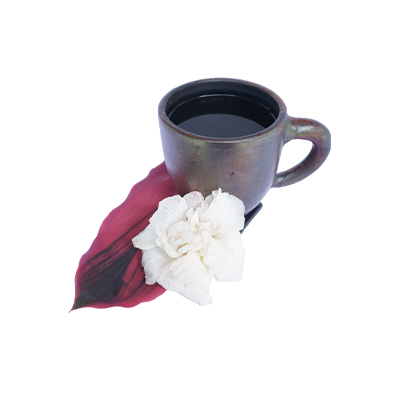
- Prepare 30 g waru landak flowers and 60 g andong leaves.
- Wash all ingredients thoroughly. Boil with 800 ml water until it boils and 400 ml of water remains, strain.
- Drink twice a day.
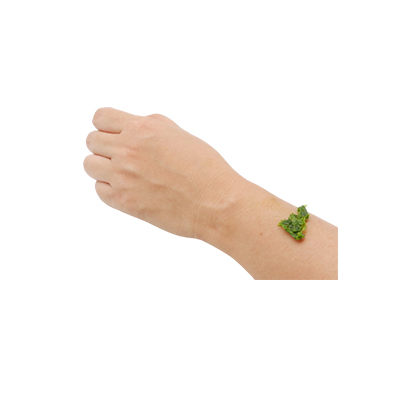
2. Inhibiting Virus Development on the Skin
- Wash 5 waru landak leaves thoroughly, air-dry until dry, then pound into powder.
- Take an adequate amount, mix with 100 ml rice water.
- Apply this concoction to the affected body part.
Reference Sources
- Tropical Plants Database, Ken Fern. tropical.theferns.info. Hibiscus mutabilis. http://tropical.theferns.info/viewtropical.php?id=Hibiscus+mutabilis 15-01-2021
- Stuartxchange. Philippine Medicinal Plants. Amapola. http://www.stuartxchange.org/Amapola 15-01-2021
- W Hembing.2008. Ramuan Lengkap Herbal Taklukkan Penyakit: batuk darah. Pustaka Bunda
- Wijaya Cindy. Resep Herbal Cacar Ular Ringankan Nyeri dan Perih di Kulit. https:// www.deherba.com/resep-herbal-cacar-ular.html 18-07-2020