Homalomena humilis (Jack) Hook.f.
Summary
Langge (Homalomena humilis) is a herb up to 50-80 cm tall of the Araceae family, mainly distributed in South Asia and the Southwest Pacific, with most Homalomena species carrying a distinctive anise-like aroma. Its name is believed to derive from a Malay term mistranslated as "flat moon." Langge is traditionally believed to be a simple yet effective remedy for wounds and fever.
Agroecology
Grows well in moist areas with low light intensity and usually lives in groups. Generally, it is mostly easily found in forests, riverbanks, steep areas with good drainage. Can be found at elevations up to 1,450 m above sea level.
Morphology
- Rhizome a stem tuber stored in the soil with fine roots present.
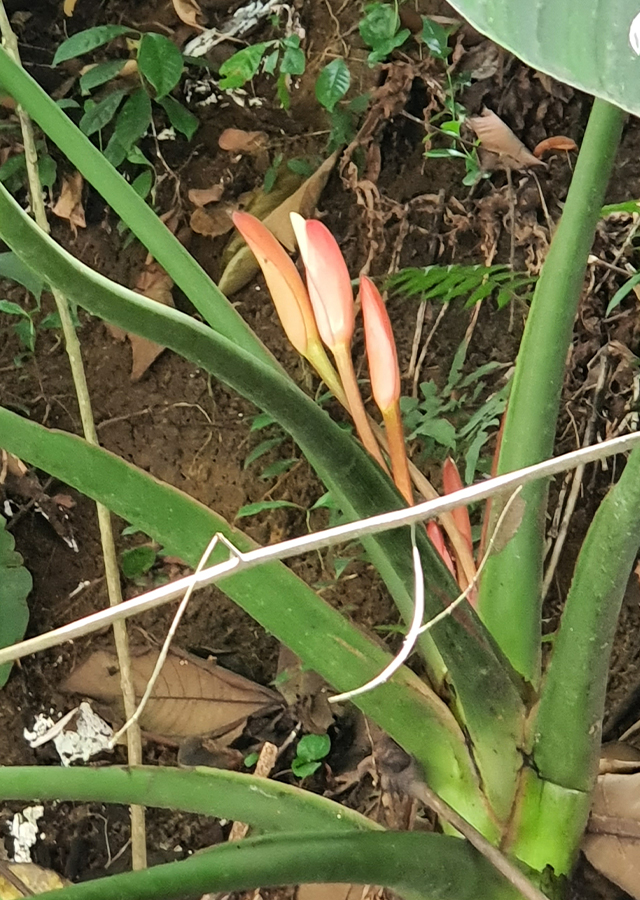
- Stem green in color and ridged.
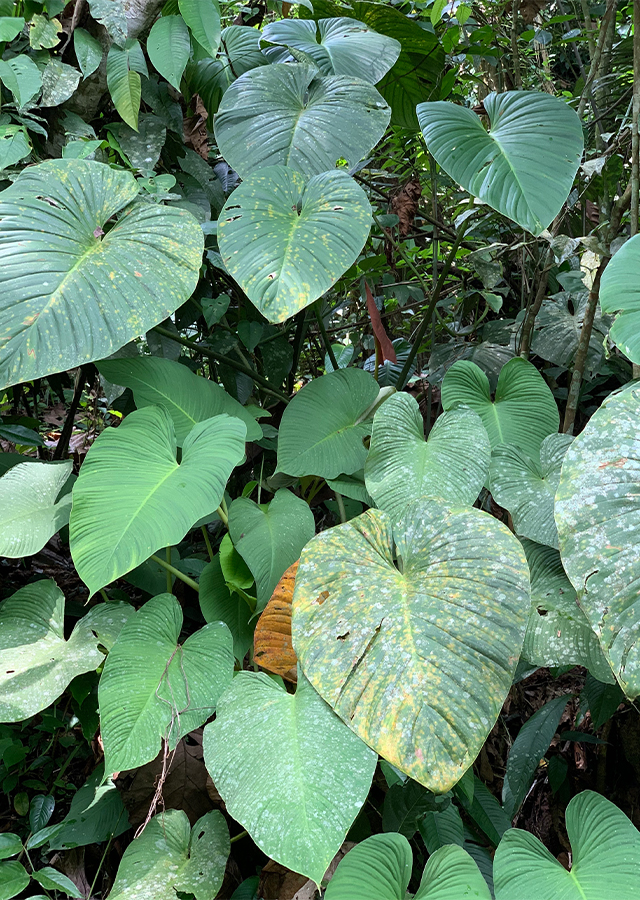
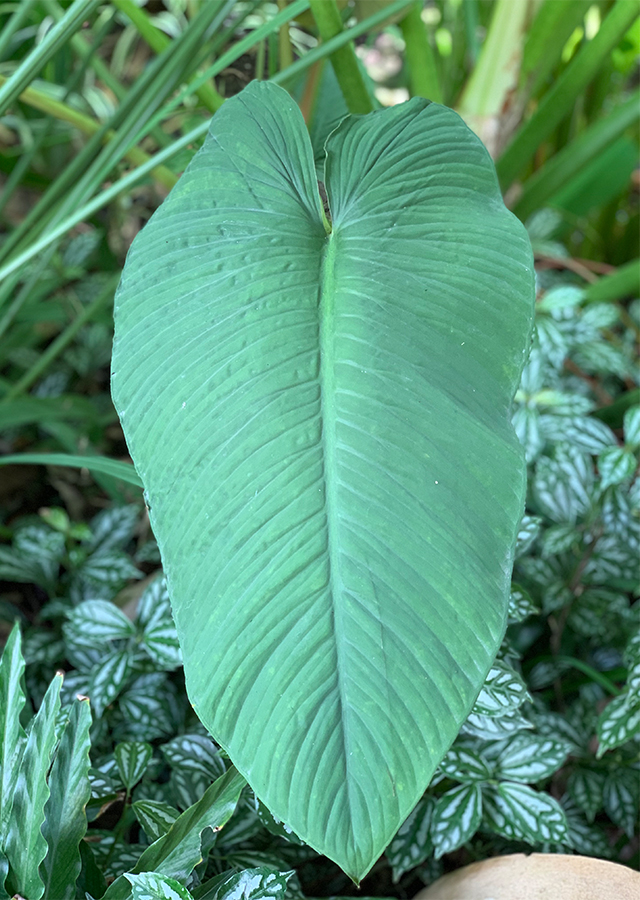
- Leaves heart-shaped with a tapering tip, flat edges, smooth surface with a glossy green wavy pattern.
- Flowers reddish-yellow in color emerging from the leaf sheath.
- Fruit oblong, funnel-like shape.
Cultivation
- Propagation can be done generatively (seed) and vegetatively (offset separation). Pollination is aided by insects such as beetles and bees.
- Effective pollination occurs on the first day of flowering, where the flower's fragrance increases from 07:00 to 08:00.
Chemical Content
- Saponin, flavonoid, alkaloid, tannin and terpenoid.
Benefits
- Treats wounds and fever.
Simplisia
Not yet available.
Local Names
Umbi utan (North Sulawesi).
Traditional Recipes
The following recipes reflect traditional knowledge passed down through generations, not a substitute for professional medical diagnosis or advice. Consult a healthcare provider before use.
1. Wound remedy
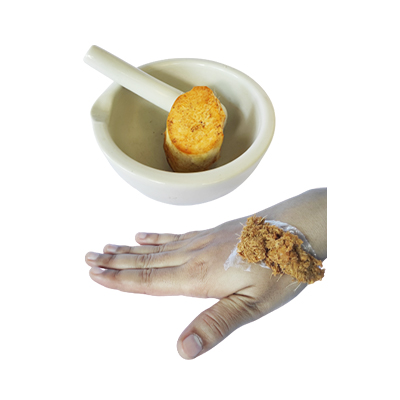
- Clean the tuber as needed.
- Peel then pound until mashed.
- After that apply to the wound.
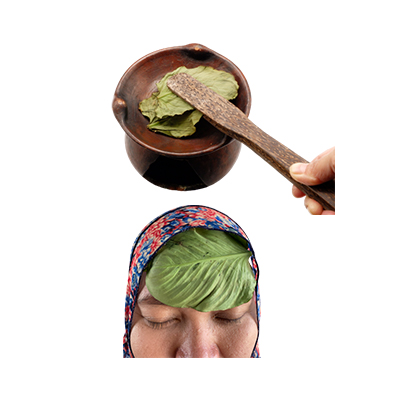
2. Fever
- Prepare langge leaves.
- Wash thoroughly with running water.
- Heat the leaves until wilted.
- Apply to the forehead.
Reference Sources
- ThePlantList. A working list of all plant species. Homalomena propinqua Schott. http://www.theplantlist.org/tpl1.1/record/kew-100043 31-01-2021
- Kinho Julianus dkk.2011. Tumbuhan obat tradisional di sulut jilid II: Obat Luka. Balai Penelitian Kehutanan Manado.
- Frausin G, et all. 2015. Plants of the Araceae family for malaria and related diseases: a review (obat demam). https://www.scielo.br/scielo.php?script=sci_arttext&pid=S1516-05722015000400657 15-09-2020