Hopea mengarawan Miq.
Summary
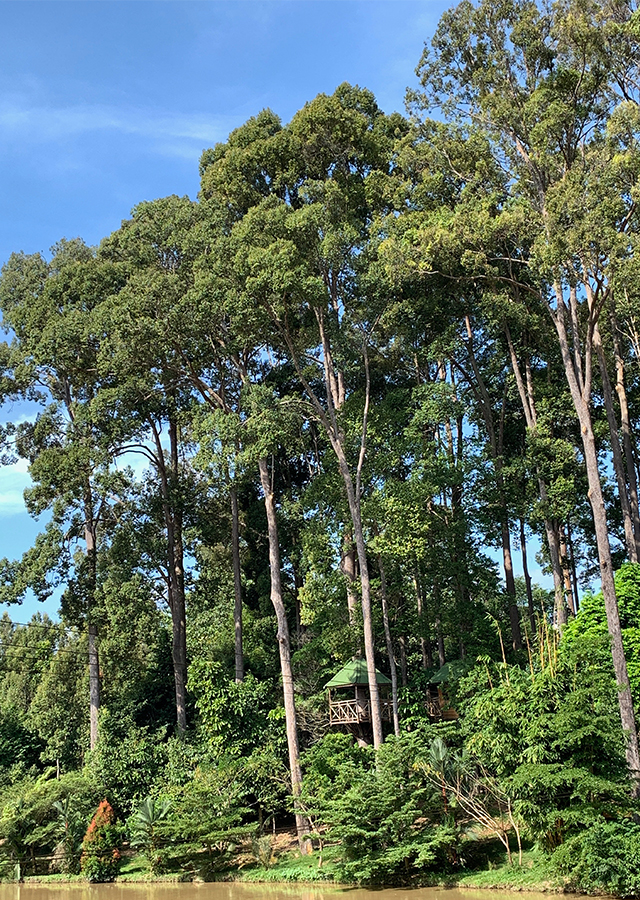
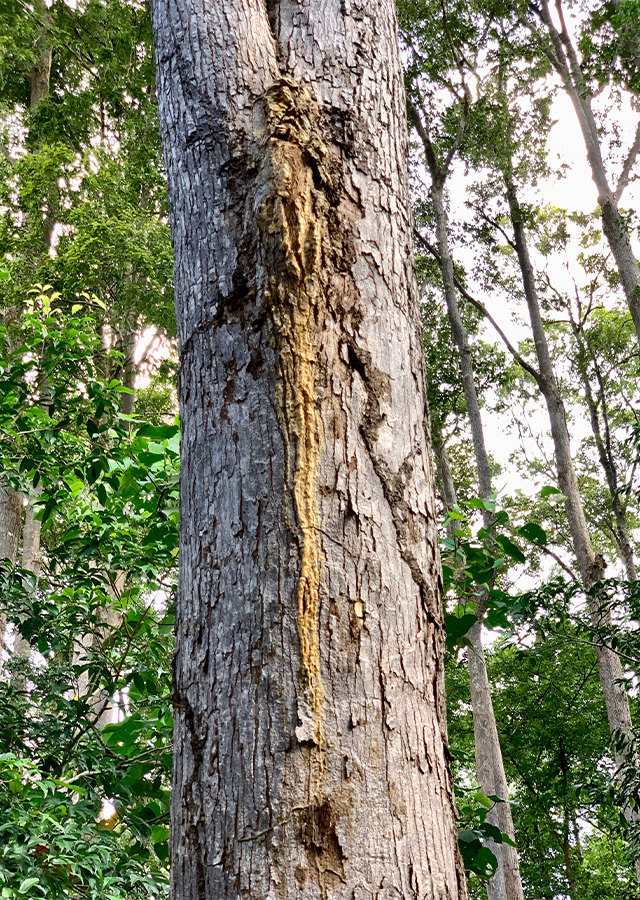
Merawan (Hopea mengarawan) is a giant tree up to 60 meters tall of the Dipterocarpaceae family, native to Singapore, Kalimantan, Sumatra, and Malaysia, now classified as 'Critically Endangered' by the IUCN due to continued wild harvesting. Its resin (damar) has long been used to caulk boats, as an adhesive, and for traditional torches. Its oligomeric resveratrol content holds great potential as an antioxidant that is still being researched.
Agroecology
This plant is usually found on ridges and hill slopes with poor sandy to clay soil in the wild, also on ultrabasic soil. This tree has a wide canopy in forests, growing locally, scattered or sometimes in groups in lowlands, often swampy or periodically flooded, and also in low hills up to elevations of 500 m above sea level.
Morphology
- Root a taproot, brown in color.
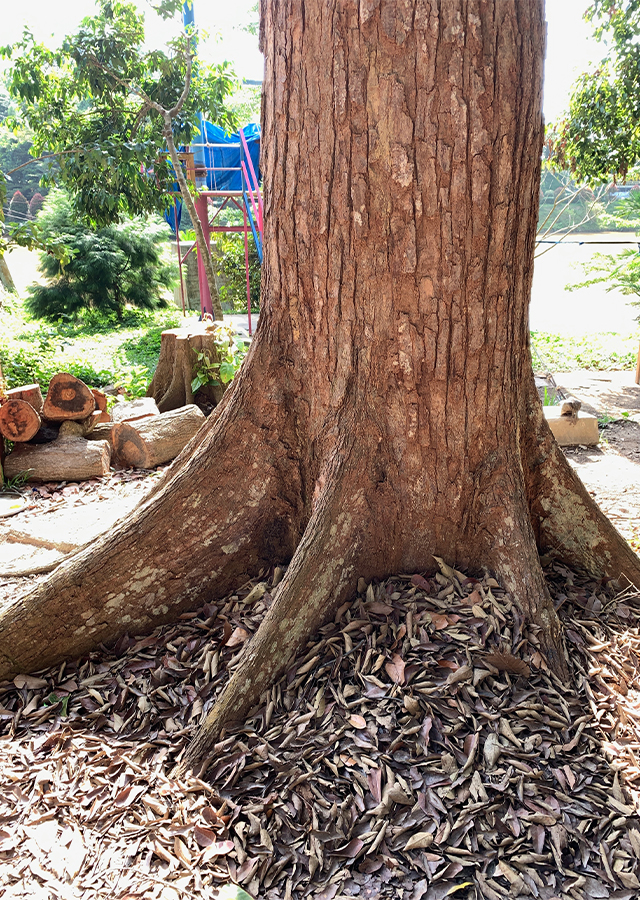
- Stem unbranched up to 25 m, sometimes more, with a diameter of up to 90 cm and clearly buttressed. It produces good quality damar resin.
- Leaves alternately petioled with rough, oblong spear-shaped blades, 6-12 by 2.5-5 cm in size, brownish underneath and golden brown on top when dry.
- Flowers appear at each stem tip up to 3 cm long and produce up to 6 yellowish-white flowers about 5 mm wide.
Cultivation
Merawan is propagated using seed.
Chemical Content
Oligomeric resveratrols, namely diptoindonesin D, balanocarpol, ampelopsin A, hopeafuran, heimiol A, parviflorol, a-viniferin, isohopeaphenol, and vaticanol B.
Benefits
Has potential as an antioxidant, antibacterial, anticancer, antihepatotoxic, anti-HIV agent.
Simplisia
- Wash the bark thoroughly. Separate the bark from the inner stem using a knife.
- Dry by sun-drying for several days, turning the bark position daily.
- Once dry, grind into powder then store in an airtight container.
Local Names
Damar cermin (Indonesia); Damar mata kucing (Indonesia); Tengerawan (Indonesia); Tengerawan (Sumatra); Tekan lampung (Borneo); Wapei (West Irian).
Traditional Recipes
The following recipes reflect traditional knowledge passed down through generations, not a substitute for professional medical diagnosis or advice. Consult a healthcare provider before use.
1. Fresh wounds
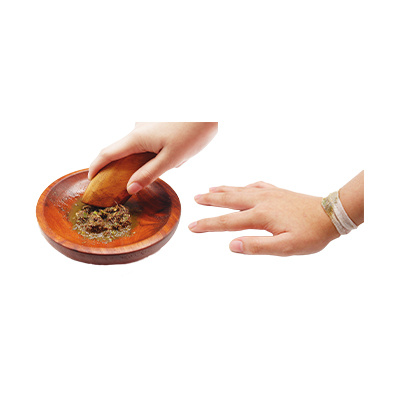
- Prepare damar leaves and roots as needed.
- Wash the leaves and roots, pound until mashed, then apply to the wound and bandage with a clean cloth.
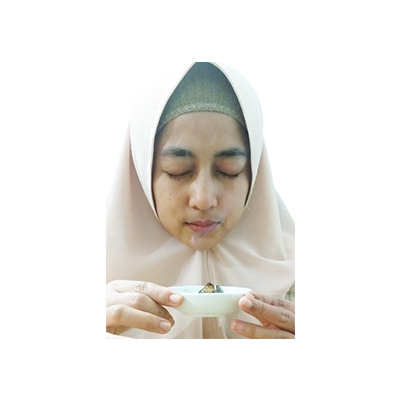
2. Asthma
- Take sea damar resin as needed.
- Burn the resin until it produces smoke.
- Inhale the resulting smoke, do this several times until asthma symptoms decrease.
Reference Sources
- Royal Botanic Gardens. Kew. Plant of the World Online: Hopea mengarawan Miq.. Hopea mengarawan Miq. | Plants of the World Online | Kew Science
- ITTO Tropical Forest News (TFN). MERAWAN (Hopea mengarawan). Merawan (Hopea mengarawan) | ITTO (tropicaltimber.info)
- Useful Tropical Plants.2024. Hopea mengarawan. Hopea mengarawan - Useful Tropical Plants (theferns.info)
- Atun, Sri. 2006. Aktivitas Oligoresveratrol dari Kulit Batang Hopea mengarawan (Dipterocarpaceae) sebagai Penangkap Radikal HidroksilActivity of Oligoresveratrols from Stem Bark of Hopea mengarawan (Dipterocarpaceae) as Hydroxyl Radical Scavenger. HAYATI Journal of Biosciences Volume 13, Issue 2, June 2006, Pages 65-68. Aktivitas Oligoresveratrol dari Kulit Batang Hopea mengarawan (Dipterocarpaceae) sebagai Penangkap Radikal Hidroksil - ScienceDirect.
- K. cecep dan Arini Lathifah. 2021. Keragaan Tegakan Merawan (Hopea mengarawan Miq.) dan Keruing Gunung (Dipterocarpus retusus Blume) di Hutan Penelitian Dramaga, Bogor. December 2021. Journal of Tropical Silviculture 12(3):186-193.DOI:10.29244/j-siltrop.12.3.186-193.
- Sahidin, dkk. 2006. KAJIAN FITOKIMIA Hopea mengarawan DAN IMPLIKASEVYA PADA KEMOTAKSONOMI HOPEA [Phytochemical Screening of Hopea mengarawan and Its Implication Against Chemotaxonomy ofHopea]. Berita Biologi Volume 8, Nomor 2, Agustus 2006.