Huperzia squarrosa (G.Forst.) Trevis.
Summary
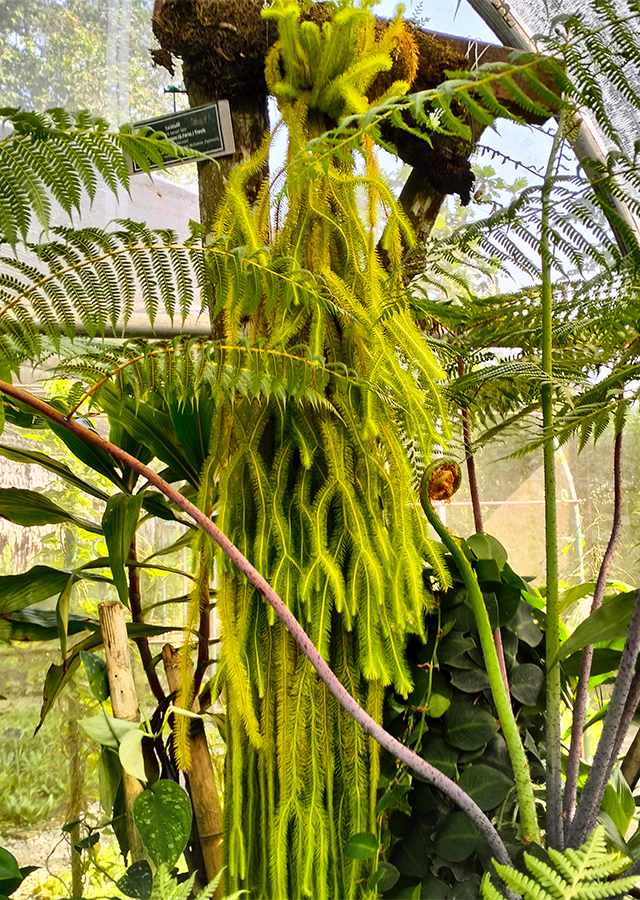
Huperzia squarrosa or taratulit is an epiphytic herb distributed from Madagascar and Mauritius in the Indian Ocean to southern China, Southeast Asia, and Australia. This plant is considered the most beautiful among other Huperzia species, so it is widely cultivated as a hanging ornamental, while the Karo people of North Sumatra use it for traditional/customary purposes and rituals to ward off supernatural influences, alongside its potential as an ingredient for treating brain function disorders such as Alzheimer's and Parkinson's.
Agroecology
Prefers bright shade for good growth, avoid full sun exposure, which can cause the foliage to whiten. Does not tolerate regular soil; use a well-drained, well-aerated but consistently moist soilless medium such as orchid bark or pine bark, or a sphagnum moss-compost mix. Prefers high humidity, tolerant of some drought, but can suffer from prolonged drought.
Morphology
- Roots have a rhizome.
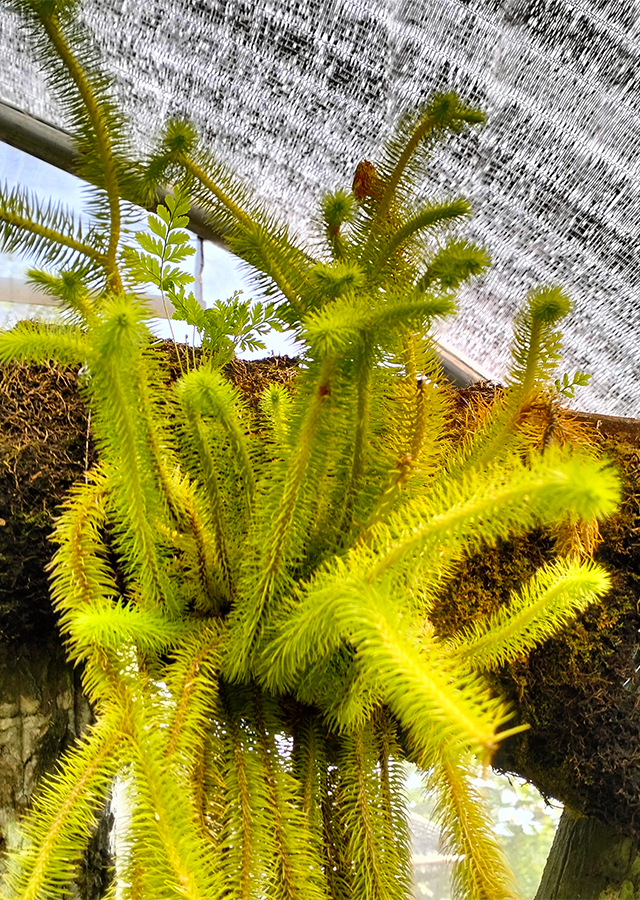
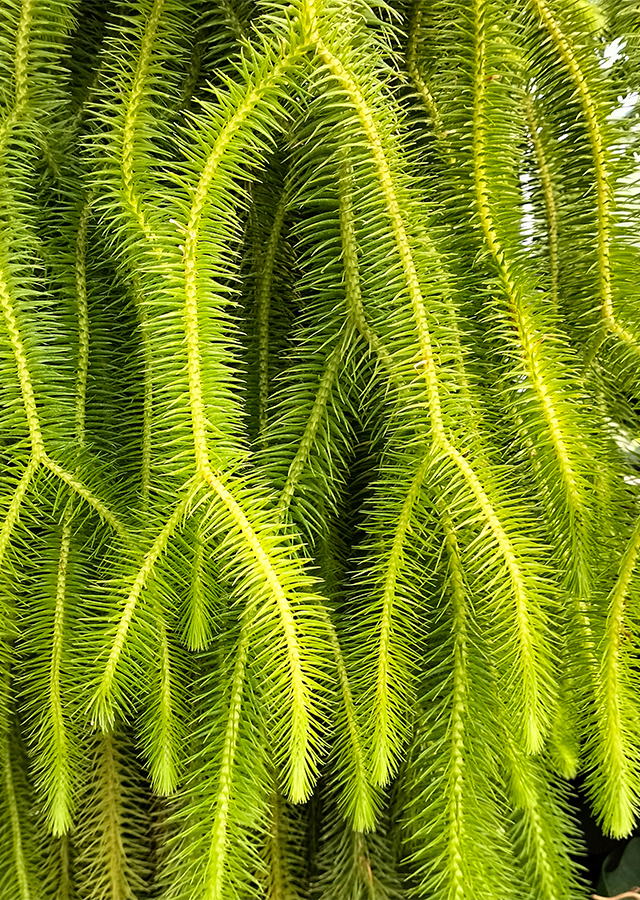
- Stem thin (4 mm wide), green, becoming brownish with age, characteristic branching forming a forked branching pattern.
- Leaves pale to yellowish green, narrowly linear and feather-like, curved at 60-90° along the stem axis.
- Bulblets (gemmae) form at the base of the upper leaves during the end of each annual growth cycle.
Cultivation
- Propagation through modified stem cuttings, bulblets (which fall to the ground when mature, and sprout to form new plants), and spores.
- For stem cuttings, remove the apical portion (5-15 cm) from the stock plant, lay it horizontally on a well-drained soilless medium, and cover the cut end with moist medium. This propagation can be done in a terrarium to maintain humidity. The upward-facing shoot tip is ideal material for stem cuttings.
Chemical Content
Alkaloids such as huperzine A (Hup A), huperzine B (B), N-methyl-huperzine B, huperzinine, lycoporine A, and carinatumine A.
Benefits
Used to treat several brain function disorders, including Alzheimer's disease, Parkinson's, bruises, tension, swelling, schizophrenia, myasthenia gravis, is an aphrodisiac for men and women, treats wounds, skin problems, back pain.
Local Names
Ikur-ikur biang (Sumatra Utara).
Traditional Recipes
The following recipes reflect traditional knowledge passed down through generations, not a substitute for professional medical diagnosis or advice. Consult a healthcare provider before use.
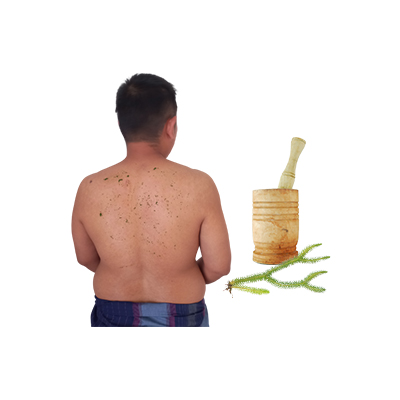
1. Treats back pain
- Prepare an adequate amount of taratulit plant and wash until clean.
- Grind until it becomes a paste.
- Apply the leaf paste to the back.
Reference Sources
- Royal Botanic Gardens, Kew. Plants of the World Online: Huperzia squarrosa (G.Forst.) Trevis. hhttps://powo-science-kew-org.translate.goog/taxon/urn:lsid:ipni.org:names:1136473-2?_x_tr_sl=en&_x_tr_tl=id&_x_tr_hl=id&_x_tr_pto=sc. 8-07-2022.
- Flora Fauna Web. 2022. Phlegmariurus squarrosus. https://www.nparks.gov.sg/florafaunaweb/flora/3/7/3745. 8-07-2022.
- S. D. Yumkham dan P. K. Singh 2010. Huperzia squarrosa (G. Forst.) Trev. (Lycopodiaceae) in Manipur: Taxonomy and Biological Aspects. Taiwania, 56(2): 157-164, 2011.
- Sri Hartini. 2008. Pusat Konservasi Tumbuhan-Kebun Raya Bogor LIPI: Huperzia spp. di Kebun Raya Bogor. Warta Kebun Raya 8(1), Mei 2008. 8-07-2022.