Hura crepitans L.
Summary
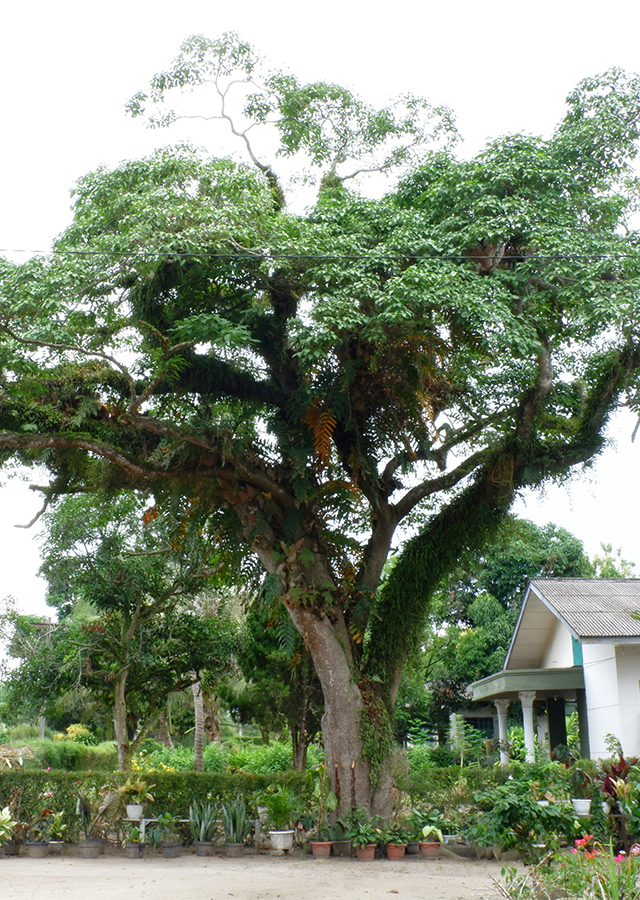
Pohon roda (Hura crepitans) is a large tree up to 40 meters tall in its native habitat of the Euphorbiaceae family, native to tropical America, named for its wheel-shaped fruit. Its sap is highly toxic and dangerous to the eyes, though its seed oil can be processed into biodiesel. Pohon roda is traditionally believed to be a laxative and to help treat skin diseases such as leprosy.
Agroecology
Pohon roda can be found growing at elevations from sea level up to 1,220 m above sea level. Able to grow well in sandy loam soil, fertile, well-drained with full sunlight intensity. Mature plants are drought tolerant. Consistent with its preference for sandy loam soil, this plant is commonly found in coastal regions.
Morphology
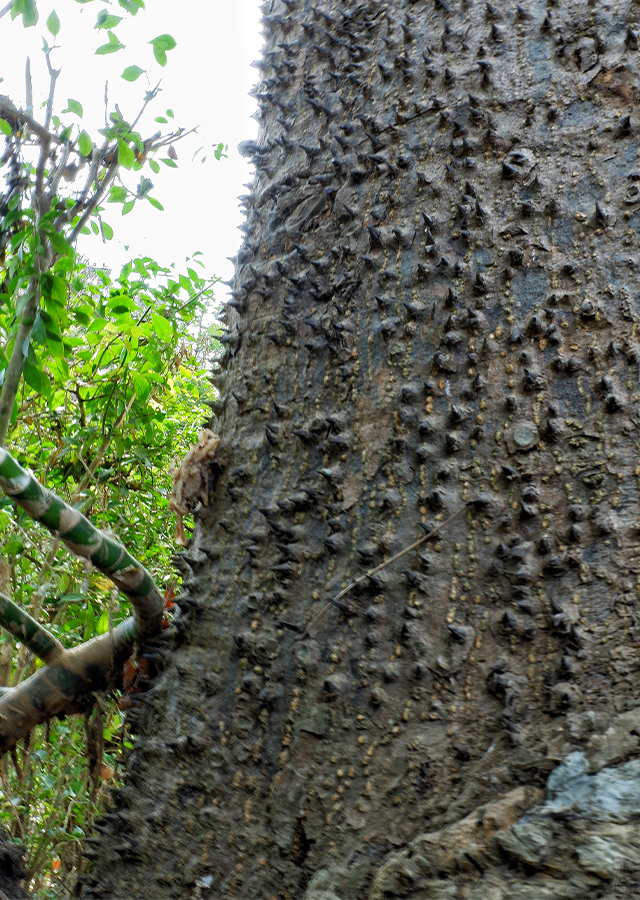
- Stem straight, many-branched, densely thorny surface, cone-shaped thorns, gray bark, exudes milky white and toxic sap. Umbrella-shaped crown.
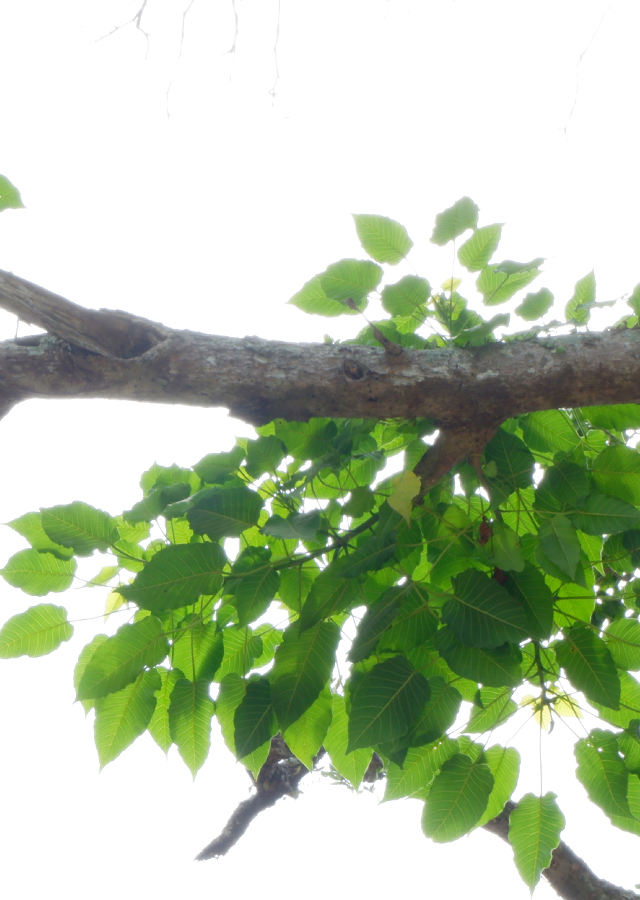
- Leaves single, alternate position, green in color, stalked, heart-shaped leaf base, tapering leaf tip, wavy leaf edges, thin paper-like texture, pinnate veins, glossy upper surface and paler, duller underside.
- Flowers male in a cluster like a monument emerging from the twig tip, red in color with small, almost invisible sepals, while female flowers emerge from leaf axils, reddish-brown in color.
- Fruit round shaped like a wheel or pumpkin, longitudinally grooved on the outside, concave at the top and base. Green in color and turning reddish-brown when ripe. Mature fruit will split open and its seeds released and fall.
- Seeds flat, thick, smooth, brown in color, small with an average diameter of about 1-5 cm.
Cultivation
- Propagated generatively (seed) and vegetatively (cuttings). Planting through seed is done by pre-sowing first.
- Plants 5-8 months old can be transplanted to polybags containing planting media of soil, sand, manure or compost in a 1:1:2 ratio. Plants 2-3 years old are ready to be planted in the garden.
Chemical Content
Hexahydrohuratoxin, ketoenal, glycoside, alkaloid, flavonoid, tannin, steroid, triterpenoid, saponin, phenolic compounds, daphnetoxin acid, huratoxin, apocynin, glucosamine lectin, methylpentadecanoate.
Benefits
Laxative, remedy for vomiting, treats elephantiasis, skin disease (leprosy, herpes), rheumatism, worm infections. Has antimicrobial and anti-inflammatory activity.
Simplisia
- Prepare pohon roda fruit then wash thoroughly.
- Once washed then drain.
- Dry in direct sunlight for several days or with an oven at 40°C until moisture content reaches 10%.
- Once dry then grind into powder.
- Pack the simplisia powder in a clean, airtight plastic or container.
Local Names
Kuku macan or Kuku harimau (Central and East Java), Ki Kasymir or Ki Semir (West Java), Kalpataru, Huru, Kemiri cina, Buta-buta.
Traditional Recipes
The following recipes reflect traditional knowledge passed down through generations, not a substitute for professional medical diagnosis or advice. Consult a healthcare provider before use.

1. Laxative
- Take pohon roda fruit seeds as needed.
- Roast until half-cooked then peel or shape into pills.
- Mix with honey.
- Drink.
2. Herpes
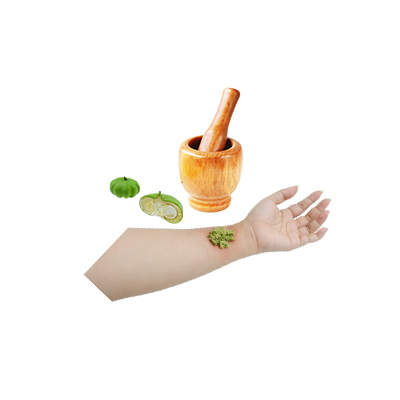
- Take fruit as needed then wash thoroughly.
- Grind the fruit into a paste.
- Apply to the skin.
Reference Sources
- Oloyede GK et al. 2018. Chemical constituents of sandbox tree (Hura crepitans Linn.) and antihepatotoxic activity of the leaves and stem bark extracts. Academic Journals. Conference Proceedings.
- Simatupang EL, S. Bahri, E. Saputra. 2017. BIODIESEL DARI MINYAK BUTA-BUTA (HURA CREPITANS LINN) DENGAN MENGGUNAKAN KATALIS Ni/LEMPUNG. Jom FTEKNIK 4(1).
- Wihermanto. 1998. Mengenal Tanaman Buah Roda (Hura crepitans L.). Warta Kebun Raya 2(1).
- Royal Botanical Garden. 2017. Plants of the World Online: Hura crepitans L. http://www.plantsoftheworldonline.org/taxon/urn:lsid:ipni.org:names:350060-1. 08-09-2021.
- Useful Tropical Plants Database. 2021. Hura crepitans. https://tropical.theferns.info/viewtropical.php?id=Hura+crepitans. 08-09-2021.
- Flora Fauna Web. 2021. Hura crepitans. https://www.nparks.gov.sg/FloraFaunaWeb/Flora/2/9/2966. 08-09-2021.