Hydrocotyle sibthorpioides Lam.
Summary
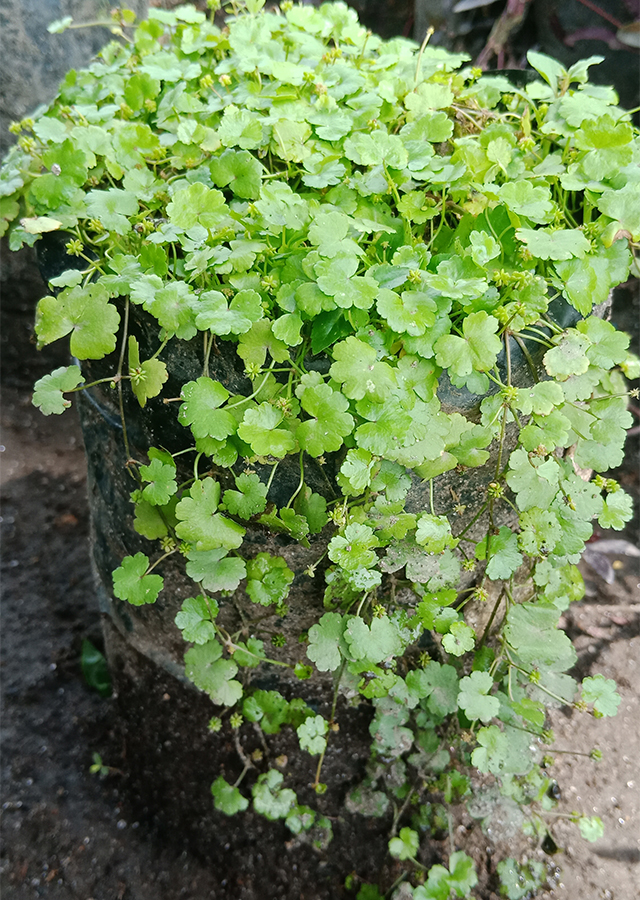
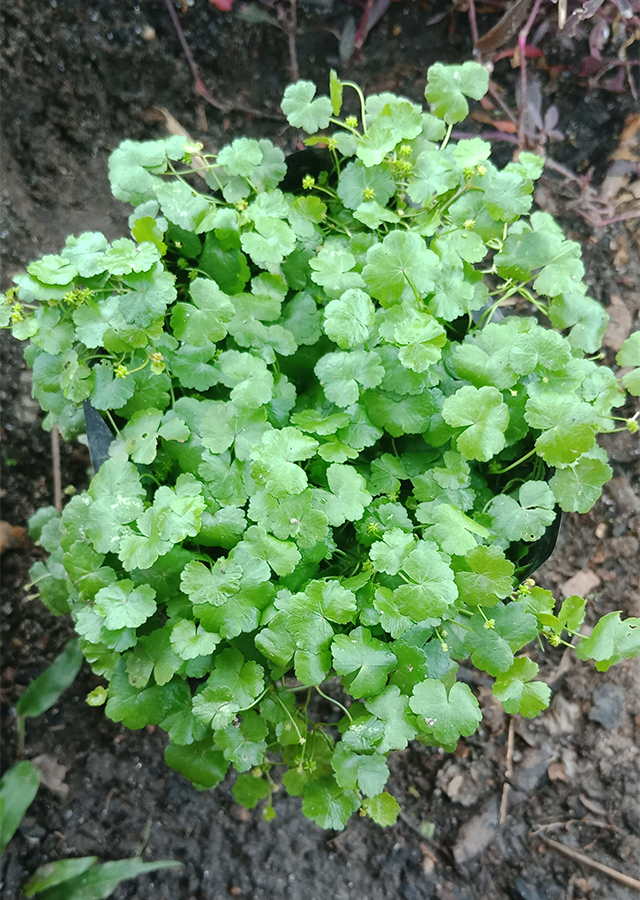
Patikim (Hydrocotyle sibthorpioides) is a low creeping plant, only 10 cm tall but spreading up to 30-50 cm, of the Araliaceae family, distributed from Africa and Asia to California and southern Australia. Its tiny leaves can be eaten as a raw or cooked vegetable. Traditionally, patikim is believed to address abscesses, boils, hepatitis, and help relieve sinusitis.
Agroecology
Generally grows in lowlands up to elevations of 1,500 m above sea level with moist soil conditions and full sunlight or shade. Optimal temperature between 10-30°C, soil pH 5-7. This plant can grow in various habitats, from dry areas to waterlogged areas and is sometimes found as a weed in moist lawns.
Morphology
- Stem soft, branching, jointed, green in color, often rooting at the joints.
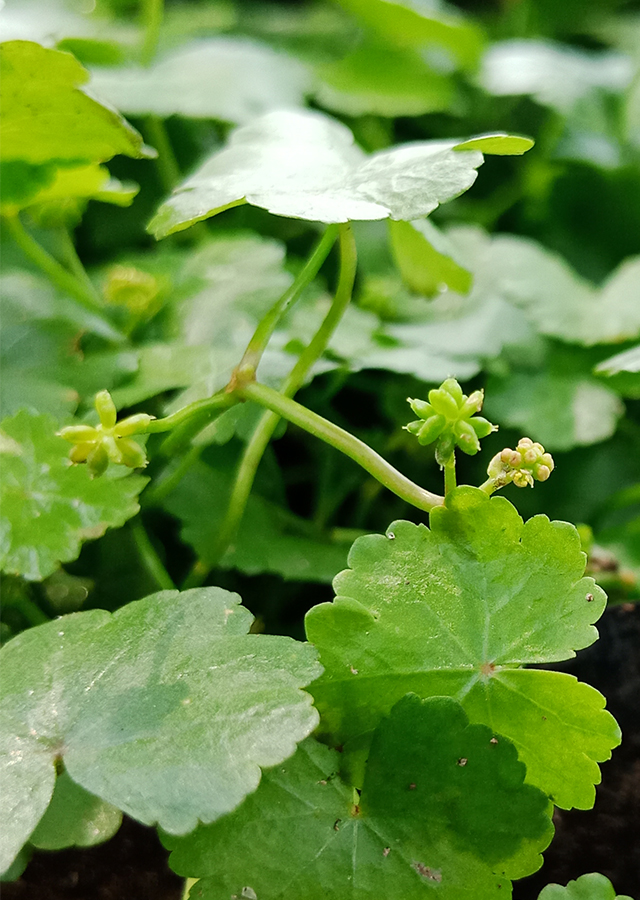
- Leaves compound, alternating position, serrated inverted egg shape, light green color, petiole length up to 6 cm.
- Flowers small, emerging from leaf axils, yellowish-white in color, funnel-shaped corolla.
- Fruit oblong, yellow to brown in color, beak-like tip, reddish-brown when ripe, splits open when touched.
- Seeds small and flat shaped.
Cultivation
Cultivation
- Propagated generatively (by seed) and vegetatively (stem cuttings).
Chemical Content
Bioactive Compound Content
- Phenolics, flavonoids, alkaloids, terpenoids, daucosterol, genistein and daidzein, coumarin and hyperin.
Benefits
Benefits
- Treats abscesses, boils, wounds, bruises, itching, cirrhosis, colds, cough, fever, sore throat, hepatitis, hepatoma, influenza, sinusitis, asthma, helps relax the aorta and blood vessels.
Simplisia
Not yet available
Local Names
Antanan beurit, Pegagan embun, Antanan leutik (Sunda), Katepan, Andem, Semanggi, Redeng (Java), Take cena (Madura), Tikim (Jakarta), Semanggi gunung.
Traditional Recipes
The following recipes reflect traditional knowledge passed down through generations, not a substitute for professional medical diagnosis or advice. Consult a healthcare provider before use.
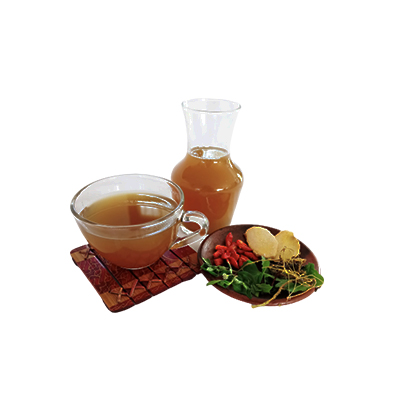
1. Acute Hepatitis with Jaundice and Chronic Hepatitis
- Prepare 60 g patikim, 60 g false daisy, 15 g kie cie (fructus lycii), 15 g ginger.
- Wash all ingredients thoroughly then boil with 800 ml water until reduced to 400 ml.
- Drink twice a day, 200 ml each time. The kie cie can be eaten
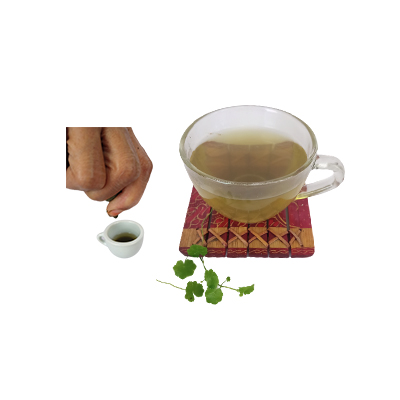
2. Shortness of Breath (Asthma)
- Boil 10-25 g fresh patikim herb with an adequate amount of water. Drink the decoction.
- Pound the patikim herb then squeeze. Drink the extracted liquid.
Reference Sources
- Prosea. 2016. Hydrocotyle sibthorpioides. https://uses.plantnet-project.org/en/Hydrocotyle_sibthorpioides_(PROSEA) 07-11-2019
- Ken Fern. tropical. theferns. info. http://tropical.theferns.info/viewtropical.php?id=Hydrocotyle+sibthorpioides 22-05-2020.
- Garg M, Devi B, Devi R. 2017. In vitro antibacterial activity of biosynthesized silver nanoparticles from ethyl acetate extract of Hydrocotyle sibthorpioides against multidrug resistant microbes. Asian J. Pharm. Clin. Res. 10(6): 263-266
- Badrunasar Anas & Santoso Harry Budi. TUMBUHAN LIAR BERKHASIAT OBAT. http://balitbangtek-hhbk.org/2020/05/unggah/file-publikasi/Digital-BUKU-GULMA_OBAT.pdf 15-01-2021
- Stuartxchange. Philippine Medicinal Plants. Kanapa. http://www.stuartxchange.org/Kanapa . 05-03-2021.