Impatiens platypetala Lindl.
Summary
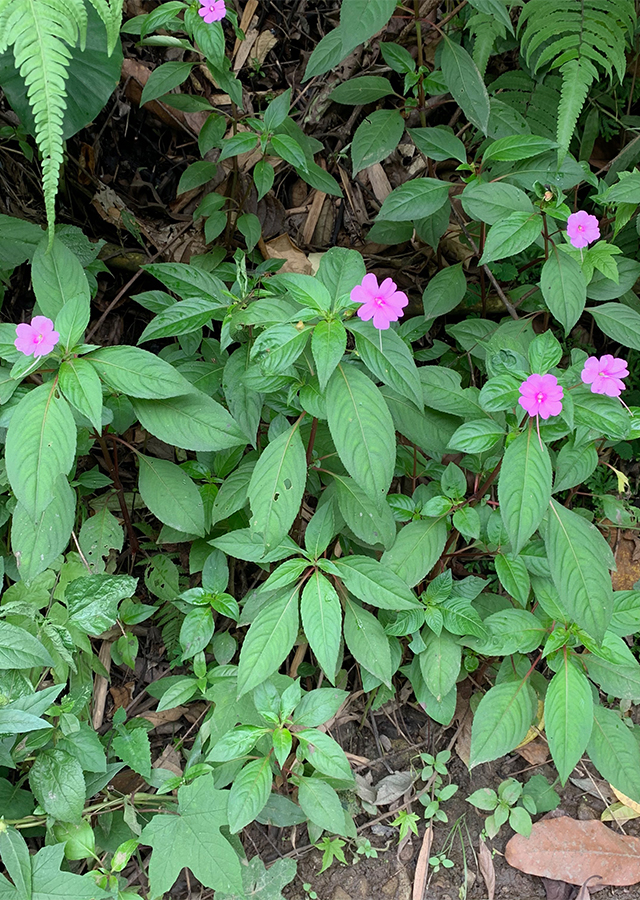
Bunga pancur (Impatiens platypetala) is a herb 30-100 cm tall of the Balsaminaceae family, native to South and Southeast Asia, introduced to the Americas in the 19th century. This plant generally grows in tropical mountain forests and is widely distributed across Java. Traditionally, bunga pancur is believed to help reduce swelling, speed the healing of broken bones, and promote menstruation.
Agroecology
This plant can live in semi-tropical areas, but cannot survive in dry and arid regions. Grows naturally from elevations of 0-1,250 m above sea level in wetlands.
Morphology
- Root a taproot.
- Stem succulent, soft, round, branched, greenish in color.
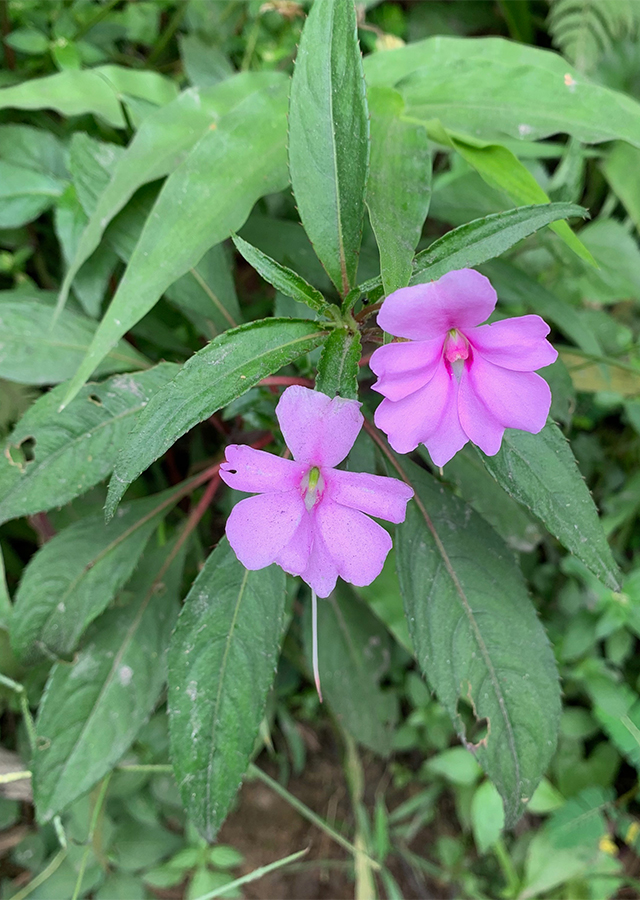
- Leaves light green, 6-15 cm long, 2-3 cm wide.
- Flowers elliptical, easily splitting open, when ripe splits into 5 coiled sections, 1-3 flowers clustered together, petals elongated, 5 in number. Flowers red, orange, purple, and white.
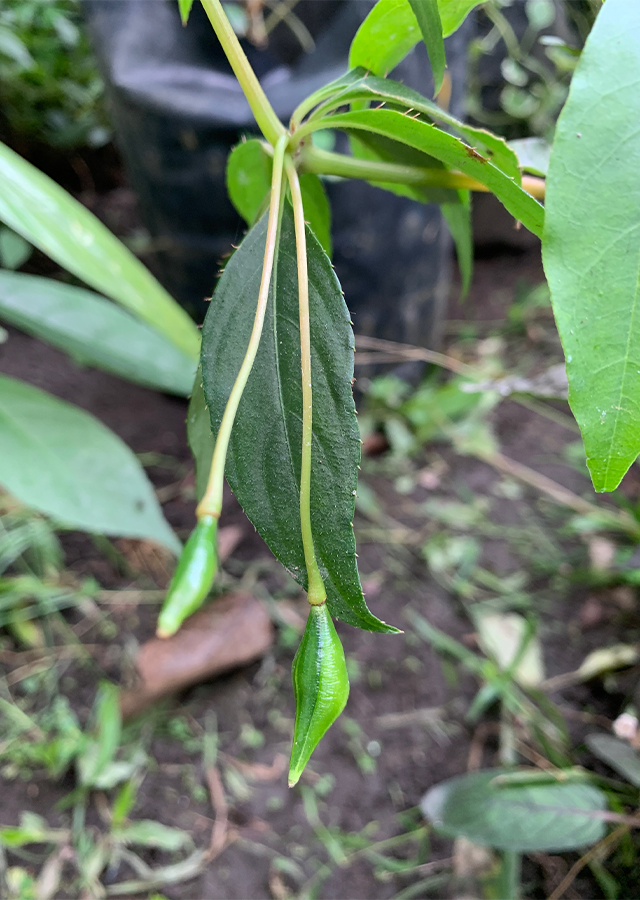
- Fruit green when young and yellow when mature, oblong round capsule shape.
Cultivation
- Propagated by scattering seeds on planting media.
- Make planting holes spaced 8-30 cm apart.
- The moisture of the planting media is always maintained. Maintenance is done by pruning the plant so its stem does not grow too tall.
Chemical Content
Flavonoid, anthocyanin (cyanidin-3-glycoside), kaempferol, phenolic compounds.
Benefits
Reduces swelling and skin inflammation, treats broken bones, boils, vaginal discharge, high blood pressure, promotes menstruation, rheumatism, lower back pain, stomach ache, and jaundice.
Local Names
Lahine (Sumatra), Kimhong, Pacar cai (Java), Tilanggele duluko (Sulawesi), Bunga jabelu (Maluku)
Traditional Recipes
The following recipes reflect traditional knowledge passed down through generations, not a substitute for professional medical diagnosis or advice. Consult a healthcare provider before use.
1. Stomach ache in children
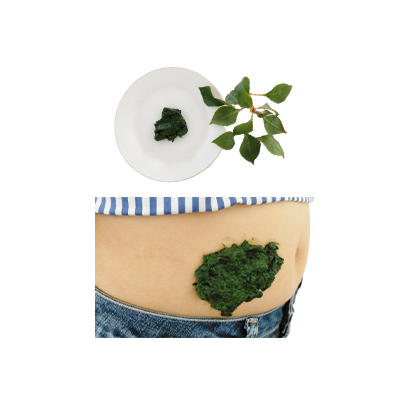
- Prepare 20 g fresh bunga pancur leaves.
- Wash the material thoroughly then pound until mashed.
- Apply to the child's aching stomach.
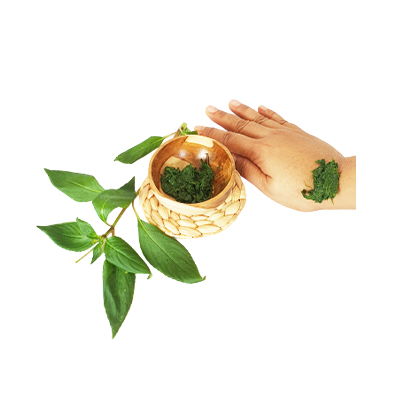
2. Skin irritation
- Pick fresh bunga pancur leaves as needed.
- Wash thoroughly then pound the leaves into a paste.
- Apply to the irritated part of the skin.
Reference Sources
- Globinmed. (No date). Impatiens platypetala Lindley. https://globinmed.com/index.php?option=com_content&view=article&id=62943:impatiens-platypetala-lindley&catid=8&Itemid=319. 17-11-2020.
- Marina Silalahi, Endang C. Purba, Wendy A. Mustaqim. (2019). Impatiens platypetala. Tumbuhan Obat Sumatera Utara pp. 56-57. UKI Press. http://repository.uki.ac.id/649/1/draft_pt2.pdf. 17-11-2020.
- Taha, Rosna, M . (2016). PROSEA. Impatiens platypetala. https://uses.plantnet-project.org/en/Impatiens_platypetala_(PROSEA) 17-11-2020.
- Fern, Ken. (2019). Useful Tropical Plants. Impatiens platypetala Lindl. http://tropical.theferns.info/viewtropical.php?id=Impatiens+platypetala. 16-02-2021.