Indigofera hirsuta L.
Summary
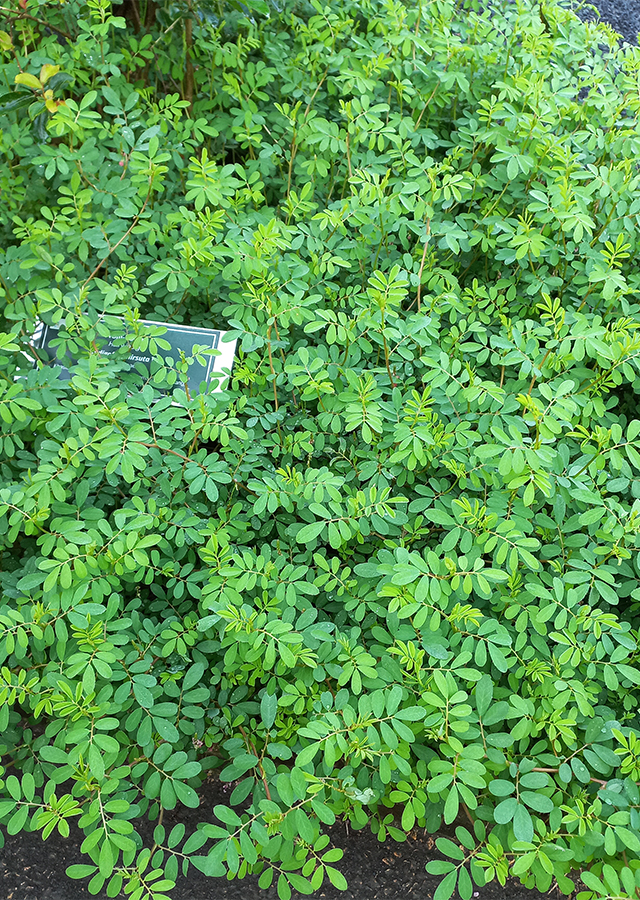
Tom-toman (Indigofera hirsuta) is an annual herb up to 1.5 meters tall of the Fabaceae family, native to Africa and Madagascar through Australia. Like common indigo, this plant produces natural indigo dye, besides serving as ground cover to prevent erosion and green manure. Tom-toman is traditionally used to treat diarrhea, back pain, and liver disorders.
Agroecology
Tom-toman is a plant that grows in humid tropical regions, and is found at elevations up to 1,350 m above sea level. This plant is not tolerant of frost and waterlogging. Grows best in areas where annual daytime temperatures are in the range of 22-30°C, in full sunlight, but can tolerate temperatures of 13-34°C, prefers average annual rainfall in the range of 900-1,700 mm. Grows best in well-drained, fairly fertile soil with a light to medium texture. Prefers a soil pH in the range of 5.5-6.5.
Morphology
- Stem cylindrical covered with orange-brown to reddish-brown hair.
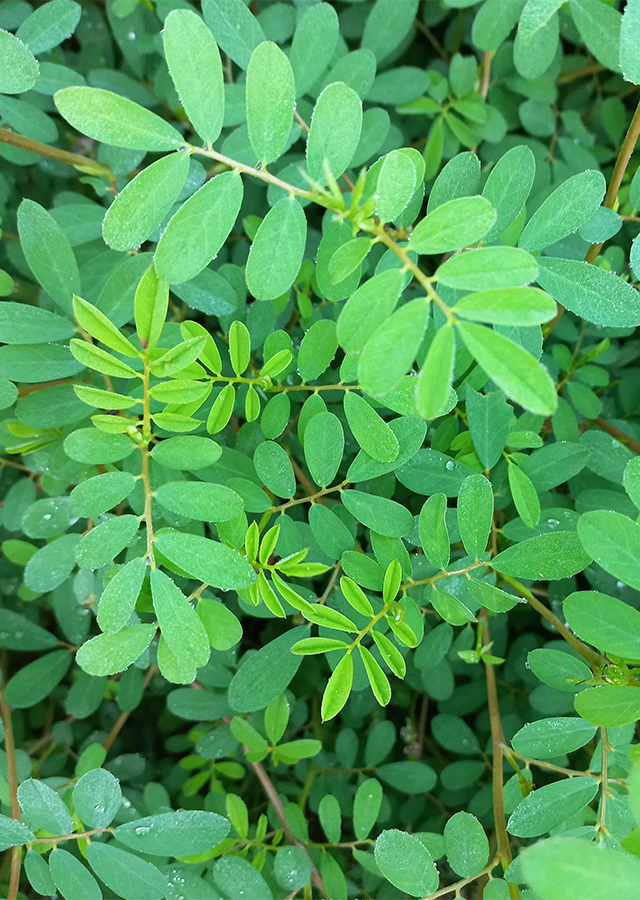
- Leaves compound usually consisting of 5-7 leaflets, elliptical to oblong shaped, but sometimes reaching 9 leaflets (4 cm long, 2.5 cm wide), flat leaf edges, pinnate veins, pilose on both surfaces covered with long, soft hair.
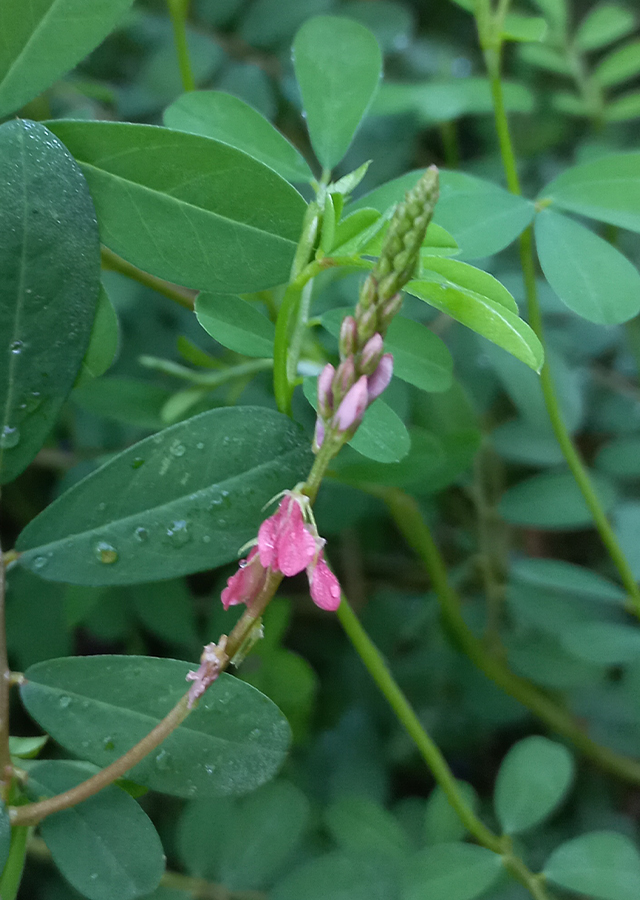
- Flowers red to pink in color, arranged in dense racemes 20-30 cm long, numerous, hairy, pea-flower shaped.
- Fruit straight, narrow pod that is cylindrical to 4-sided (1.5-2 cm long, 2-2.5 mm wide). The pod is hairy, covered with stiff brown hair. Pods hang in dense chains resembling a bottle brush.
- Seeds round or oblong.
Cultivation
Tom-toman propagation is done generatively with seed. Seeds have a hard coat so scarification is needed before sowing to speed up germination. Germination of treated seed takes 7-9 days.
Chemical Content
Phenol, flavonoid, alkaloid, saponin, kaempferol-3-O-β-D-glucopyranoside and kaempferol-7-O-β-D-glucopyranoside, glycoside, steroid.
Benefits
Treats diarrhea and as a stomach remedy, used for brain disorders, back pain, lotion for yaws, treats liver problems, lung problems, paralysis, epilepsy, seizures, kidney, hemorrhoids, venereal disease, and food poisoning.
Local Names
Jukut lulut, Tarum (West Java), Tebawang amjak (Sulawesi), Tom (Java), Taum (Bali), Talung (East Nusa Tenggara).
Traditional Recipes
The following recipes reflect traditional knowledge passed down through generations, not a substitute for professional medical diagnosis or advice. Consult a healthcare provider before use.
1. Diarrhea
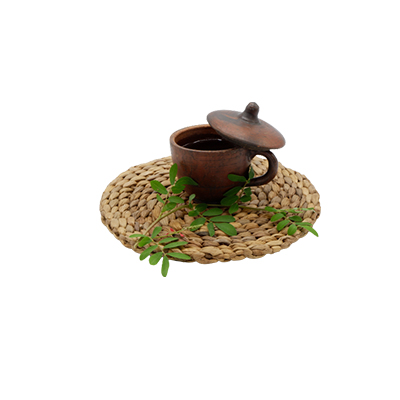
- Take tom-toman leaves as needed, wash thoroughly.
- Boil the leaves until boiling.
- Strain the decoction.
- Drink.
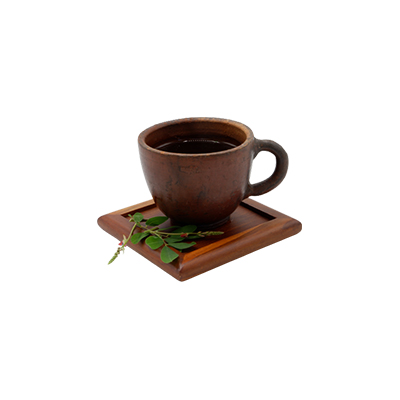
2. Brain disorders
- Wash tom-toman leaves as needed thoroughly.
- Boil the leaves until boiling.
- Strain the decoction.
- Drink.
Reference Sources
- Royal Botanic Gardens. 2017. Plants of the World Online: Indigofera hirsuta L. https://powo.science.kew.org/taxon/urn:lsid:ipni.org:names:499456-1. 10-09-2021.
- Useful Tropical Plants Database. 2021. Indigofera hirsuta. https://tropical.theferns.info/viewtropical.php?id=Indigofera+hirsuta. 10-09-2021.
- CAB International. 2021. Indigofera hirsuta (hairy indigo). https://www.cabi.org/AppError/NotFound?aspxerrorpath=/datasheet/28601. 10-09-2021.
- Flora Fauna Web. 2021. Indigofera hirsuta L.https://www.nparks.gov.sg/florafaunaweb/flora/5/9/5968. 10-09-2021.
- Stuartxchange. 2018. Philippine Medicinal Plants: Taiuman. http://www.stuartxchange.org/Taiuman. 10-09-2021.