Intsia bijuga (Colebr.) Kuntze
Summary
Intsia bijuga or merbau air is widely distributed across coastal islands of the Indian and Pacific Oceans, including Madagascar and the Seychelles, and is listed as vulnerable by the IUCN. In Fiji, this tree was once considered sacred, with a leaf decoction believed to cleanse the body of evil spirits, while its hard, termite-resistant wood is widely used for furniture, canoes, and even coffins. Based on its function as a medicinal plant, merbau air is traditionally believed to relieve diarrhea, dysentery, rheumatism, and various other ailments.
Agroecology
The habitat of Intsia bijuga is generally found growing in undisturbed moist forest in eastern coastal zones, also found in coastal areas, often in zones behind mangrove forests, but also found inland up to elevations of 600 m asl. Usually grows in areas with mean annual rainfall of 2,000-3,000(-3,500) mm, with up to 3 dry months, and mean annual temperature around 24-27°C, in well-drained sandy soil media with a pH of 4.7-5.3. Intsia bijuga also has some resistance to salt spray and saline soil as well as wind. However, I. bijuga cannot tolerate longer drought periods.
Morphology
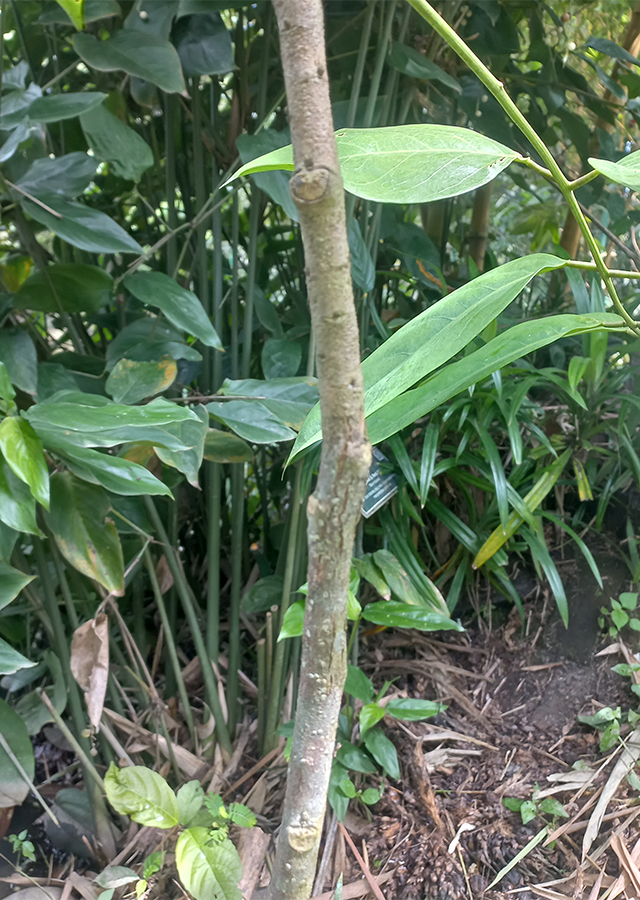
- Trunk often branching low but sometimes unbranched up to 18 m. Bark surface smooth, pale gray to pale brown with an orange tinge. Inner bark thick, fibrous, pale red to pale yellowish brown, and brown-spotted. Crown rounded to umbrella-shaped, dense.
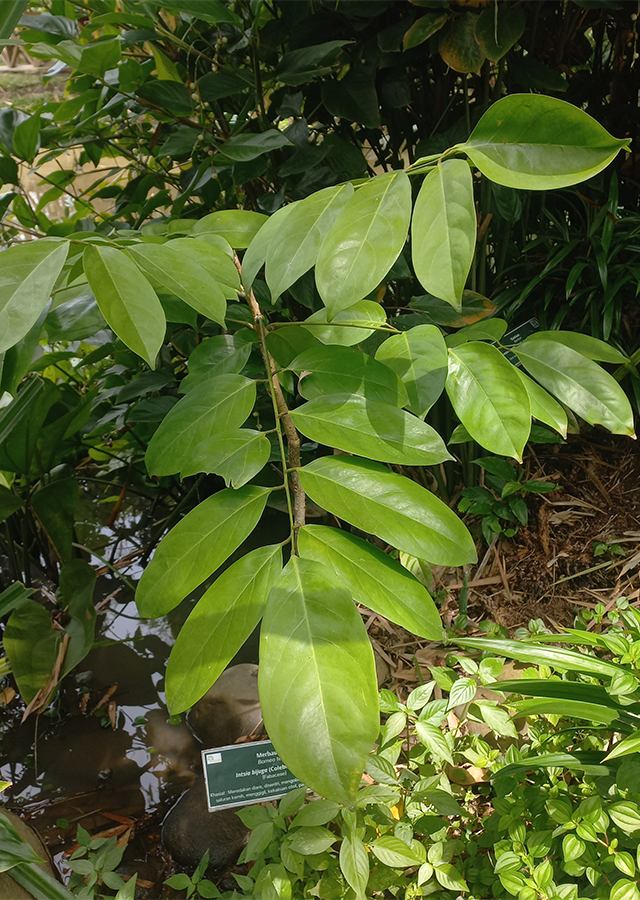
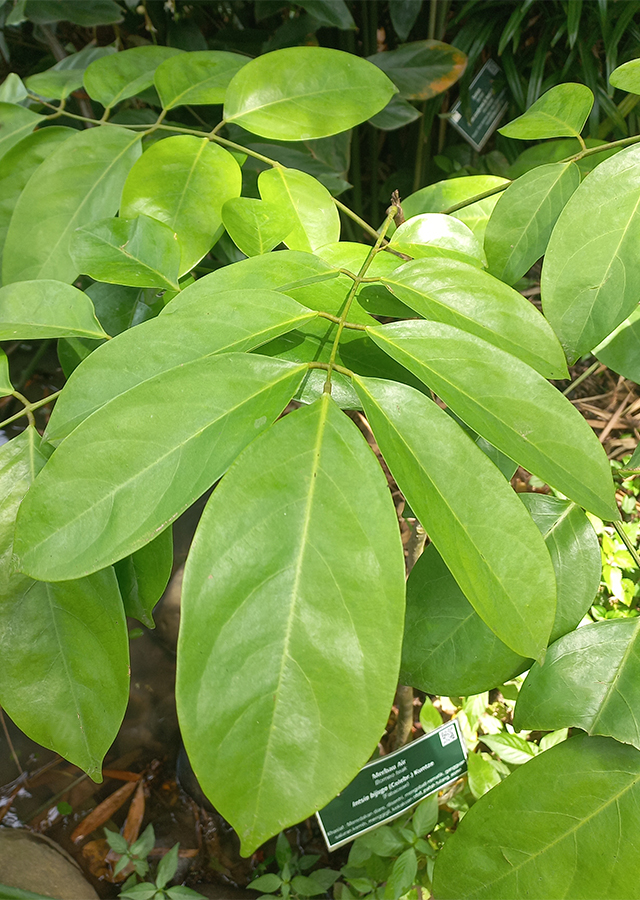
- Leaves alternate or spirally arranged, paripinnately compound with (1-)2-3 pairs of leaflets, stipules fused at the base. Petiole thick, 1-2 cm long, rachis up to 8 cm long. Leaflets asymmetric, ovate or elliptic to nearly round, obtuse to rounded, often slightly notched at the tip, margin entire, surface rough, hairless, veins pinnate with 12-20 pairs of lateral veins.
- Flowers bisexual, zygomorphic, fragrant, white or reddish, pedicel about 3-5 mm long, with 2 deciduous bracteoles, hypanthium elongated. Sepals 4, unequal, ovate shaped, short-haired. Petal 1, about 1-3 cm long with a claw at the base and a toothed lamina wider than long, with a whitish yellow or pink tinge. Stamens 3, hairy, purple-red. Ovary superior, compressed spindle-shaped, hairy, 1-celled. Inflorescence held in a terminal panicle 6-10 cm long, short-haired.
- Fruit a pod, oblong shaped, flattened, hairless, pale brown, with slightly raised veins, slow to dehisce with 2 coarse to woody valves. Each pod contains 3-9 seeds.
- Seeds discoid to oblong shaped, dark brown, more or less covered with removable rusty brown scurf.
Cultivation
- Plant propagation through seed. Propagation with root suckers and cuttings is also possible.
- Germination can take up to nearly 2 years. To promote quick and simultaneous germination, scarification followed by soaking in water is essential. The most effective scarification technique is using a file to abrade the small protrusion on the seed coat (strophiole) located on the opposite side from the hilum. Soaking in concentrated sulfuric acid for one hour is also effective in breaking the seed coat. Seeds should be planted vertically with the hilum facing down, so that the seed coat comes off as the hypocotyl emerges from the soil. Seeds can also be sown directly in the field. The germination rate of scarified seed is 60-95% within 3-20 weeks.
- Seedlings need high light intensity for optimal growth, and in open areas their growth is much faster than under closed canopy conditions. However, trials in Indonesia have shown that seedling growth under shade or under shade trees is faster than in full sun. Proper drainage and high air humidity are important for good growth. Seedlings can be moved to the field at about 3 months old, with a planting spacing of 3 m × 4 m or 5 m × 5 m.
Chemical Content
Tannins, anthrones, flavonoids, glycosidic flavonoids, phenolic compounds, steroids, triterpenes, anthraquinones, coumarins, robinetin (the main polyphenol of the heartwood) together with 3,5,4'-tri and 3,5,3',4'-tetrahydroxystilbenes, dihydromyricetin, myricetin, and naringenin.
Benefits
Relieves diarrhea, dysentery, treats rheumatism, urinary tract disorders, chills, muscle stiffness and rheumatoid arthritis, broken bones, asthma, toothache, sore tongue, headache, scabies, enlarged lymph nodes, diabetes, cough, given to women after childbirth, acts as a laxative.
Local Names
Merbau asam (Kalimantan), Ipi (Kepulauan Sunda Kecil), Merbaoe, Merbau, Merbo, Mirabow, Taritish.
Traditional Recipes
The following recipes reflect traditional knowledge passed down through generations, not a substitute for professional medical diagnosis or advice. Consult a healthcare provider before use.
1. Rheumatism
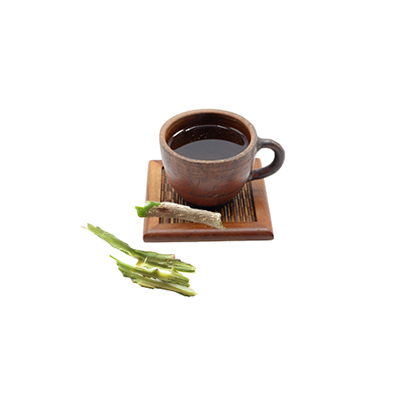
- Take an adequate amount of merbau air bark and wash until clean.
- Boil the bark until it boils.
- Let it cool to warm/cold.
- Strain then drink.
Reference Sources
- Royal Botanic Gardens. Plants of the World Online: Intsia bijuga (Colebr.) Kuntze. https://powo.science.kew.org/taxon/urn:lsid:ipni.org:names:500954-1. 24-09-2022.
- Stuartxchange. 2018. Philippine Medicinal Plants: Ipil. http://www.stuartxchange.org/Ipil. 24-09-2022.
- PROTA4U. Intsia bijuga (Colebr.) Kuntze. https://prota4u.org/database/protav8.asp?g=pe&p=Intsia+bijuga+(Colebr.)+Kuntze. 24-09-2022.
- Flora Fauna Web. 2022. Intsia bijuga (Colebr.) Kuntze. https://www.nparks.gov.sg/florafaunaweb/flora/2/9/2971. 24-09-2022.