Ipomoea indica (Burm.) Merr.
Summary
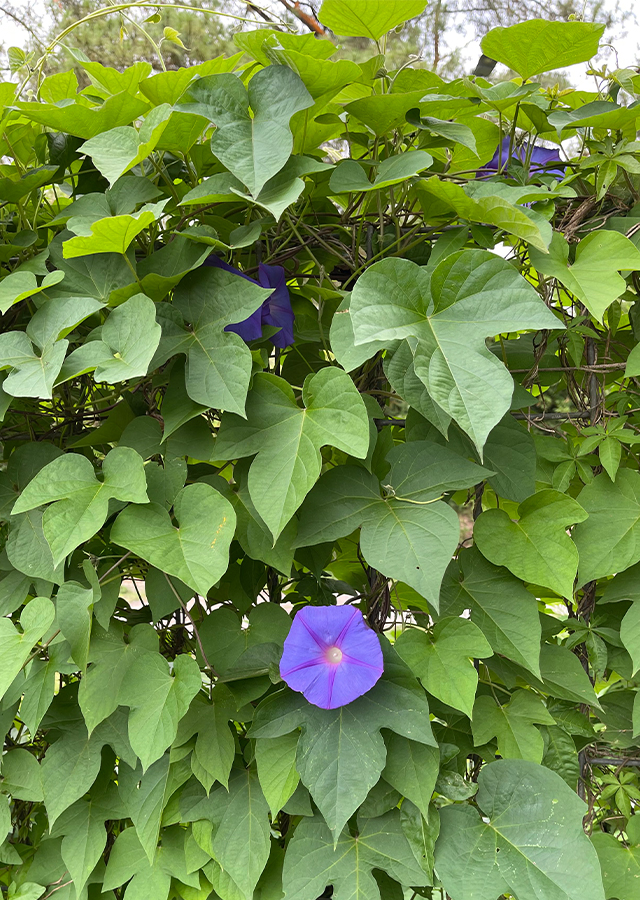
Ocean blue morning glory (Ipomoea indica) is a climbing plant up to 15 meters long from the Convolvulaceae family with an unclear origin, now listed as an invasive species in many countries though popular as a tropical garden ornamental. Its leaves can be used as a substitute for laundry soap. Almost all parts of the ocean blue morning glory are traditionally used to treat dysentery, bronchitis, and skin diseases.
Agroecology
Ipomoea indica is commonly found growing in tropical, subtropical, and wet-climate regions of the world. Generally found in disturbed forests, forest edges, secondary forests, suburban ditches, along roadsides, riverbanks, coastal sand dunes, and waterways. It can also be found and naturalized in seasonal freshwater wetlands, coastal sites, abandoned farmland, and rainforest and moist forest at elevations from near sea level to about 1,250 m asl. This species can grow invasively, especially in degraded natural areas. Its growth favors moist, well-drained, light or sandy loam soil with a pH in the range of 6.1-7.5. It grows best in areas with full sun and mean annual rainfall in the range of 1,000-3,500 mm, with annual temperatures ranging between 18-30°C and not tolerating temperatures below 7°C.
Morphology
- Stem young stems finely hairy, twining slenderly, sometimes rooting at the nodes.
- Leaves alternately arranged, margins entire or 3-lobed, heart-shaped, apex acuminate, green. Upper leaf surface (adaxial) sparsely puberulent, densely puberulent on the lower leaf surface (abaxial).
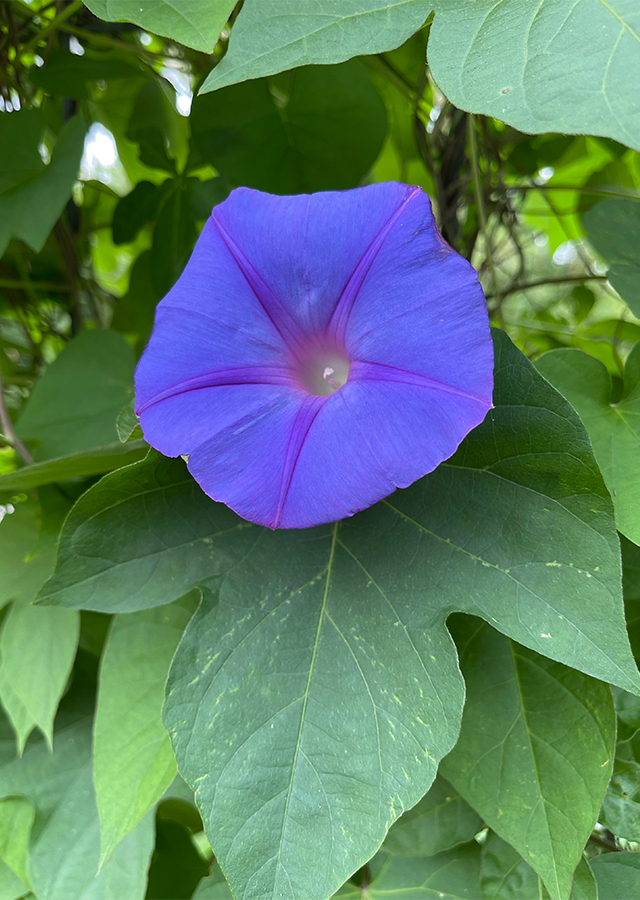
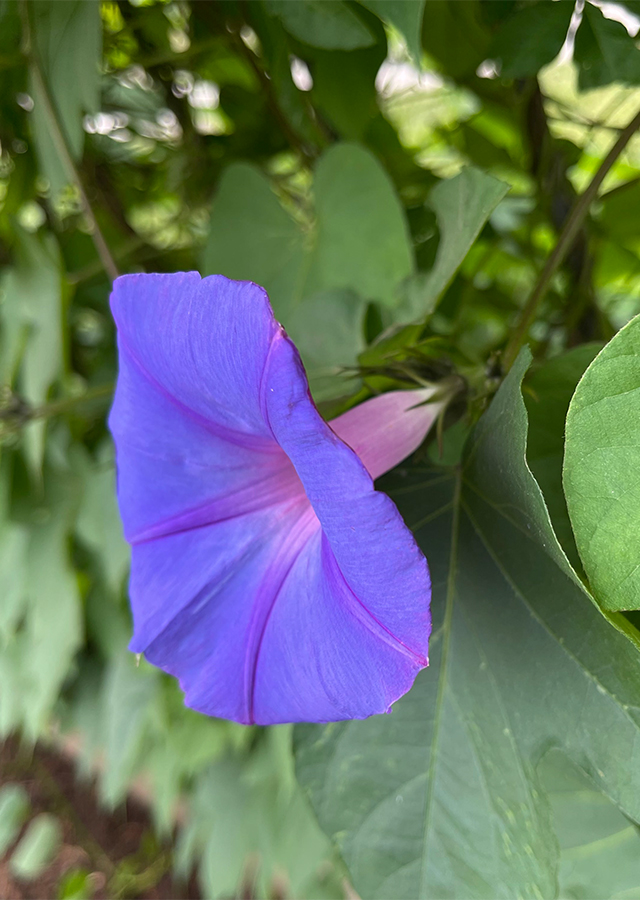
- Flowers large, corolla funnel-shaped, blue to purple with a tube bright blue or bluish purple, reddish purple or red to whitish pink, hairless. Sepals 5, subequal, lanceolate, apex linear-acuminate, sepal hairs silvery white, softly appressed. Stamens 5, unequal, epipetalous, the lower part of the filaments finely white. Bracts 3 per flower, linear. Inflorescence dense umbellate cymes, arranged in 2-12 clusters in the leaf axil.
- Fruit dry (dehiscent), a round, thin capsule, about 1-1.3 cm in diameter.
- Seeds 4-6 per fruit, blackish brown, about 5 mm in diameter, glabrous.
Cultivation
Propagation is generative (seed) and vegetative (stem cuttings). The plant can spread rapidly through discarded rooted stem fragments.
Chemical Content
Linoleic acid, oleic acid, tocopherol, phenolics, flavonoids, polyphenols.
Benefits
Relieves dysentery, dyspepsia, helps heal wounds and inflammation, bronchitis, fever, skin diseases, scabies, treats back pain and sore muscles, is laxative, anti-inflammatory, carminative, depurative (blood-purifying), vermifuge (a wormer).
Simplisia
- Prepare ocean blue morning glory plant seeds, wash clean with running water then drain.
- Dry under the sun or with an oven at 40°C until the moisture content reaches 10%.
- Grind using a blender until it becomes powder.
- Store in a clean, airtight container.
Local Names
Koali awa.
Traditional Recipes
The following recipes reflect traditional knowledge passed down through generations, not a substitute for professional medical diagnosis or advice. Consult a healthcare provider before use.
1. Dysentery
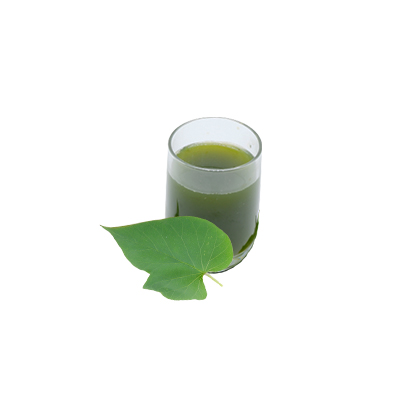
- Take the sap of ocean blue morning glory from crushed leaves.
- Drink to relieve dysentery.
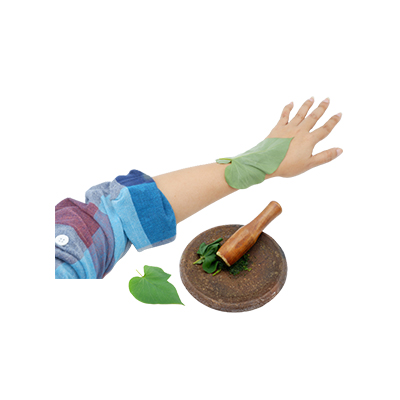
2. Wounds
- Take the sap of ocean blue morning glory from crushed leaves.
- Apply to the wound.
- Wrap with a leaf.
Reference Sources
- Royal Botanic Gardens. Plants of the World Online: Ipomoea indica (Burm.) Merr. https://powo.science.kew.org/taxon/urn:lsid:ipni.org:names:269086-1. 23-02-2022.
- Flora Fauna Web. 2020. Ipomoea indica (Burm.) Merr.. https://www.nparks.gov.sg/florafaunaweb/flora/6/6/6660. 23-02-2022.
- CAB International. 2022. Invasive Species Compendium: Ipomoea indica (ocean blue morning-glory). https://www.cabi.org/isc/datasheet/107833#toPictures. 23-02-2022.
- Useful Tropical Plants Database. 2021. Ipomoea indica. http://tropical.theferns.info/viewtropical.php?id=Ipomoea+indica&redir=Ipomoea+involucrata. 23-02-2022.
- Shrestha S., Rajbhandary S. 2014. Ipomoea indica and Ipomoea triloba (Convolvulaceae) – New Records for Flora of Nepal. The Journal of Japanese Botany, 89(3): 181-185.