Ixora coccinea L.
Summary
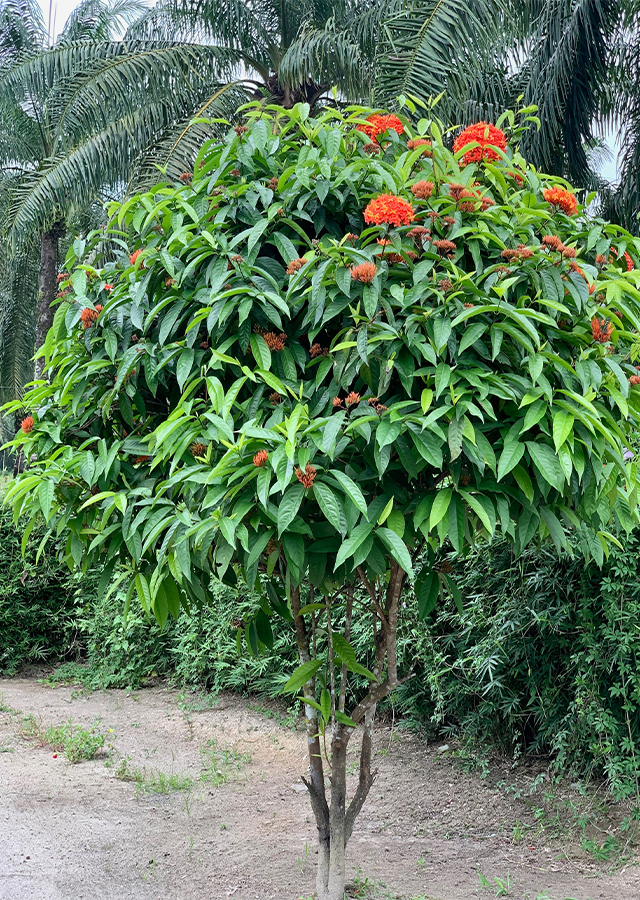
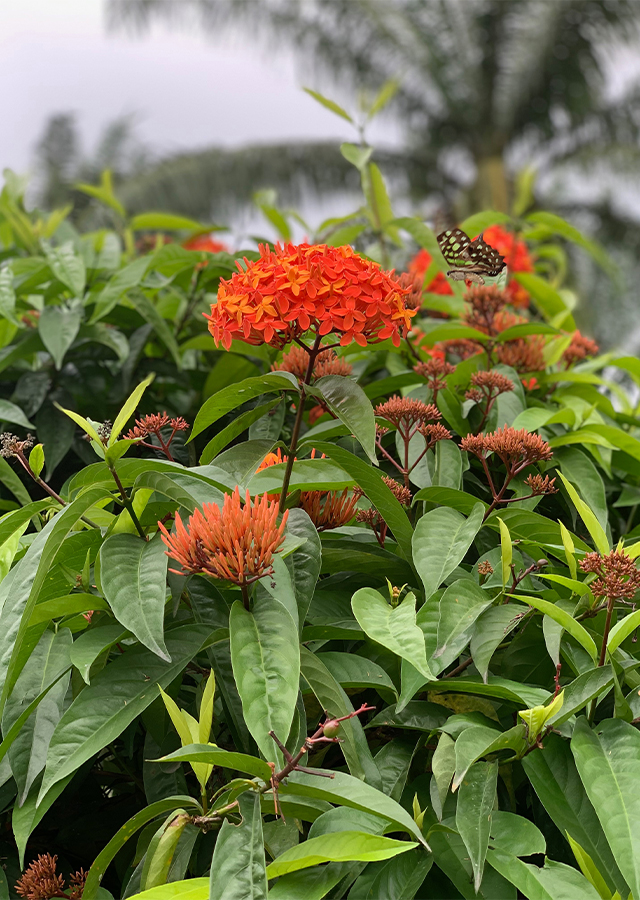
Asoka (Ixora coccinea) is an upright shrub 1-4 meters tall of the Rubiaceae family, originating from South India and Sri Lanka, nicknamed 'West Indian Jasmine' and often used in Hindu ceremonies. Its blazing red flowers are popular as a hedge and ornamental plant throughout Southeast Asia. Traditionally, asoka is also believed to help address dysentery, diarrhea, and boils.
Agroecology
Generally found in tropical rainforests in moist places. Grows well in lowlands as well as highlands, at elevations of 1-1,000 m above sea level, temperature 30-35 °C, and prefers full sunlight.
Morphology
- Roots taproot, brownish in color.
- Stem rough, hard wood, heavily branched, gray in color.
- Leaves single, elongated round shaped, blunt to tapering tip, 7-10 cm long, 5-7 cm wide, dark green, glossy. Leaf stalk very short, almost invisible.
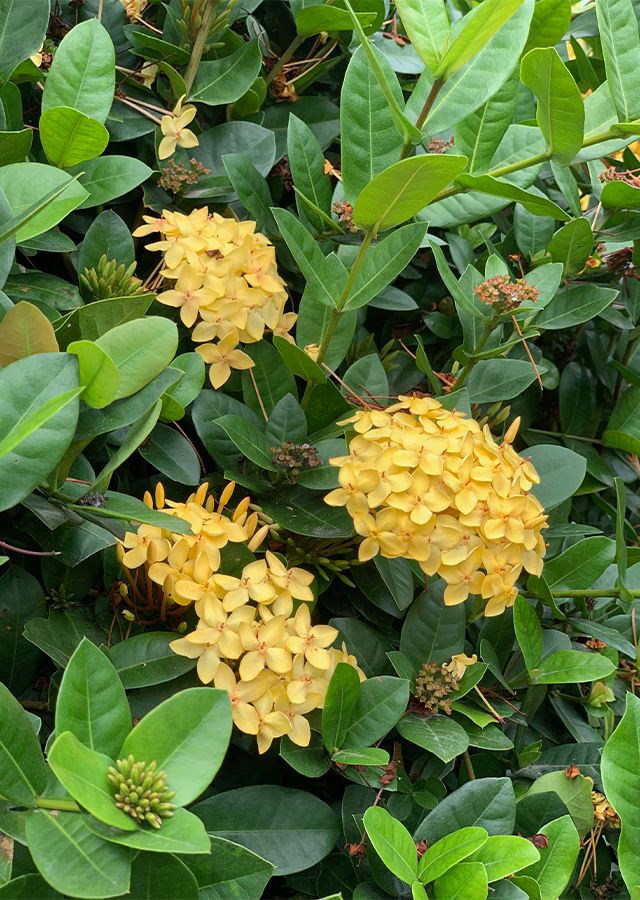
- Flowers compound, 15-50 flowers in one cluster. Each flower tube-shaped with 4-5 open lobes. Petal lobes lance-shaped or egg-lance shaped. Flowers red or orange-red in color. Red stalked.
- Fruit fleshy, round, dark red to blackish-purple in color, consisting of 2 seeds.
Cultivation
Propagated vegetatively (stem or branch cuttings) as well as generatively (seed).
Chemical Content
Has antibacterial, anti-inflammatory, antioxidant, antitumor activity, treats wounds, skin irritation, treats red eyes, dysentery, diarrhea, boils, and bronchitis.
Benefits
Has antibacterial, anti-inflammatory, antioxidant, antitumor activity, treats wounds, skin irritation, treats red eyes, dysentery, diarrhea, boils, and bronchitis.
Local Names
Kembang santen merah (Sumatra), Soka beureum (Sunda), Saya mami (Ternate).
Traditional Recipes
The following recipes reflect traditional knowledge passed down through generations, not a substitute for professional medical diagnosis or advice. Consult a healthcare provider before use.
1. Treating Wounds
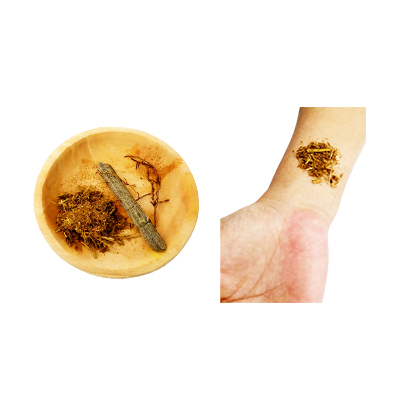
- Prepare an adequate amount of stem and root then pound until fine.
- Apply to the wounded or affected area.
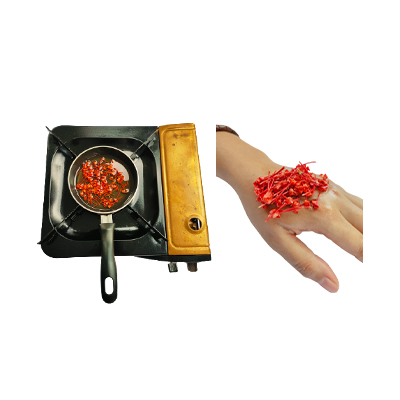
2. Skin Irritation
- Prepare an adequate amount of asoka flowers.
- Wash thoroughly with running water.
- Heat an adequate amount of coconut oil, add the flowers
- Apply the flowers to the irritated area.
Reference Sources
- Stuartxchange. (2019). Philippine Medicinal Plants. Santan. http://www.stuartxchange.org/Santan.html 01-03-2021.
- M.C. Ysrael & J.L.C.H. van Valkenburg. (2016). Pl@nt Use. Ixora (PROSEA Medicinal plants). https://uses.plantnet-project.org/en/Ixora_(PROSEA_Medicinal_plants)) 23-02-2021.
- Fern, Ken. (2014). Useful Tropical Plants. Ixora coccinea. http://tropical.theferns.info/viewtropical.php?id=Ixora+coccinea 01-03-2021.
- Globinmed. (No date). Ixora coccinea L.. https://globinmed.com/index.php?option=com_content&view=article&id=106269:ixora-coccinea-l&catid=286&Itemid=357 23-02-2021.
- CABI. (No date). Invasive Species Compendium. Ixora coccinea(flame-of-the-woods). https://www.cabi.org/isc/datasheet/29175 23-02-2021.
- Healthbenefits.com. Health benefits of Jungle Geranium (Iritasi kulit). https://www.healthbenefitstimes.com/jungle-geranium/ 18-07-2020.
- Ulung Gagas. 2014. Sehat Alami dengan Herbal (Mengobati Luka). 250 Tanaman Berkhasiat Obat. Gramedia Pustaka utama.
- IJPSR.com. PHYTOCHEMICAL AND PHARMACOLOGICAL PROFILE OF IXORA: A REVIEW https://ijpsr.com/PhytochemicalandpharmacologicalprofileofIxora:areview 02-12-2020.