Jacaranda mimosifolia D.Don
Summary
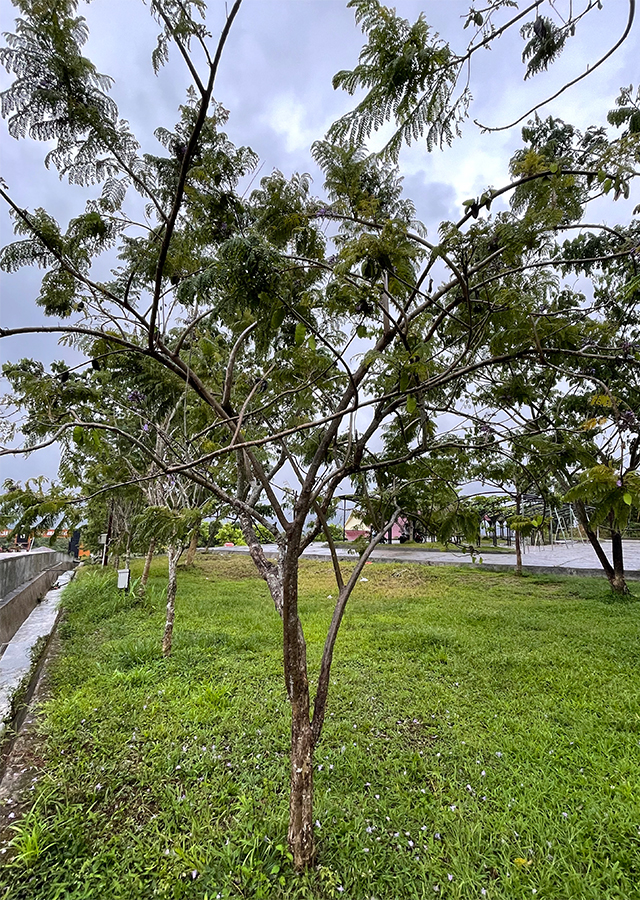
Jacaranda mimosifolia or jacaranda is native to central and eastern South America, covering Uruguay, Argentina, Paraguay, Bolivia, and Brazil, and is now widely introduced as a tropical ornamental thanks to its beautiful flowers. Besides providing shade and functioning as a windbreak, its wood is used to make tool handles and carvings, while in Ethiopia its flowers are an important nectar source for African honeybees. Classified as 'Vulnerable' on the 2011 IUCN Red List, jacaranda is also traditionally used to treat syphilis, amoebic dysentery, and various skin infections.
Agroecology
J. mimosifolia is a plant of tropical and subtropical regions, generally found growing in drier or mesic areas, grasslands, shrublands, riparian forests and other riverside habitats, also in forests and sheltered places such as forested ravines. Grows best in highland areas up to 2,400 m with annual rainfall of 900-1,300 mm, but will also tolerate rainfall up to 2,000 mm. Annual daytime temperature is in the range of 20-34°C, but can tolerate 10-38°C. J. mimosifolia prefers a sunny position, but is not frost hardy. Grows well in well-drained sandy loam soil, although it can survive in poorer shallow soil. Prefers soil with a pH in the range of 6.5-7.5, tolerating 6-8.5. J. mimosifolia is not tolerant of waterlogged soil or clay. However, established plants are tolerant of drought.
Morphology
- Roots deep-rooted.
- Trunk has yellowish white wood, hard, fairly heavy. The bark is thin and grayish brown, smooth when young, becoming finely scaly with age. Twigs reddish brown, slender and slightly zigzag.
- Leaves large, compound, pinnate, alternately arranged, with several pairs of leaflets (13-31 pinnae, each with 10-41 leaflets), hairless or slightly puberulent along the rachis and margins. Leaflets ellipsoidal oblong shaped with parallel venation, tip acute, margin entire.
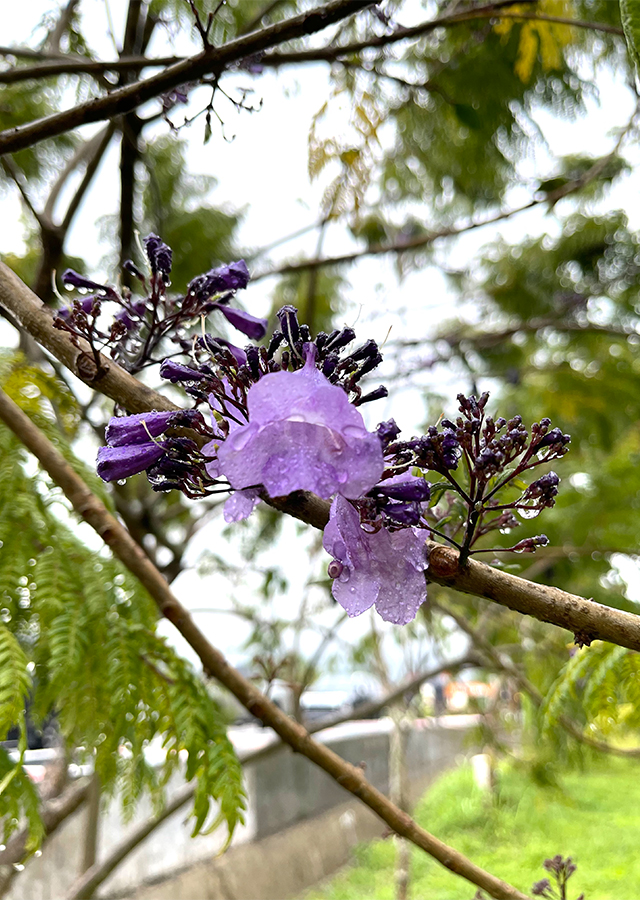
- Flowers described as varying, blue-purple, purple, lavender blue, or light purple. Tube-shaped, flowers appear in open terminal panicles, puberulent branches, calyx small, broadly campanulate, 5-toothed, teeth about 1 mm. Corolla purplish blue, tube white inside, puberulent outside and inside.
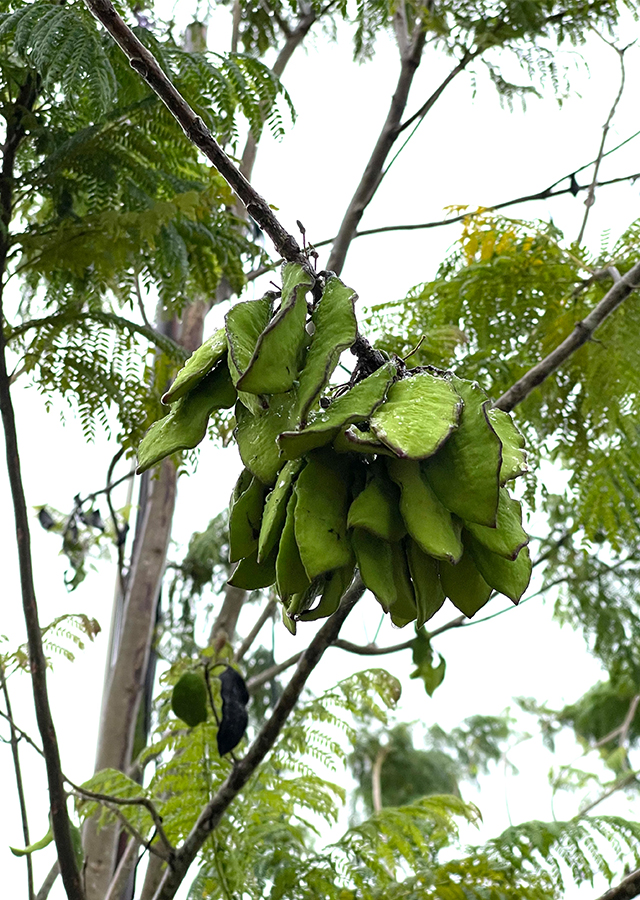
- Fruit a dry, reddish brown capsule, with many seeds, flattened and winged, the tip often shallow, base truncate to subcordate.
- Seeds surrounded by a thin membrane serving as a wing, more or less encircling the seed body.
Cultivation
- Plant propagation can be done through seed. Fresh seed has a germination capacity of 50-92% and generally does not require pre-sowing treatment. The optimal temperature for germination is 25°C and the germination rate is slightly higher in light than in darkness. Seed can last at least 12 months in dry storage.
- Requires fairly substantial care during the first two years, also requiring weeding, regular watering, and tending until it grows well.
- J. mimosifolia can also be propagated through cuttings.
Chemical Content
Triterpenes, flavonoids, acetoside, quinine, phenylpropanoid derivatives, flavonol glycosides, isoquercitrin, fatty acids and anthocyanins, tannins, saponins, steroids, phenylethanoid glucosides, jacaranone.
Benefits
Treats syphilis, amoebic dysentery, neuralgia, varicose veins, hepatitis, diarrhea, heals wounds and skin infections, acne, purifies the blood.
Local Names
Information not found. Further research is needed.
Traditional Recipes
The following recipes reflect traditional knowledge passed down through generations, not a substitute for professional medical diagnosis or advice. Consult a healthcare provider before use.
1. Heals wounds
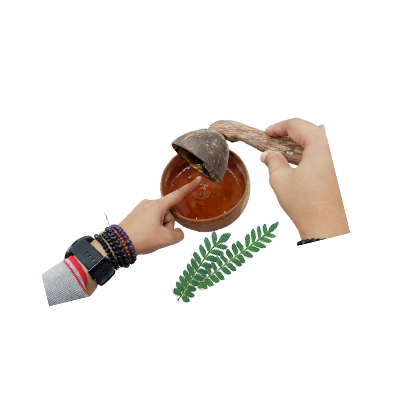
- Take an adequate amount of jacaranda leaves and wash until clean.
- Boil until it boils.
- Let it cool to warm then pour on the wound.