Jasminum sambac (L.) Aiton
Summary
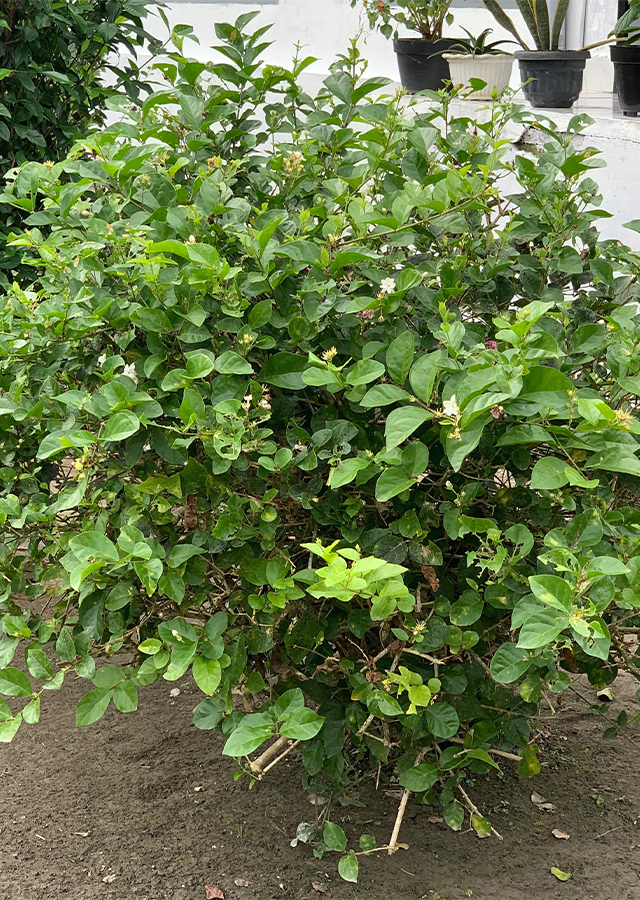
Jasmine (Jasminum sambac) is a shrub up to 3 meters tall of the Oleaceae family, native to India, spreading to the Malay Archipelago and introduced to Java around the 3rd century. As one of Indonesia's three national flowers (Puspa Bangsa), jasmine is widely used in the perfume industry and traditional bridal decoration. In China and Java, its flowers are processed into fragrant jasmine tea.
Agroecology
Grows well in lowlands up to elevations of 800 m above sea level, rainfall 112-119 mm/month and gets adequate sunlight. A suitable growing environment is a hot tropical climate with good drainage.
Morphology
- Root a taproot, branched.
- Stem woody, diameter between 0.5-3 cm, has branches and twigs spreading in all directions, elongated growth.
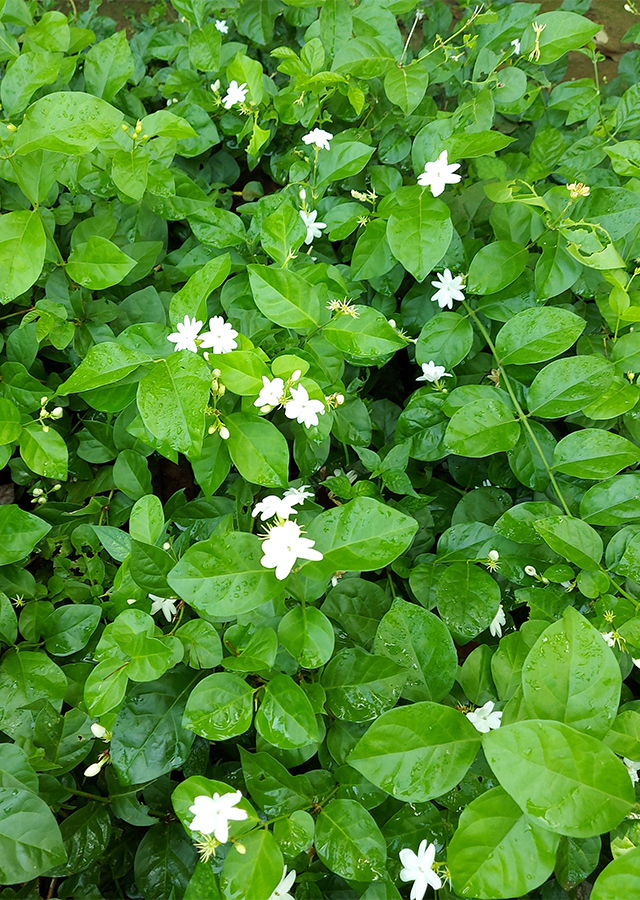
- Leaves single, short petiole, opposite, ovate to oval, pointed tip, rounded base, flat edges, pinnate venation, green to grayish-green.
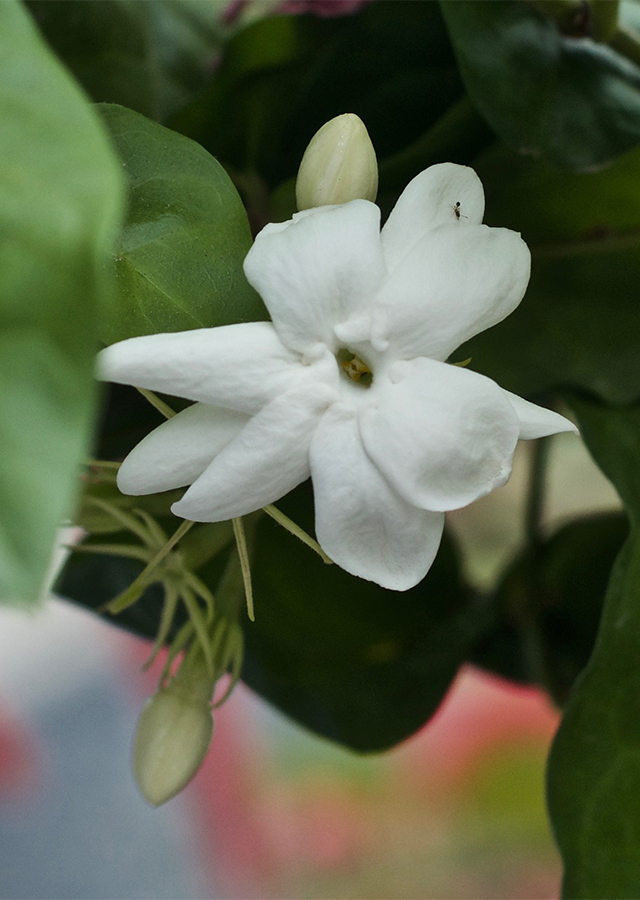
- Flowers appear singly, 3-3.5 cm in diameter. Layered white corolla, fragrant aroma.
- Fruit a glossy berry and black in color surrounded by sepals.
Cultivation
Propagated by cuttings of hardened branches, can also be done by layering basal branches.
Chemical Content
Alkaloid, flavonoid, terpenoid, phenol, tannin, saponin, phytosterol, indole, acetate, linalcohol, benzylic, benzylic alcohol, linalyl acetate, jasmone.
Benefits
Treats skin disease (ringworm, leprosy, boils), swelling from bee stings, fever, headache, has antidepressant, anti-inflammatory, antiseptic, and aphrodisiac activity.
Simplisia
- Choose fresh jasmine leaves, clean off attached dirt, wash then drain.
- Cut the leaves and place on a tray then dry in the sun and cover with a thin dark-colored cloth.
- Once dry, place in a clean, tightly sealed or airtight plastic bag.
Local Names
Melur (Gayo and Batak Karo), Menuh (Bali), Meulu, Riwat (Aceh), Menyuru (Banda), Manduru (Manado), Mundu (Bima and Sumbawa), Malete (Madura).
Traditional Recipes
The following recipes reflect traditional knowledge passed down through generations, not a substitute for professional medical diagnosis or advice. Consult a healthcare provider before use.
1. Swelling from bee stings
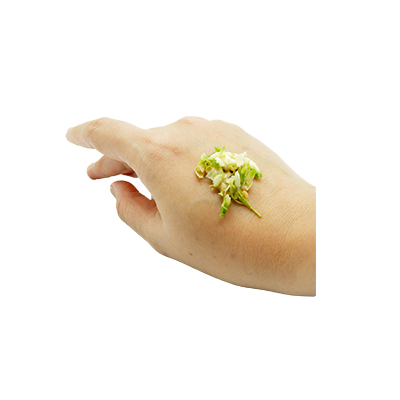
- Prepare 1 handful of jasmine flowers and wash thoroughly, then knead until fine.
- Apply to the part stung by the bee.
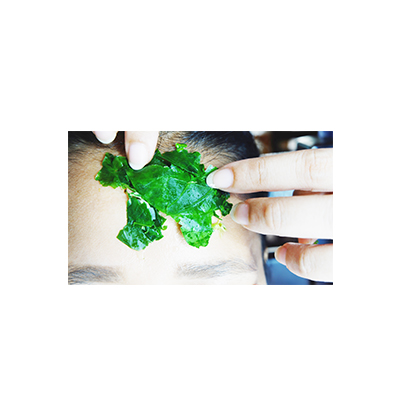
2. Fever and headache
- Knead 1 handful of jasmine leaves and 10 jasmine flowers, then soak in water in a container.
- Use the soaking water to compress the forehead.
Reference Sources
- Kalaiselvi M, Kalaivani K. 2011. Phytochemical analysis and anti lipid peroxidative effect of Jasminum sambac (L.) Ait OLEACEAE. Pharmacologyonline 1: 38-43.
- Kunhachan P, Banchonglikitkul C, Kajsongkram T, Khayungarnnawee A, Leelamanit W. 2012. Chemical composition, toxicity and vasodilatation effect of the flowers extract of Jasminum sambac (L.) Ait.“G. Duke of Tuscany”. Evidence-Based Complementary and Alternative Medicine.
- Mourya N, Bhopte D, Sagar R. 2017. A review on Jasminum sambac: A potential medicinal plant. Int. J. Ind. Herbs Drugs 2(5): 13-16.
- Pasaribu H. 2016. Pemerikasaan secara mikroskopik pada tanaman Melati. Skripsi. Universitas Sari Mutiara Indonesia Medan. Medan
- Prosea. 2016. Jasminum sambac. https://uses.plantnet-project.org/en/Jasminum_sambac_ (PROSEA) 07-06-2019
- Bunga Melati: Jenis, manfaat & gambarnya (Lengkap). 30-01-2018. https://digiyan.com/bunga-melati/. 04-05-2020
- Jenis Bunga Melati “Lengkap Dengan Gambar, Manfaat, dan Ciri-cirinya, Sentot Kaki. https://workamerica.co/bunga-melati/ 07-01-2020
- Bunga Melati. https://www.tribunnewswiki.com/2019/07/16/bunga-melati.. 20-09-2020
- Remaja Kerokhanian Sapta Darma Sragen. 2014. Daftar Tanaman Obat Indonesia (Bengka, demam, sakit kepala). Sragen.