Jatropha gossypiifolia L.
Summary
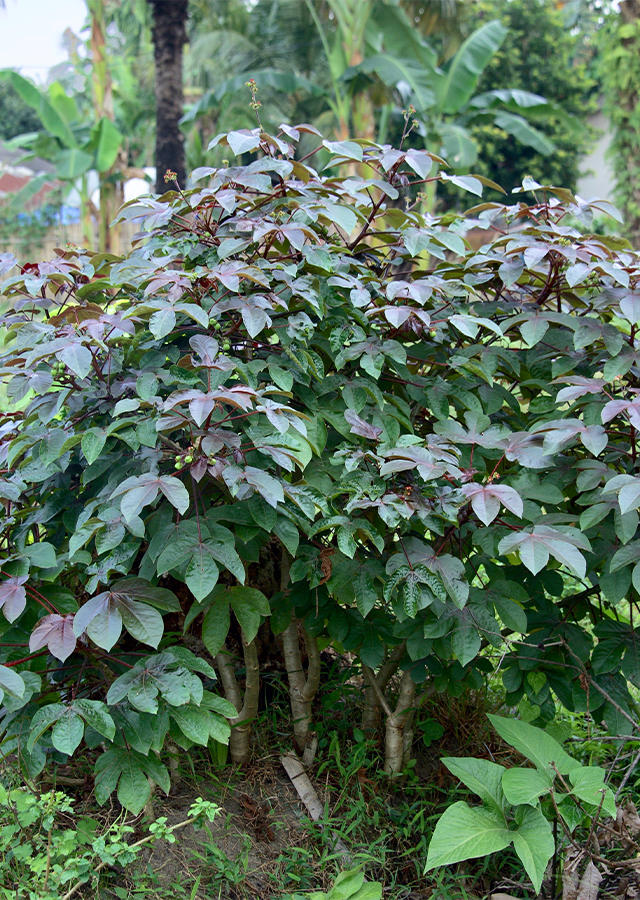
Jarak merah (Jatropha gossypiifolia) is a shrub up to 2-3 meters tall of the Euphorbiaceae family, native to tropical America from Mexico to Paraguay, introduced as an ornamental in West Africa. Rural African communities plant it as a hedge, believing it provides protection from fire. Jarak merah is also traditionally used to treat fever, wounds, and swelling.
Agroecology
Grows at elevations around 20 m above sea level, with annual rainfall of 750-2,000 mm/year. This plant is generally found growing wild along roadsides, grassy fields or thickets, in open sunny places in lowlands.
Morphology
- Root a taproot with lateral roots.
- Stem mature stems contain watery, frothy sap. Green when young turning grayish with age.
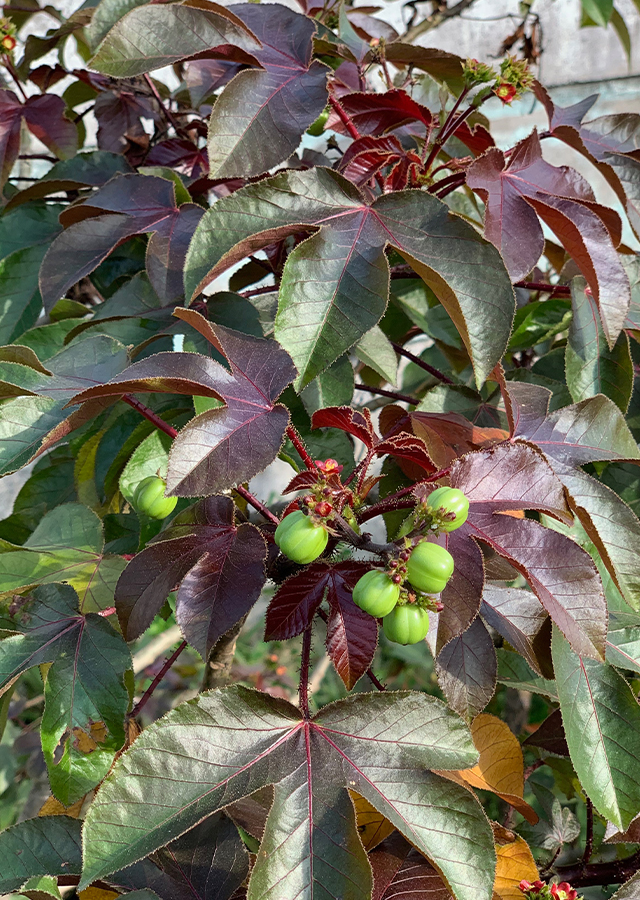
- Leaves incomplete, having only a petiole and blade, round shaped, serrated edges, pointed tip, purplish in color, but usually turning bright green as the leaf ages.
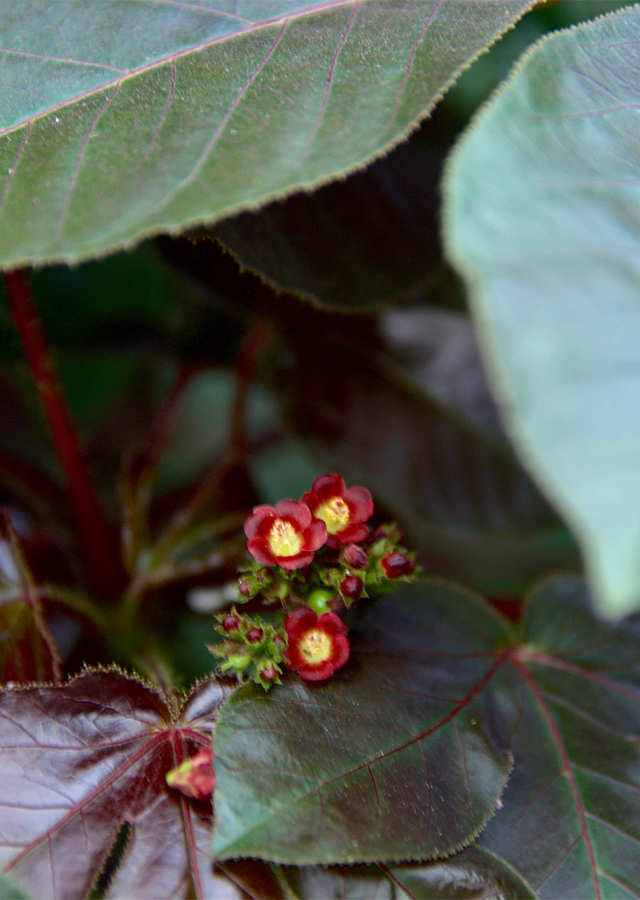
- Flowers small and clustered, with five reddish-purple petals.
- Fruit capsule-shaped, with oval lobes, slightly hairy. Young fruit glossy green, mature fruit brown.
- Seeds round, blackish-brown, containing oil.
Cultivation
Propagated generatively (seed) and vegetatively (suckers).
Chemical Content
Anthraquinone, flavonoid, phlobatannin, phenolic, saponin, tannin, amino acids, steroid, alkaloid, glycoside, terpenoid, tannin, quercetin, fraxetin.
Benefits
Treats fever, wounds, swelling and skin disease, constipation, stops bleeding, acts as a hemostatic agent, antiseptic, antibacterial, and anti-inflammatory.
Simplisia
- Choose fresh jarak merah leaves. Clean off attached dirt. Wash, then drain.
- Cut the leaves and place on a tray. Cover with a thin dark-colored cloth. Dry in the sun.
- Once dry, place in a clean, tightly sealed or airtight container.
Local Names
Jarak kosta merah, Jarak landi, Jarak cina (Java), Kaleke bacu, Kaleke jharat (Madura), Jarak ulung (Lampung).
Traditional Recipes
The following recipes reflect traditional knowledge passed down through generations, not a substitute for professional medical diagnosis or advice. Consult a healthcare provider before use.
1. Swelling and skin disease
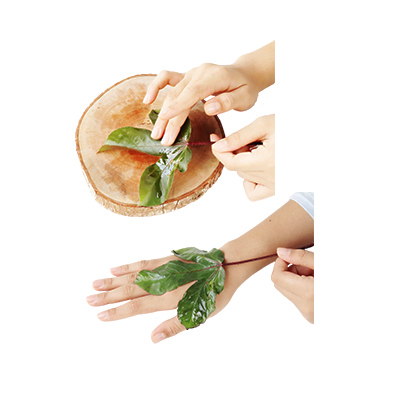
- Wash 3-4 fresh leaves thoroughly, coat with coconut oil then heat over a flame until wilted.
- Apply to the swollen or affected area while still warm.
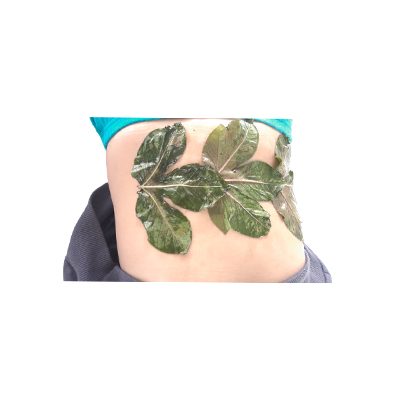
2. Constipation
- Wash 3-4 fresh jarak merah leaves thoroughly. Coat with coconut oil, then wilt over a flame.
- Apply the warm leaves to the abdomen.
Reference Sources
- CABI. (2010). Invasive Species Compendium. Jatropha gossypiifolia (bellyache bush). https://www.cabi.org/isc/datasheet/28394. 08-02-2021
- Fern, Ken. (2014). Useful Tropical Plants. Jatropha gossypiifolia. http://tropical.theferns.info/viewtropical.php?id=Jatropha+gossypiifolia. 08-02-2021.