Jatropha multifida L.
Summary
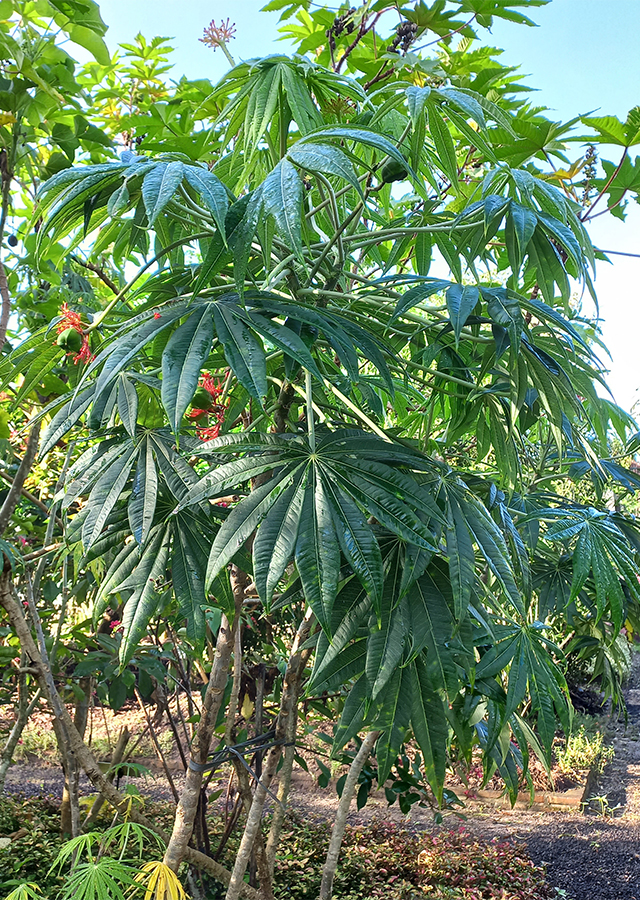
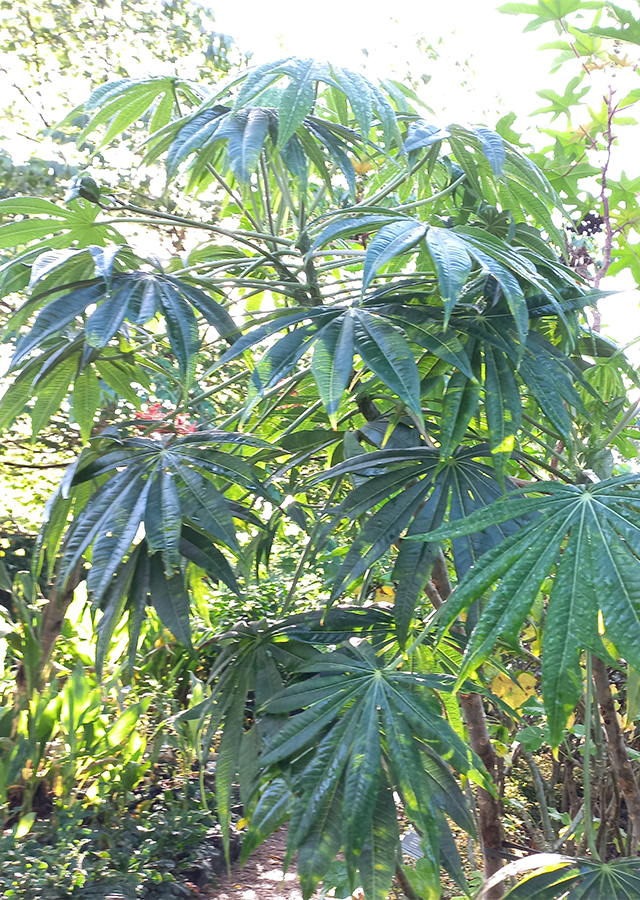
Daun betadine (Jatropha multifida) is a shrub 2-3 meters tall from the Euphorbiaceae family that originates from the Caribbean and Mexico, known by Indonesian communities as the 'betadine plant' for its ability to heal fresh wounds. Research shows its stem is as effective as 10% povidone iodine and can coagulate blood. Daun betadine is also traditionally used as a laxative and scabies remedy.
Agroecology
The daun betadine plant is a semi-arid tropical lowland plant, although it can grow in humid areas as long as there is excellent drainage. Prefers a full-sun position, but also succeeds in partial shade. Can grow in most well-drained soils. Established plants are somewhat drought-tolerant and tolerant of maritime/coastal exposure.
Morphology
- Roots a taproot system, tuberous.
- Stem woody with an enlarged base. Round stem shape with a hairy surface, exuding sap and showing scars from fallen leaves. When young the stem is green and turns greenish-white when old. Growth direction is perpendicular (upright). Sympodial branching system (branching near the ground surface), branch growth direction leaning upward (patent).
- Leaves single, scattered. 5-15 cm long, 6-16 cm wide. The widest part is in the middle of the leaf blade, from which the leaf shape of Jatropha multifida L. is classified as round (orbicular). Leaf tip tapering (acuminate), leaf base notched (emarginate), upper and lower leaf surfaces of Jatropha multifida L. are dull (opaque), palmate venation, leaf margin incised (divided) with lobed margins, where the depth of the incision exceeds half the length of the veins on either side. The position of this incision depends on the arrangement of the leaf veins. Hence, the term lobed margin is a combination of the incision character and vein arrangement (palmately lobed leaf). Leaf arrangement scattered.
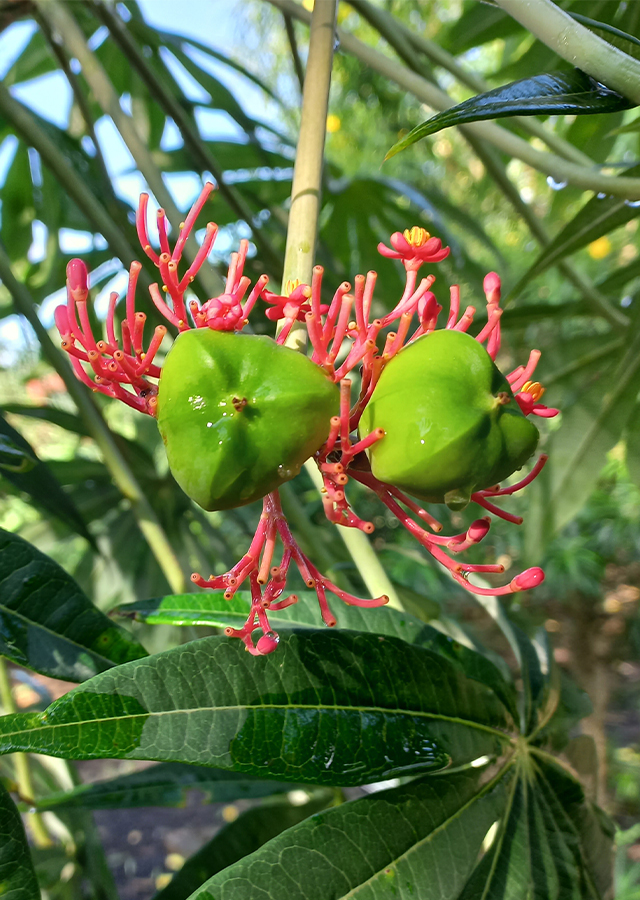
- Flowers compound (racemose inflorescence), growing at the tip of the stem (terminal flower). The racemose inflorescence's main stalk branches and its branches can branch again so the flowers are not on the main stalk, of the panicle type. The color of the main flower stalk is green and turns brown when old. Flowers are red and are bisexual (hermaphroditic), meaning flowers that have stamens (male reproductive organs) and pistils (female reproductive organs). Stamens number eight and the anther is horseshoe-shaped, the stamen filament itself is yellow. The pistil of the Jatropha multifida L. flower has three fused carpels. The corolla has 5 petals that are not fused (polypetalous). Meanwhile, the calyx has 5 sepals that are fused (gamosepalous) with the calyx being red, the same color as the corolla, and based on how much of the parts are fused (the length of the lobes at the top of the calyx), the calyx is fissured (fissus), because the fused part covers about half the length of the calyx, so the lobes are also about half). The flower is actinomorphic in symmetry, because many planes of symmetry can be drawn to divide the flower into two symmetrical halves.
- Fruit ovate or elliptical in shape with a length of ± 2.5 cm and a diameter of 2-4 cm, where the young fruit is green and turns brown when old. Divided into three chambers each containing one seed, classified as a dry, true, single fruit of the three-valved (tricoccous) type.
- Seeds oblong, ± 2 cm long with a thickness of about 1 cm.
Cultivation
Propagation of the daun betadine plant generatively by seed and vegetatively by stem cuttings.
Chemical Content
Alkaloid compounds, tannins, glycosides, saponins, flavonoids, phenols, flavones apigenin, acacetin, luteolin, phenolic acids such as vanillic, syringic, p-OH-benzoic acid, melilotic, cis- and trans-ferulic acids; p-coumaric acid and chloric acid, tannins, proanthocyanidins, and glycoflavones.
Benefits
Used as a laxative and emetic, treats digestive disorders and colic, as a tonic, orchitis (testicular inflammation), remedy for edema, scabies, wounds and boils, emeto-catharsis, treatment of canker sores, fever, worms and gonorrhea, skin infections, stops external bleeding, abortifacient, treatment of pain, infections, inflammatory conditions, tumors.
Local Names
Balacai batai (Ternate), Jarak tintir, Jarak cina (Java), Jarak gurita (Sunda), Pohon yodium (Bengkulu).
Traditional Recipes
The following recipes reflect traditional knowledge passed down through generations, not a substitute for professional medical diagnosis or advice. Consult a healthcare provider before use.
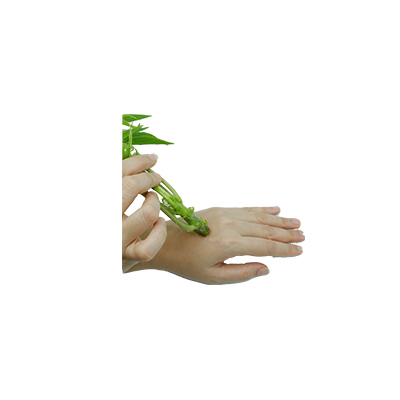
1. Bleeding wounds
- Take a medium-sized daun betadine leaf stalk, neither too old nor too young.
- Wait until the tip of the leaf stalk exudes yellowish sap, then apply to the wounded area.
- Wait a few minutes until the sap dries.
- Repeat this two to three times a day.
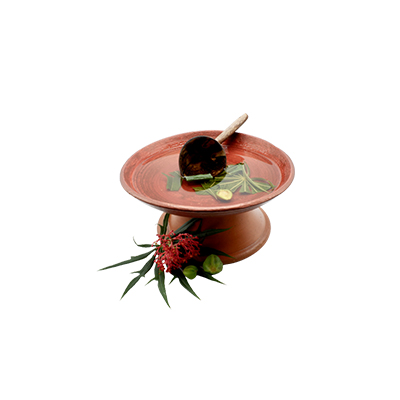
2. Fever
- Take daun betadine leaves and fruit as needed and wash until clean.
- Boil with water until boiling.
- Use the decoction water for bathing.
Reference Sources
- Royal Botanic Gardens. Plants of the World Online: Jatropha multifida L. http://plantsoftheworldonline.org/taxon/urn:lsid:ipni.org:names:314308-2. 23-09-2021.
- Stuartxchange. 2018. Phlippine Medicinal Plants: Mana. http://www.stuartxchange.org/Mana.html. 23-09-2021.
- Useful Tropical Plants Database. 2021. Jatropha multifida L. https://tropical.theferns.info/viewtropical.php?id=Jatropha+multifida. 23-09-2021.
- PDF Coffee. 2021. Deskripsi Morfologi Tanaman Jatropha Multifida. https://pdfcoffee.com/deskripsi-morfologi-tanaman-jatropa-multifida-pdf-free.html. 23-09-2021.
- PROSEA. 2020. Jatropha multifida (PROSEA). https://uses.plantnet-project.org/en/Jatropha_multifida_(PROSEA). 23-09-2021.