Kaempferia galanga L.
Summary
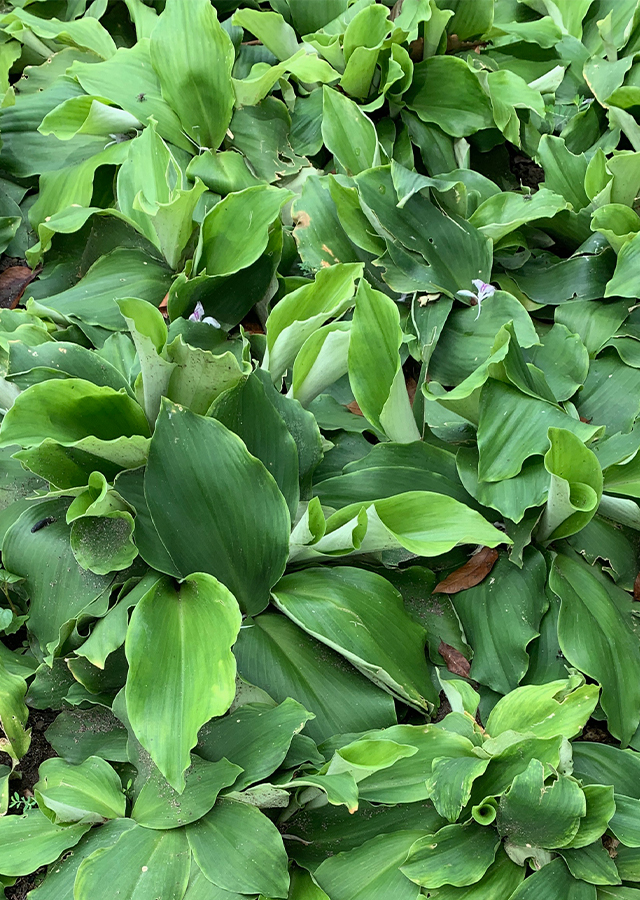
Kencur (Kaempferia galanga) is a herb up to 20 cm tall of the Zingiberaceae family, thought to originate from India and now widely cultivated from Southeast Asia to Maluku. Its rhizome is the main ingredient of the popular beras kencur jamu drink as well as a cooking seasoning of high economic value. Kencur is traditionally believed to relieve cough, colds, and boost appetite.
Agroecology
Grows optimally in areas at elevations of 50-600 m above sea level, rainfall 2,500-4,000 mm/year, clay to sandy clay loam soil texture. Usually found in lowland or mid-elevation areas with loose soil and not too much water.
Morphology
- Roots fibrous, has a round, fragrant-smelling tuber called a rhizome.
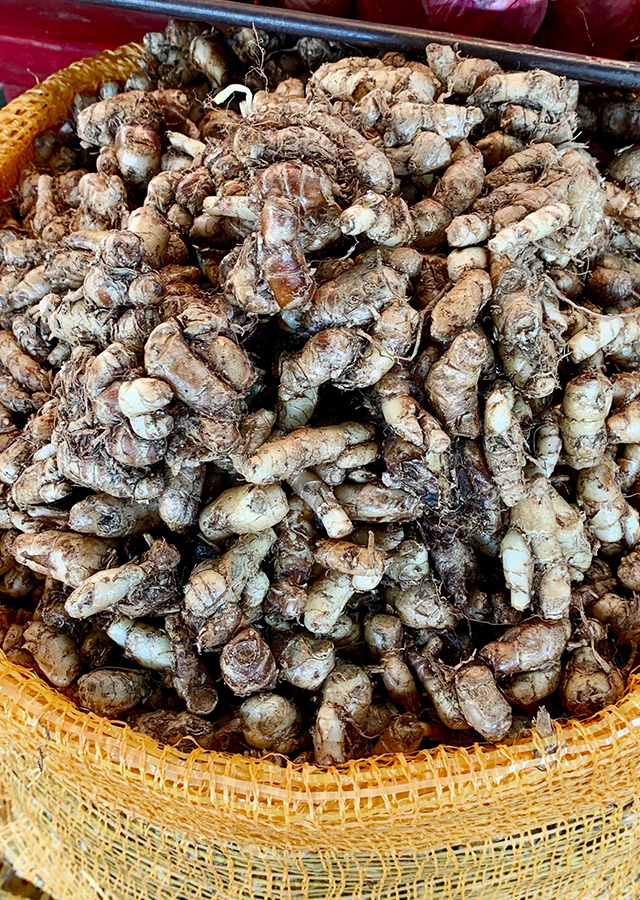
- Rhizome cylindrical shape, brownish surface color, soft texture, white flesh color, fragrant smell, branching.
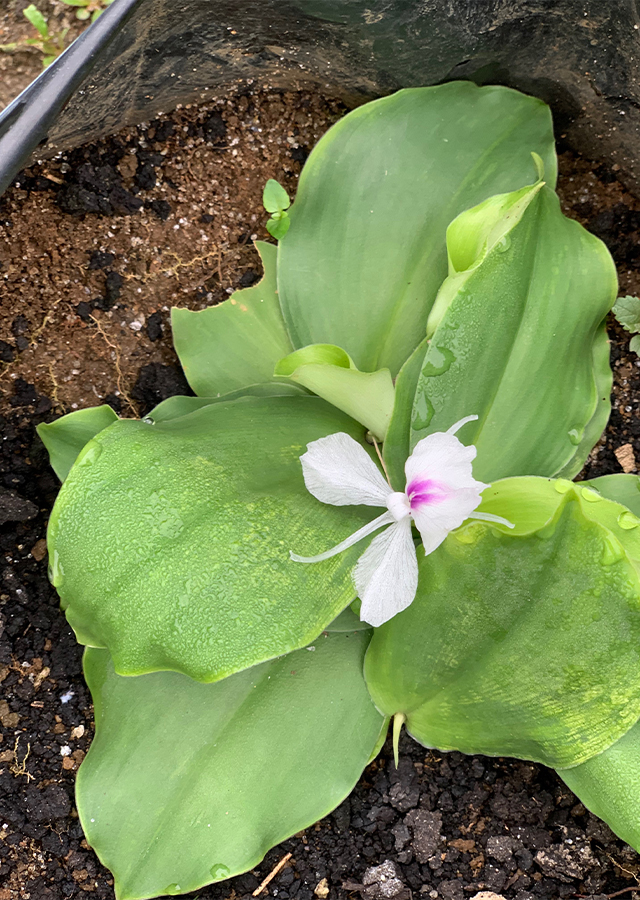
- Leaves single, lance-shaped with pinnate venation, green in color, purple at the lower tip, 7.5-9 cm long and 4.5-6 cm wide.
- Flowers petals white with a purple tinge, 2-2.5 cm in size, calyx attached to the rhizome.
Cultivation
- Seed is obtained from mature but still fresh-looking kencur rhizomes. The rhizome is stored in a place that is neither too bright nor too dark so it sprouts quickly.
- The rainy season is the right planting time.
Chemical Content
Essential oils (borneol, methyl-p, cumaric acid, cinnamic acid ethyl ester, pentadecane, aldehyde, kaempferin and cineole, P-methoxy cinnamate), tannins, saponins, calcium oxalate, camphene, cineole, ethyl alcohol.
Benefits
Remedy for cough, tetanus, headache, diarrhea, bloating, nausea, colds, aches, compress for swelling/inflammation, appetite booster, hypertension, rheumatism and asthma, has anti-inflammatory and anticancer activity.
Simplisia
Simplisia
- Clean the rhizome of dirt thoroughly then wash and drain. Weigh the material then chop into thin slices.
- Arrange the rhizome on a tray and air-dry for several days at room temperature away from direct sunlight.
- Once dry, pack in plastic and vacuum-seal.
Local Names
Ceuko, Tekur (Aceh), Kawicer (Batak), Cakue (Minang), Cikur (Sunda), Sikor (Kalimantan), Cekuh (Bali), Cakuru (Makassar), Asauli (Ambon).
Traditional Recipes
The following recipes reflect traditional knowledge passed down through generations, not a substitute for professional medical diagnosis or advice. Consult a healthcare provider before use.
1. Cough
- Prepare 5 cm kencur rhizome, 1 glass of warm water, salt to taste.
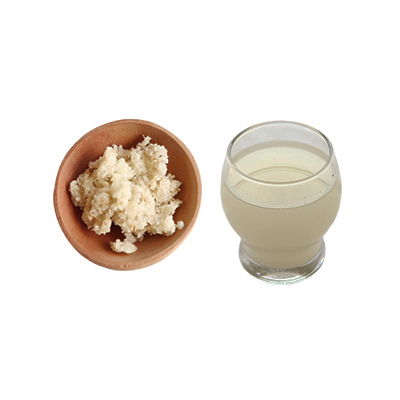
- Grate the kencur, add water, squeeze and strain, add salt.
- Drink the concoction while warm.
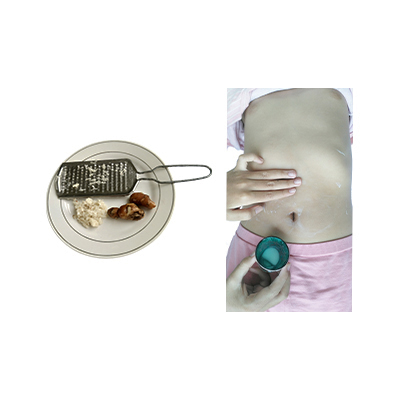
2. Diarrhea
- Prepare 5 cm kencur rhizome, salt to taste, 1 glass of warm water.
- Grate the kencur, add warm water, squeeze then strain.
- Apply to the stomach as a paste.
Reference Sources
- Hasanah AN, Nazaruddin F, Febrina E, Zuhrotun A. 2011. Analisa kandungan minyak atsiri dan uji aktivitas antiinflamasi ekstrak rimpang kencur (Kaempferia galanga L.). J. Matematika & Sains 16(3): 147-152
- Setiawan AI, Wahidah BF, Khoiri N. 2018. Kajian struktur morfologi tanaman obat suku Zingiberacaea di Desa Sumbersari Kelurahan Wonolopo Kecamatan Mijen Kota Semarang. Prosiding Seminar Nasional Biologi.
- Umar MI, Asmawi MZ, Sadikun A, Atangwho IJ, Yam MF, Altaf R, Ahmed A. Bioactivity-guided isolation of ethyl-p-methoxycinnamate, an anti-inflammatory constituent, from Kaempferia galanga L. extracts. Molecules 17(7): 8720-8734.
- Xue Y, Chen H. 2002. Study on the anti-carcinogenic effects of three compounds in Kaempferia galanga L. J. Hygiene Res. 31(4):247-8.
- Widyaningrum Herlina, Tim Solusi Alternatif. 2019. Kitab Tanaman Obat Nusantara (Obat batuk, diare). Penerbit Media Pressindo, Jakarta.
- Sirait Midian dkk. 1985. Cara Pembuatan Simplisia. Departemen Kesehatan Republik Indonesia. Jakarta 49.