Kalanchoe daigremontiana Raym.-Hamet & H.Perrier
Summary
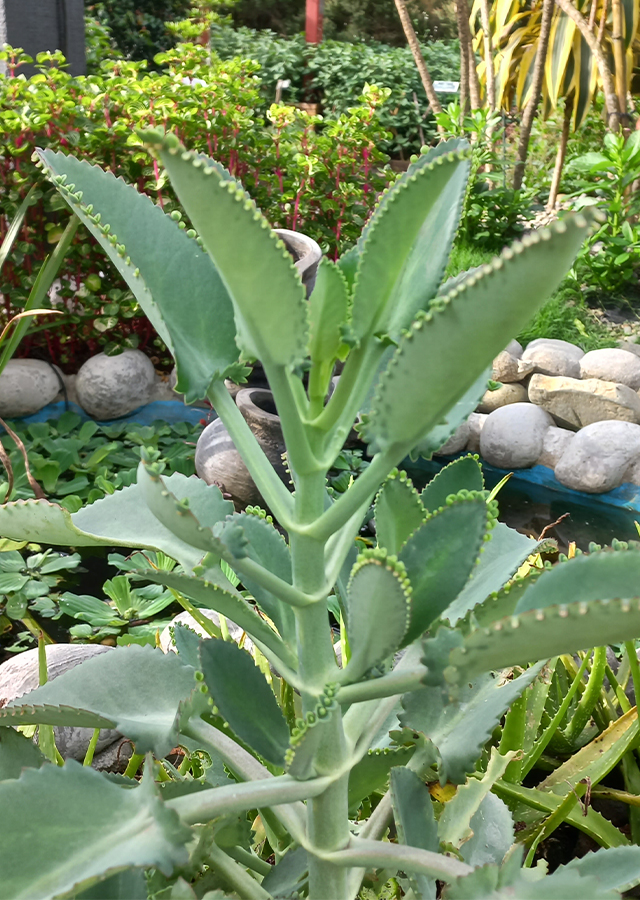
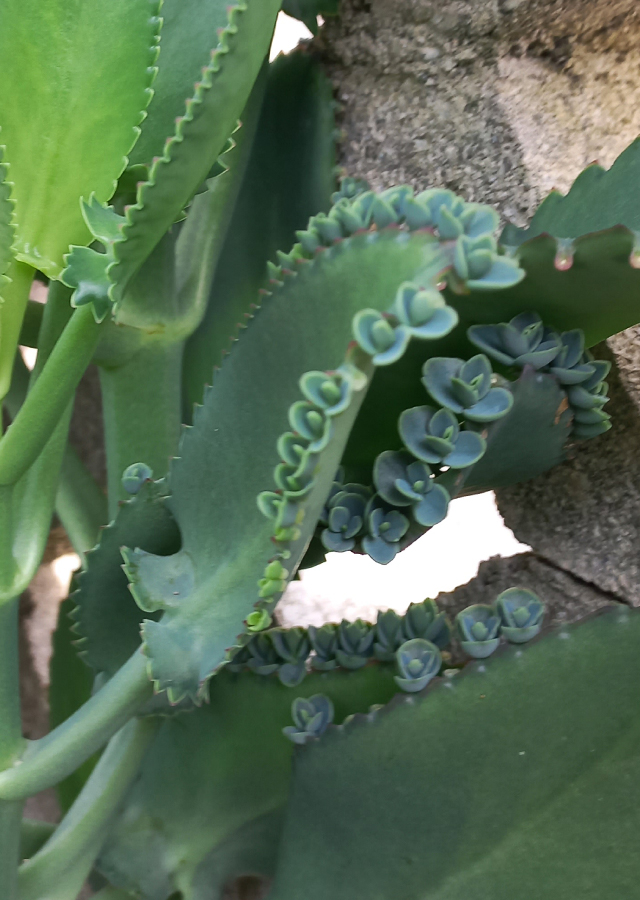
Cocor bebek anak banyak (Kalanchoe daigremontiana) is a succulent up to 1 meter tall from the Crassulaceae family that originates from the dry zones of Madagascar, now considered an invasive plant in various countries. Its distinctive leaf margins grow tiny plantlets ready to plant, making it a characteristic ornamental. In Chinese herbal medicine, cocor bebek anak banyak is used to relieve vomiting and coughing.
Agroecology
Cocor bebek anak banyak can be found growing in xeric, semi-arid and arid environments including deserts, dry forests, grasslands, cactus scrub, thorn scrub, thorn forests, disturbed forests, and roadsides. This species can survive extended periods of drought with little or no water. However it does not tolerate frost and usually dies if exposed to temperatures below freezing. Its growth prefers a position in full sun or partial shade.
Morphology
- Roots taproot, brown.
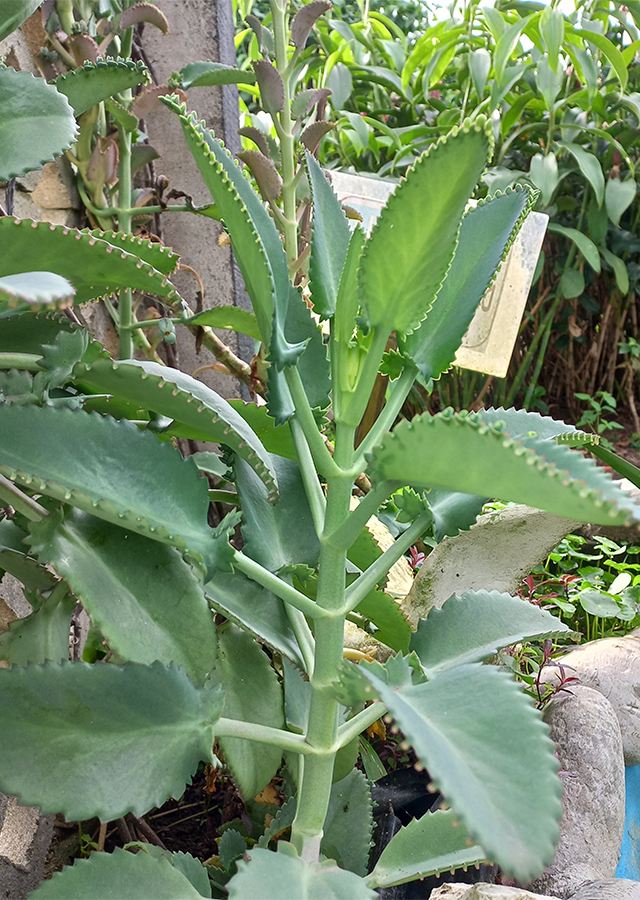
- Stem soft, upright, round, smooth, leaf attachment scars clearly visible, green.
- Leaves single, oppositely alternating, leaf blade triangular to lanceolate shape, tip and base pointed, leaf margin serrated with numerous small plantlets present, pinnate venation, thick, waxy leaf surface (glaucous), light green colored, blade with purplish-brown spots on the underside.
- Flowers compound and pendulous. Corolla pink or lavender colored, lobes obovate, tip rounded. Calyx tube-shaped, green or purplish colored, lobes triangular, length equal to or longer than the tube, tip pointed.
- Fruit a box, tube-shaped, green.
- Seeds white, round-oblong shape with longitudinal lines.
Cultivation
- Propagation is done generatively (seeds) and vegetatively (plantlets, stem and leaf cuttings).
- Each plant is able to produce thousands of small seeds (more than 1000 seeds per fruit) that are dispersed by wind.
Chemical Content
Saponin, flavonoid, tannin, phenolic compounds, steroid, bufadienolides, ascorbic acid, triglycoside (kaempferol 3-O-β-D-xylopyranosyl-(1→2)-α-L-rhamnopyranoside-7-O-β-D-glucopyranoside).
Benefits
Treats coughs, reduces fever, treats asthma, kidney stones, ulcers, speeds wound healing, boils, relieves psychological disorders of agitation, restlessness and anxiety. Has antimicrobial, antifungal, anti-inflammatory, analgesic, antihypertensive, antioxidant, antidiabetic, hemostatic activity.
Simplisia
- Prepare fresh cocor bebek anak banyak leaves as needed, wash clean with running water.
- Cut the leaves into pieces to make drying easier.
- Dry under sunlight or with an oven at 40 °C until moisture content reaches 10%.
- Blend into powder.
- Store in a clean, airtight place.
Local Names
Sosor bebek (Java), Cocor bebek besar.
Traditional Recipes
The following recipes reflect traditional knowledge passed down through generations, not a substitute for professional medical diagnosis or advice. Consult a healthcare provider before use.
1. Treating kidney stones
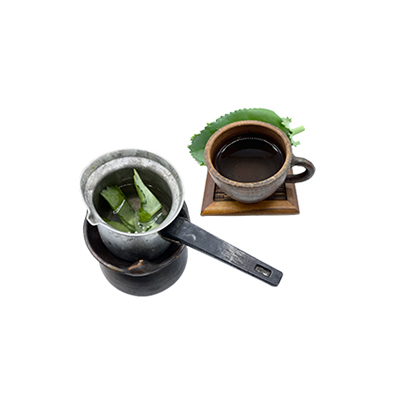
- Prepare 3 cocor bebek anak banyak leaves and wash until clean.
- Boil with 40-50 ml of water until boiling.
- Let stand until warm/cool.
- Strain, then drink twice a day.
- Can add honey to enhance flavor.
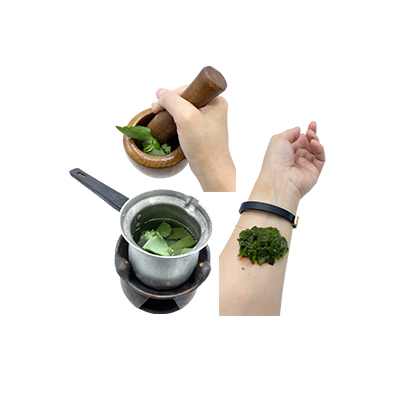
2. Boils
- Take cocor bebek anak banyak leaves as needed and wash until clean.
- Boil the leaves then mash into a paste.
- Apply the leaf paste to the affected boil area.
- The leaf paste will reduce swelling and redness.
Reference Sources
- Royal Botanic Gardens. 2021. Plants of the World Online: Kalanchoe daigremontiana Raym.-Hamet & H.Perrier. http://www.plantsoftheworldonline.org/taxon/urn:lsid:ipni.org:names:274315-1. 10-11-2021.
- CAB International. 2021. Invasive Species Compendium: Kalanchoe daigremontiana (devil's backbone). https://www.cabi.org/isc/datasheet/115049#tosummaryOfInvasiveness. 10-11-2021.
- Widyaningrum H. 2019. Kitab Tanaman Obat Nusantara. Yogyakarta: Media Pressindo.
- Czepas J.K. et.al. 2016. Antioxidant efficacy of Kalanchoe daigremontiana bufadienolide-rich fraction in blood plasma in vitro. PHARMACEUTICAL BIOLOGY, 54(12): 3182–3188. http://dx.doi.org/10.1080/13880209.2016.1214740.
- Akentieva N. P. et.al. 2021. The Effect of Plant Extracts Kalanchoe daigremontiana and Aloe arborescens on the Metabolism of Human Multiple Myeloma Cells. Biointerface Research in Applied Chemistry, 11(5): 13171 - 13186.