Kalanchoe gastonis-bonnieri Raym.-Hamet & H.Perrier
Summary
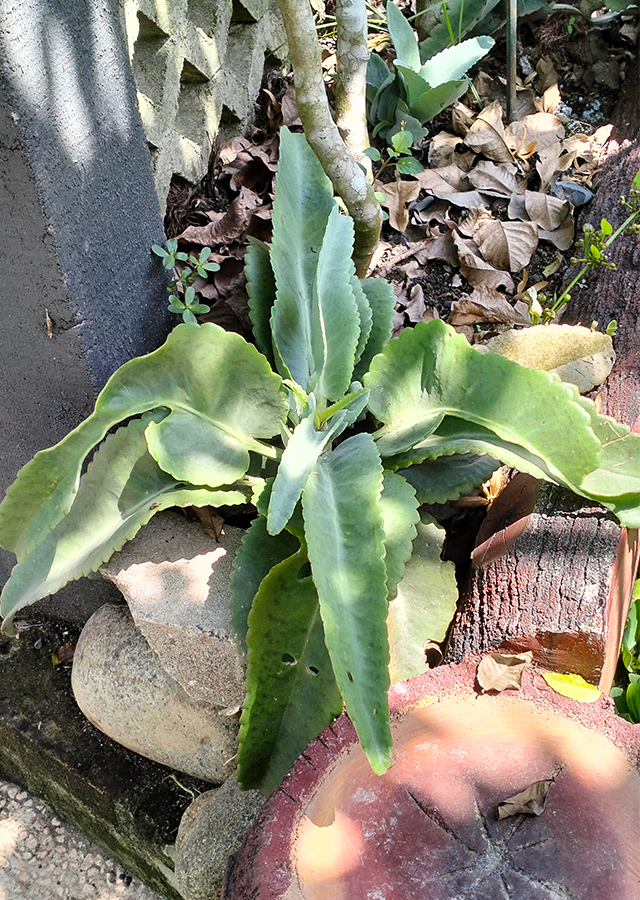
Kalanchoe gastonis-bonnieri or telinga keledai (donkey ears) is a succulent native to Madagascar now naturalized across various tropical regions of the world, from the Amazon to Africa and Asia. In several countries, this plant is traditionally used to treat internal wounds and burns, though laboratory research shows its consumption can be toxic at high doses. The uniqueness of its leaf and flower shape keeps this species favored as an ornamental.
Agroecology
The habitat of Kalanchoe gastonis-bonnieri is found growing on limestone rocks in tropical forests. This species is a relatively easy-to-grow plant, and can grow well in both full sun and partial shade positions. This species also thrives in nutrient-rich, well-drained porous soil. Kalanchoe gastonis-bonnieri is drought-tolerant, but not tolerant of extreme freezing. Flowers will only be produced by healthy plants grown under optimal conditions.
Morphology
- Stem upright, usually branching only from the base, the whole plant hairless.
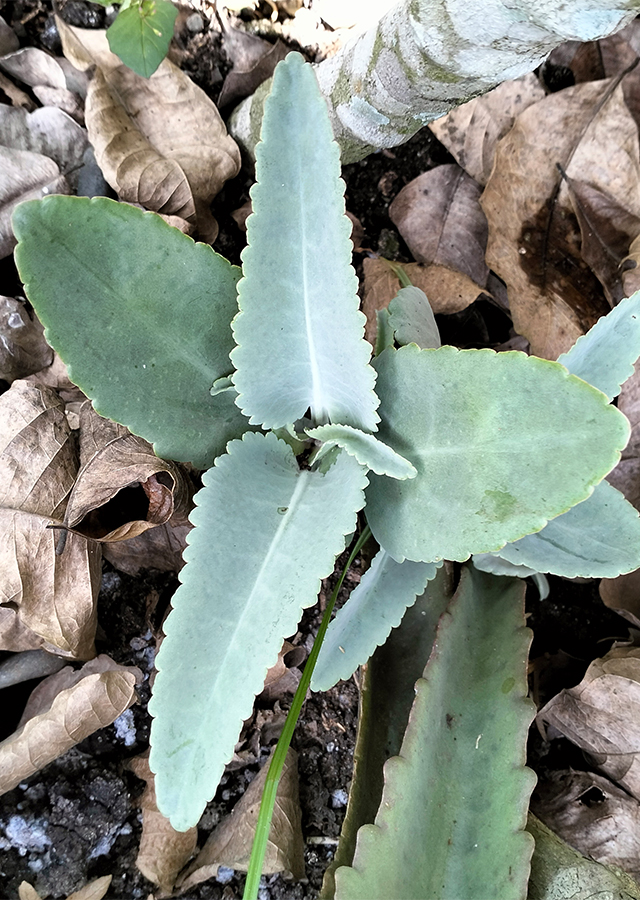
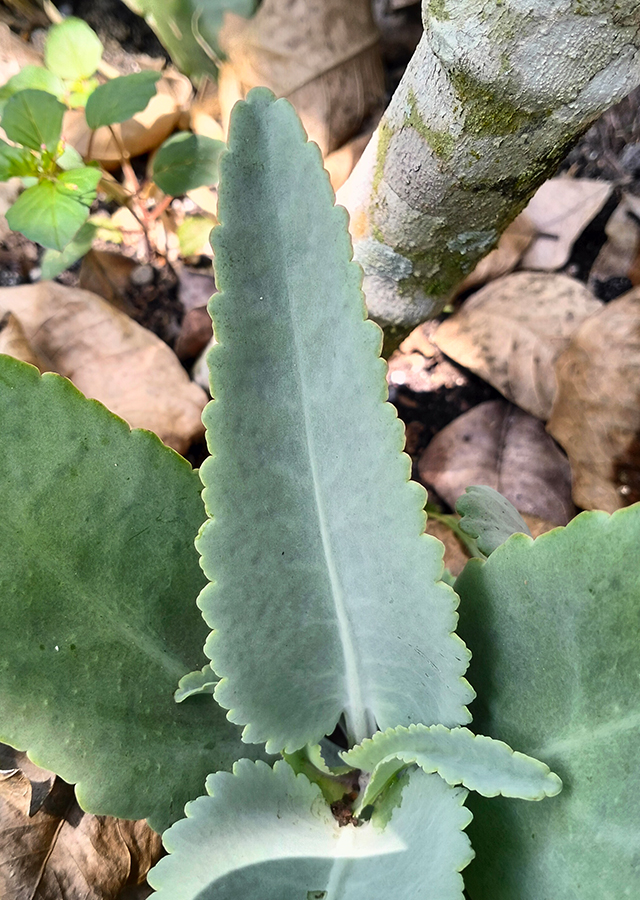
- Leaves unifoliate, rosette, thick and fleshy (up to 0.3-0.5 m long), grayish green with brown to reddish-brown spots, waxy-coated. Young leaves more whitish to grayish, mature leaves greener. Blade egg- to spear-shaped (ovate to lanceolate) with toothed margins, tip acute, base cuneate. Small plantlets often grow along the leaf margins. Leaves initially grow upright, then bend and touch the ground with their tips.
- Flowers bisexual, tubular, drooping, reddish to pinkish-orange near the base with yellow, flared tips. Flowers arranged in branched clusters (terminal inflorescence) and borne on a stalk 0.6-0.9 m tall. Flower buds pale peach becoming darker, and become a calyx holding petals that are yellowish green or reddish salmon with flared tips and a yellow interior. Filaments nearly white with yellow anthers.
- Fruit dehiscent, the dry fruits known as follicles.
Cultivation
- Plant propagation through seed and suckers.
- This species begins flowering at about 2-3 years of age. The parent plant dies after flowering once.
Chemical Content
Alkaloids, terpenoids, saponins, the flavonoid quercetin 3-O-α-rhamnopyranoside-7-O-β-D-glucopyranosyl-(1→3)-α-L-rhamnopyranoside, 6-C-β-D-glucopyranosyl-8-C-β-D-glucopyranosylapigenin (vicenin-2).
Benefits
Treats genitourinary disorders (urinary tract infections), ovarian cysts, vaginal infections, uterine fibroids, vaginal contraception, relieves headache and cold and flu symptoms, treats insect bites, bruises, burns, ulcers, internal wounds, rheumatism, inflammation, hypertension, diarrhea, tumors, abscesses, fights leishmaniasis (a parasitic disease caused by the Leishmania parasite).
Local Names
Informasi tidak ditemukan. Butuh penelusuran lebih lanjut.
Traditional Recipes
The following recipes reflect traditional knowledge passed down through generations, not a substitute for professional medical diagnosis or advice. Consult a healthcare provider before use.
1. Relieves headache
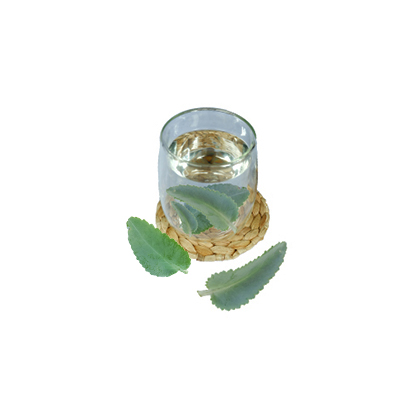
- Prepare an adequate amount of fresh telinga keledai leaves and wash until clean.
- Soak with an adequate amount of water.
- Let it sit for a while.
- Strain then drink.
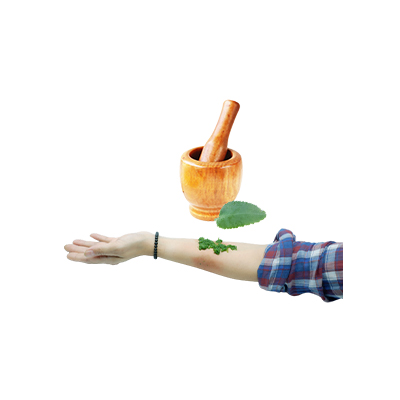
2. Burns
- Take an adequate amount of fresh telinga keledai leaves and wash until clean.
- Grind until it becomes a paste.
- Apply the leaf paste to the burn.
Reference Sources
- Royal Botanic Gardens. Plant of the World Online: Kalanchoe gastonis-bonnieri Raym.-Hamet & H.Perrier. https://powo.science.kew.org/taxon/urn:lsid:ipni.org:names:274343-1. 25-07-2022.
- Flora Fauna Web. 2022. Kalanchoe gastonis-bonnieri Raym.-Hamet & H. Perrier. https://www.nparks.gov.sg/florafaunaweb/flora/5/0/5051. 25-07-2022.
- Jardineriaon. Nightshade (Kalanchoe Gastonis-Bonnieri). https://www.jardineriaon.com/dichondra-repens-cuidados.html/amp. 25-07-2022.
- LLIFLE. Encyclopedia of living forms. 2022. Kalanchoe gastonis-bonnieri Raym.-Hamet & H.Perrier.. http://www.llifle.com/Encyclopedia/SUCCULENTS/Family/Crassulaceae/27797/Kalanchoe_gastonis-bonnieri. 25-07-2022.
- Costa S. S., Corrêa M. F. P., Casanova L. M. 2015. A New Triglycosyl Flavonoid Isolated from Leaf Juice of Kalanchoe
gastonis-bonnieri (Crassulaceae). Natural Product Communications, Vol. 10(3): 433 - 436.