Labisia pumila (Blume) Fern.-Vill
Summary
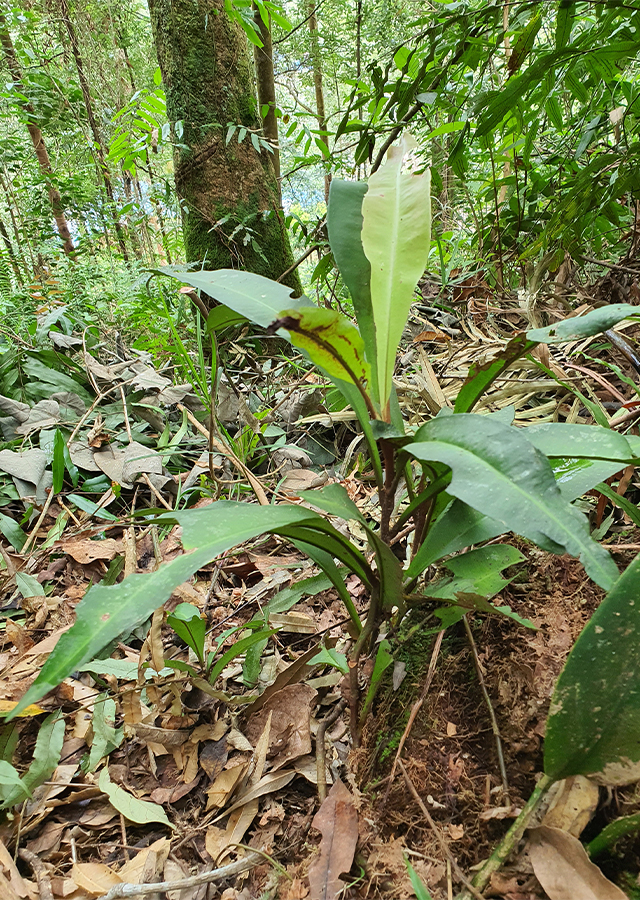
Kacip fatimah (Labisia pumila) is an upright herb up to 30 cm tall of the Primulaceae family, native to Indo-China, very popular in Malaysia as a modern postpartum supplement in tablet form. This plant is also distributed across Java, Sumatra, and Thailand. Kacip fatimah is traditionally believed to speed up labor contractions and help address menopause issues.
Agroecology
Grows in tropical forests at elevations between 80-100 m above sea level. Prefers shaded places and is sensitive to changes in climate, humidity, light intensity, and temperature.
Morphology
- Stem solitary/rarely branched, woody.
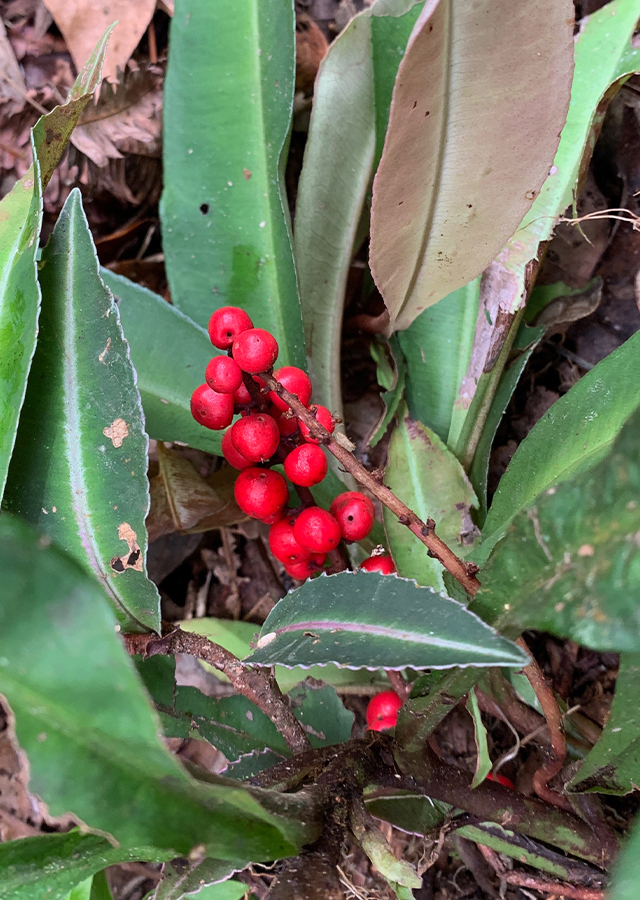
- Leaves round-elongated, 10-35 cm long, 4-8 cm wide, finely toothed, many veins, more than 5 leaves per plant, arranged alternately.
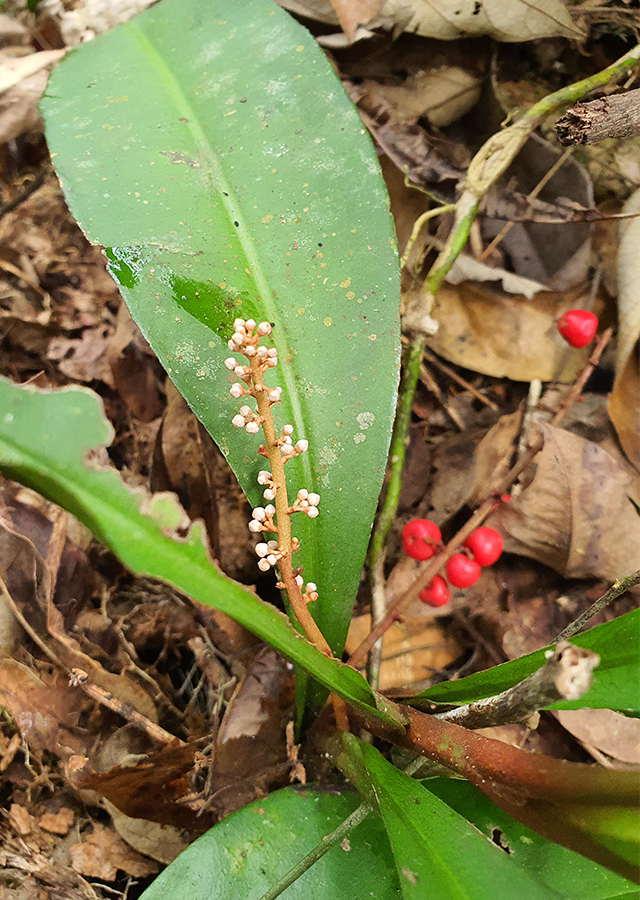
- Flowers very small, bisexual, white or pink in color, growing on a rib like a panicle spine.
- Fruit 5 mm in diameter, red when ripe.
- Seeds somewhat round, striped, cylindrical in shape.
Cultivation
- The plant propagates from its seed in natural habitat.
- It could be easily propagated by leaf and petiole cuttings with or without hormone treatment. However, stem cuttings required the application of hormone for a good rooting percentage.
Chemical Content
Phenolic, flavonoid (kaempferol, myricetin, naringin, quercetin, rutin), anthocyanin, β-carotene, ascorbic acid, benzoquinone, gallic acid, phytosterol, sapogenin, alkaloid, saponin, steroid, oxytocin.
Benefits
Induces and speeds up labor contractions, addresses menopause issues, osteoporosis in women, antioxidant, delays aging, antibacterial, antifungal, anti-inflammatory, remedy for rheumatism, diarrhea, gonorrhea, hemorrhoids, bloating in infants, improves women's fertility, stamina and sexual function, postpartum supplement, promotes menstruation.
Simplisia
- Wash the whole fresh kacip fatimah plant thoroughly.
- Dry at 40°C for 3 days. Grind until fairly fine.
- Store in a clean, airtight container.
Local Names
Cawat hanoman (Kalimantan), Suket patimah (Banyuwangi), Kelimparan tuli, Rumput fatimah.
Traditional Recipes
The following recipes reflect traditional knowledge passed down through generations, not a substitute for professional medical diagnosis or advice. Consult a healthcare provider before use.
1. Treating infant bloating and dysentery
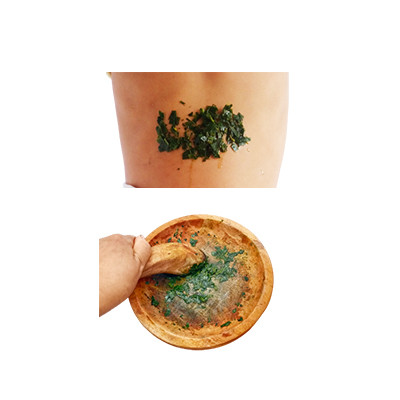
- Choose several healthy leaves, wash thoroughly.
- Grind and mix with coconut oil.
- Apply to the infant's stomach.
2. Speeding up labor
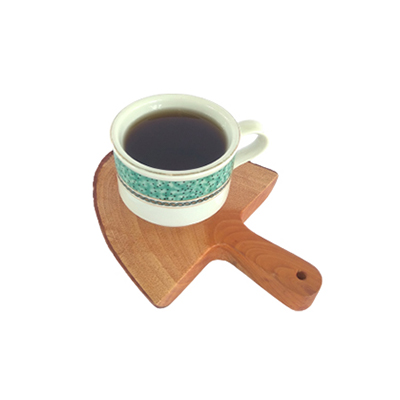
- Steep dried kacip fatimah leaves and root (simplisia) with hot water, let it become warm then strain.
- Drink the water while warm.
3. Promoting menstruation and addressing menopause symptoms
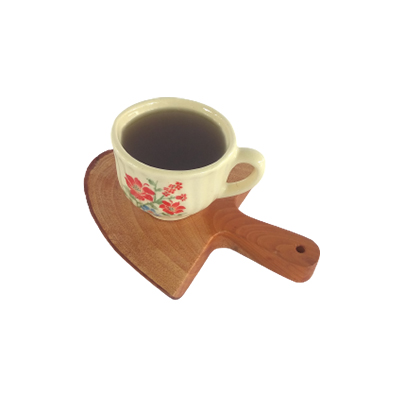
- Prepare leaves and root as needed. Wash thoroughly, dry and grind into tea powder.
- Put 1 tbsp of powder into 300 ml of water. Boil for 5 minutes.
- Drink 1-2 times a day.
Reference Sources
- Hyun-kyung Choi 1, Dong-hyun Kim, Jin Wook Kim, Sulaiman Ngadiran, Mohamad Roji Sarmidi, Chang Seo Park. (2010). Labisia pumila extract protects skin cells from photoaging caused by UVB irradiation. J Biosci Bioeng. Vol. 109(3): 291. https://pubmed.ncbi.nlm.nih.gov/20159580/. 19-02-2021.
- Kadir, Azidah Abdul, Nik Hussain, Nik Hazlina. et. al. (2012). The Effect of Labisia pumila var. alata on Postmenopausal Women: A Pilot Study. J. Evidence-Based Complementary and Alternative Medicine Vol. 2012. https://www.hindawi.com/journals/ecam/2012/216525/. 19-02-2021.
- Norhanisah Abdullah, Dr. Siavash Hosseinpour Chermahini, Lee Suan Chua, Mohamad roji Sarmidi. (2013). Labisia pumila: A Review on its Traditional, Phytochemical and Biological Uses. World Appl. Sci. J., Vol. 27 (10): 1297-1306. https://www.researchgate.net/publication/288157909_Labisia_pumila_A_review_on_its_traditional_phytochemical_and_biological_uses. 19-02-2021.
- Rozilawati, S.; Abdullah, N.A.P.; Jaafar, H.Z.E.; Sinniah, U.R.; et al. (2007). Morphological characteristic of Labisia pumila benth. Journal of ISSAAS [International Society for Southeast Asian Agricultural Sciences] (Philippines). https://agris.fao.org/agris-search/search.do?recordID=PH2011000756. 19-02-2021.
- Globinmed. (No date). Labisia pumila. https://www.globinmed.com/index.php?option=com_content&view=article&id=102032:labisia-pumila-102032&catid=209&Itemid=143. 19-02-2021.
- Kew Science. (No date). Plants of the World Online. Labisia pumila (Blume) Fern.-Vill. http://www.plantsoftheworldonline.org/taxon/urn:lsid:ipni.org:names:588713-1. 22-02-2021.
- Drugs.com. (2020). Kacip Fatimah. https://www.drugs.com/npp/kacip-fatimah.html. 22-02-2021.
- Samy J, Sugumaran M, Kate LWL. 2013. 100 Useful Herbs of Malaysia and Singapore : An introduction to their medicinal, culinary, aromatic and cosmetic uses. K.M. Wong, editor. Singapore : Marshall Cavendish Editions. (Mempercepat persalinan, Mengobati perut, kembung bayi dan disentri)
- Rainforest Herbs, 2020 https://www.rainforestherbs.com/collections/herbal-biohacks/products/kacip-fatimah-herb-150grams 30-10-2020 (Melancarkan haid dan mengatasi gejala menopause Sumber ramuan)
- pubs.rsc.org. Chemical and cellularanti oxidant activity of Flavone extracts of Labisia pumila. https://pubs.rsc.org/en/content/articlelanding/2018/ra/c8ra00142a 28-01-2021