Lagerstroemia indica L.
Summary
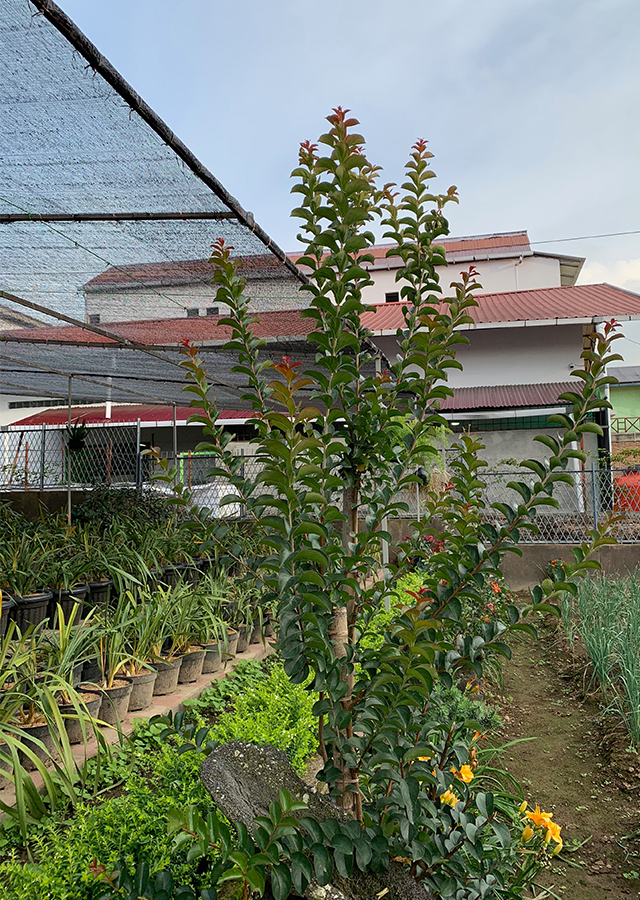
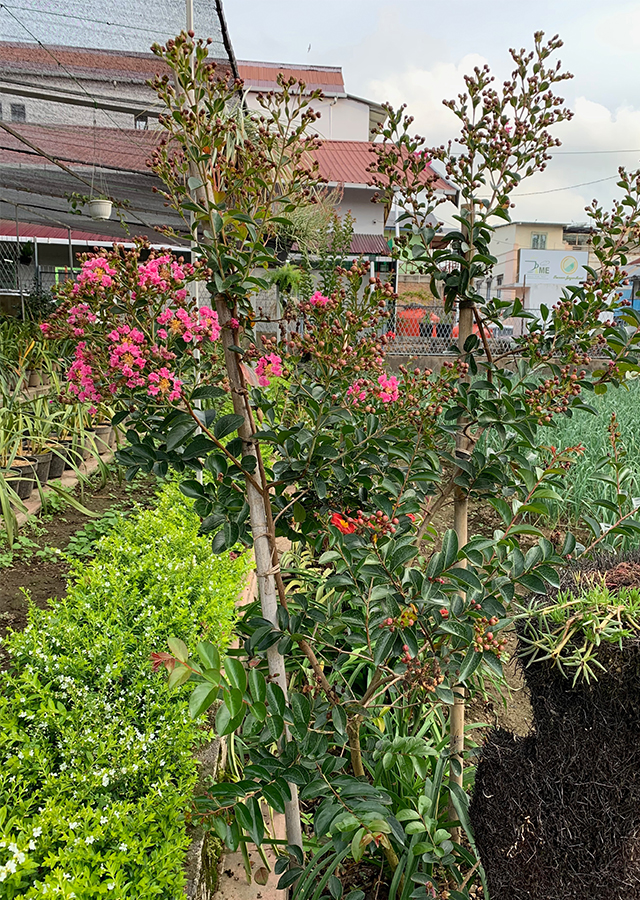
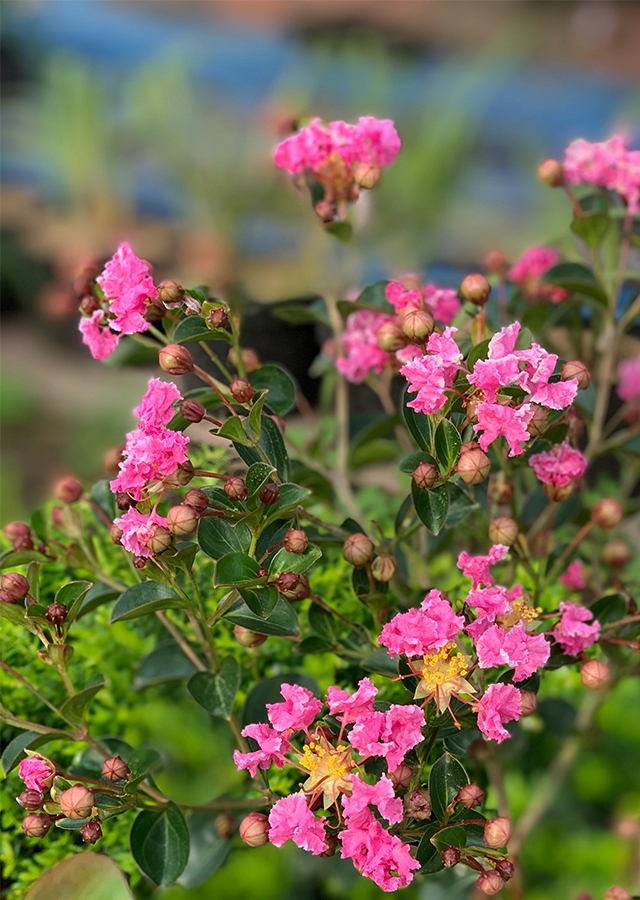
Crepe myrtle (Lagerstroemia indica) is a shrub 3-8 meters tall of the Lythraceae family, native to East Asia including China, Korea, and Japan, and now thriving in tropical regions that tend to be dry. Its popularity as an ornamental owes much to its flowers, which bloom nearly year-round. In traditional medicine, this plant is used to relieve dysentery and coughing blood, and as a fever reducer.
Agroecology
Grows up to an elevation of 700 m above sea level, can grow in warm to tropical climates at temperatures of 25-30°C, ideal in hot areas, with average annual rainfall of 1,200-2,400 mm/year, high humidity, and pH < 7 (acidic soil).
Morphology
- Trunk woody, heavily branched, with curved branches and brown bark.
- Leaves dark green, simple, short-stalked and alternately arranged, elliptical to elongated, 2-7 cm long, 1-4 cm wide, with a blunt but slightly pointed tip.
- Flowers compound, panicle-shaped, clustered at the stem tips or emerging from leaf axils.
Cultivation
- Propagated generatively (by seed) and vegetatively (by air layering and cuttings).
- Cuttings can use mature stems, old stems, and roots.
Chemical Content
- Brevifolin, decarboxy ellagic acid, polyphenols, tellimagrandin, nilocitin, astragalin, rutin, catechin, terpenoids, tannins, deoxysugars, saponins, flavonoids, quercetin, apigenin
Benefits
- Treats breast inflammation (mastitis), jaundice, dysentery, coughing blood, measles; acts as a fever reducer and laxative; treats external skin wounds; detoxifies the body.
Simplisia
Not yet available
Local Names
Bungur kuwal (Lampung). Bungur (Sunda), Kelangi (Java), Bhungor (Madura), Bungur (Malay).
Traditional Recipes
The following recipes reflect traditional knowledge passed down through generations, not a substitute for professional medical diagnosis or advice. Consult a healthcare provider before use.
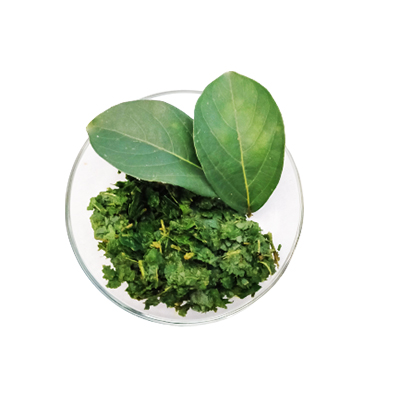
1. Breast Inflammation
- Take 20 g of crepe myrtle leaves and wash thoroughly.
- Pound until fine.
- Apply to the affected area.
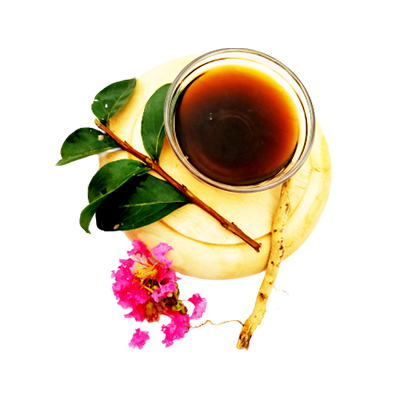
2. Measles
- Wash 500 g of crepe myrtle plant thoroughly.
- Boil in 5 cups of water until it boils down to 2½ cups. Let cool, then wash or apply to the areas affected by measles.
- Treat regularly to speed up healing.
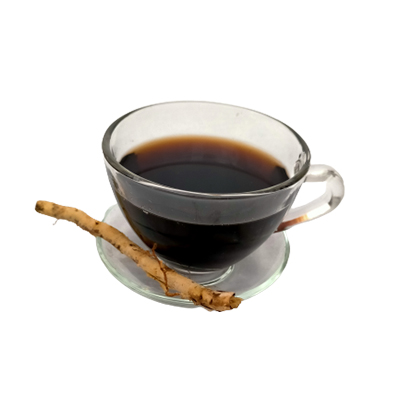
3. Coughing Blood, Vomiting Blood, and Diarrhea
- Wash 20 g of crepe myrtle root thoroughly. Boil in 2 cups of water until reduced to 1 cup. Let cool, then strain.
- Drink twice a day regularly.
Reference Sources
- Ilmubudidaya.com. 2017. 6 Cara Menanam Bunga Bungur sebagai Tanaman Herbal Berkhasiat. https://ilmubudidaya.com/cara-menanam-bunga-bungur 21-04-2020
- Khasiat Tumbuhan. 2014.Manfaat Tanaman Bungur Kecil. http://khasiat-tumbuhan.blogspot.com/2014/04/manfaat-tanaman-bungur-kecil.html 03-05-2020
- Mengobati Radang Payudara Campak. https://akarbatang.blogspot.com/2018/12/10-manfaat-tanaman-bungur-cara-mengolah-dan-efek-samfek-samping.html 09-07-2020
- Batuk Darah, Muntah Darah dan Berak-Berak. https://akarbatang.blogspot.com/2018/12/10-manfaat-tanaman-bungur-cara-mengolah--dan-efek-samfek-samping.html 09-07-2020
- National Parks. Flora & Fauna Web. Lagerstroemia indica. https://www.nparks.gov.sg/florafaunaweb/flora/2/1/2173 26-01-2021