Lagerstroemia speciosa (L.) Pers.
Summary
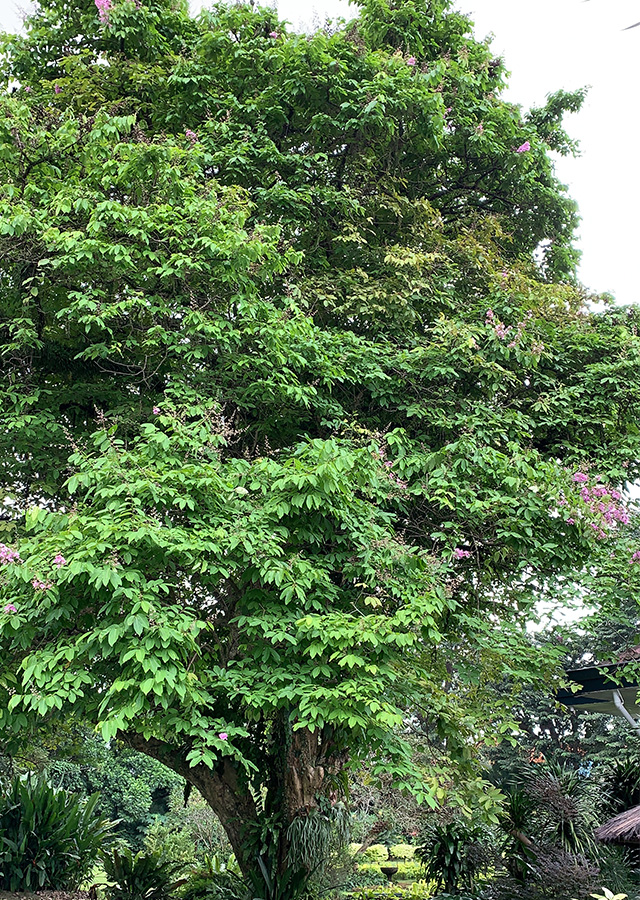
Queen's crepe myrtle (Lagerstroemia speciosa) is a 10-30 meter tree of the Lythraceae family that grows naturally in teak forests across the Philippines, Thailand, Indonesia, and Japan, in both barren and fertile soil. Besides serving as a roadside shade tree, in the Philippines its leaves have traditionally been brewed to help control diabetes and urinary tract disorders. Local communities also use it to relieve diarrhea and high blood pressure.
Agroecology
Queen's crepe myrtle is known as a shade tree for roads or yards. It grows up to an elevation of 800 m above sea level, with an annual temperature of 18-35°C and average rainfall of 2,000-3,500 mm/year. It favors full sun and moist soil with a pH between 5.5-6.5.
Morphology
- Roots taproot.
- Trunk round, light brown. Its bark is thin and easily damaged.
- Leaves simple, short-stalked.
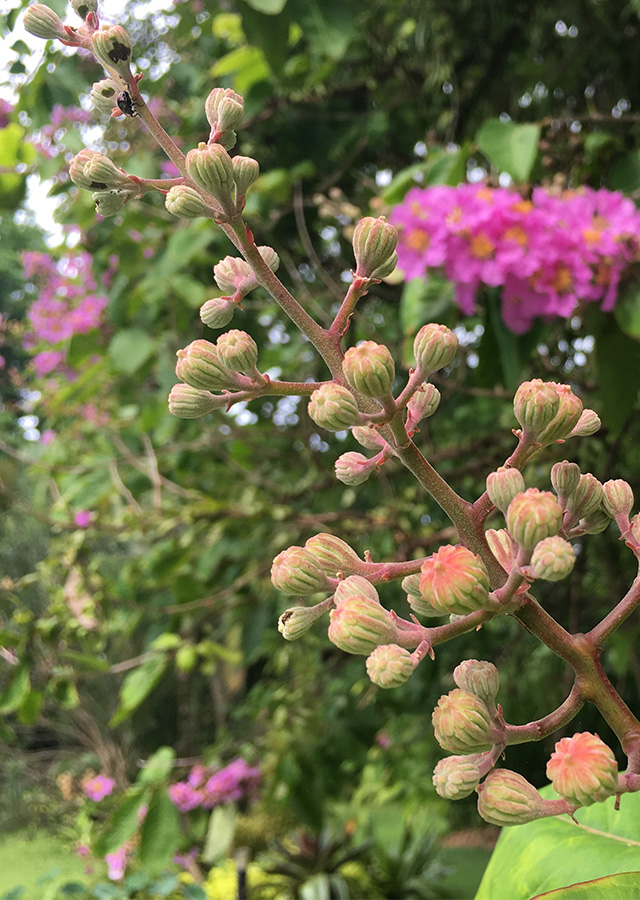
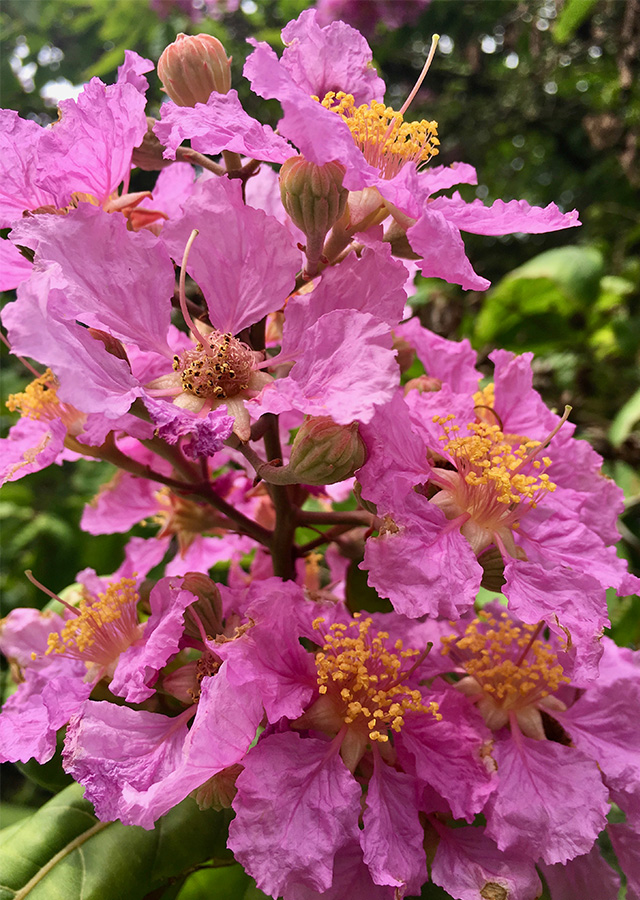
- Flowers compound, purplish-pink.
- Fruit round and elongated, 2-5 cm long.
- Seeds fairly large, flat, with a blackish-brown winged tip.
Cultivation
Propagated generatively (by seed) and vegetatively (by air layering). Good seedlings should be large and sturdy, with no damaged or defective parts. Seedling height should be at least 30-35 cm above the polybag surface. Planting hole size is 50 x 50 x 50 cm.
Chemical Content
Flavonoids, saponins, tannins, corosolic acid, the ellagitannin lagerstroemin, gallotannins, steroids, terpenoids, anthraquinone glycosides, phenolic compounds, amino acids, alkaloids, essential oil (terpineol, pinene, myrcene, bisabolene).
Benefits
Treats diarrhea, high blood pressure, kidney/bladder stones, diabetes, blood in urine, and eczema.
Simplisia
Not yet available
Local Names
Bungur kuwal, Bungur bener (Lampung), Bungur tekuyung (Palembang), Ketangi, Laban, Wungu (Central Java), Bhungor, Wungur (Madura).
Traditional Recipes
The following recipes reflect traditional knowledge passed down through generations, not a substitute for professional medical diagnosis or advice. Consult a healthcare provider before use.
1. Eczema
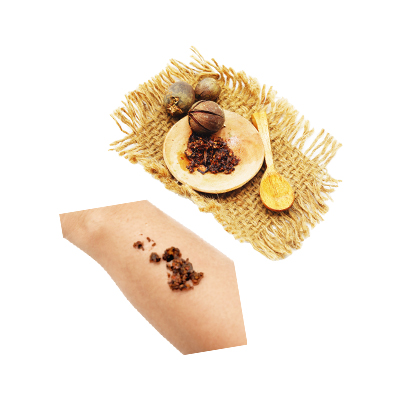
- Prepare 5 g of ripe queen's crepe myrtle seeds, ½ tsp coconut oil.
- Roast the seeds, then pound into a fine powder, add ½ teaspoon coconut oil, and mix well.
- Apply the mixture to the skin affected by eczema.
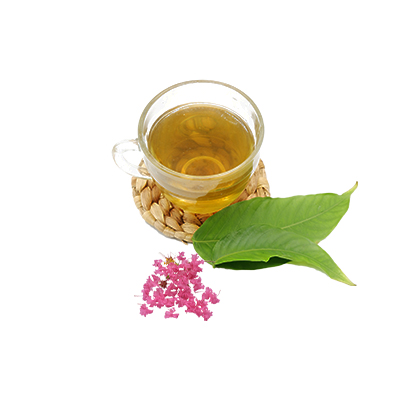
2. Diabetes
- Wash 8 fresh queen's crepe myrtle leaves thoroughly, then boil in 3 cups of water until it boils down to 1 cup.
- Strain the decoction and drink it all at once in the morning.
Reference Sources
- Pohon Bungur. 2015. https://www.jurnalasia.com/ragam/pohon-bungur/. 07-09-2020
- Satu Harapan. 2019. Bungur, Peneduh Jalan Cantik Berkhasiat Obat. https://www.satuharapan.com/read-detail/read/bungur-peneduh-jalan-cantik-berkhasiat-obat 12-06-2020
- Ensiklopedia Jakarta. 2019. Pohon Bunga Bungur, Tumbuhan. http://encyclopedia.jakarta-tourism.go.id/post/pohon-bunga-bungur--tumbuhan?lang=id 12-06-2020
- Dalimartha,S. 2000. Atlas tumbuhan obat Indonesia, jilid 2 (eksim, diabetes). Trubus Agriwidya, Jakarta.
- Stuartxchange. Philippine Medicinal Plants. Banaba. Lagerstroemia speciosa (L.) Pers. http://www.stuartxchange.org/Banaba.html 02-12-2020
- National Parks. Flora & Fauna Web. Lagerstroemia speciosa (L.) Pers.https://www.nparks.gov.sg/florafaunaweb/flora/2/9/2991 18-01-2021