Lantana trifolia L.
Summary
Lantana trifolia or verbena perdu is widely distributed in South America, the Caribbean, and Central America, and has been naturalized in Africa. Its fruit is used as food, its wood as a raw material, and this plant is traditionally used to address cough and colds. In Central Uganda, verbena perdu even holds special cultural significance, used in herbal baby bathing rituals and believed to bring luck and prevent childhood misbehavior.
Agroecology
The habitat of verbena perdu or Lantana trifolia is usually found growing in moist thickets, sometimes in low pine forests, forest edges, disturbed forests, grasslands, abandoned cultivation, and roadsides, at elevations from near sea level up to 1,200 m asl. The plant is a subtropical to tropical species and is not frost tolerant. Its growth prefers a sunny position and succeeds in various well-drained soil types.
Morphology
- Stem upright, reddish green or purplish in color.
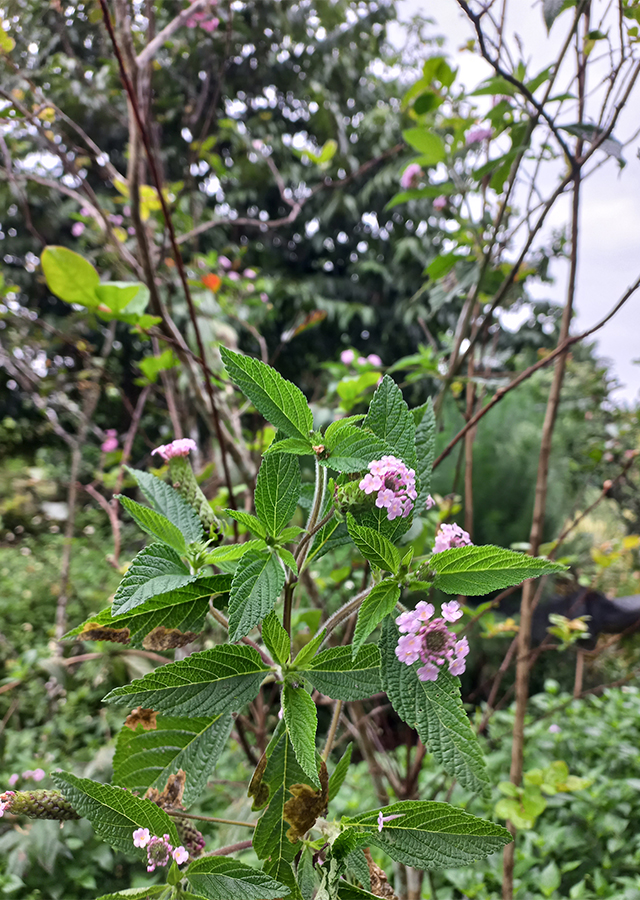
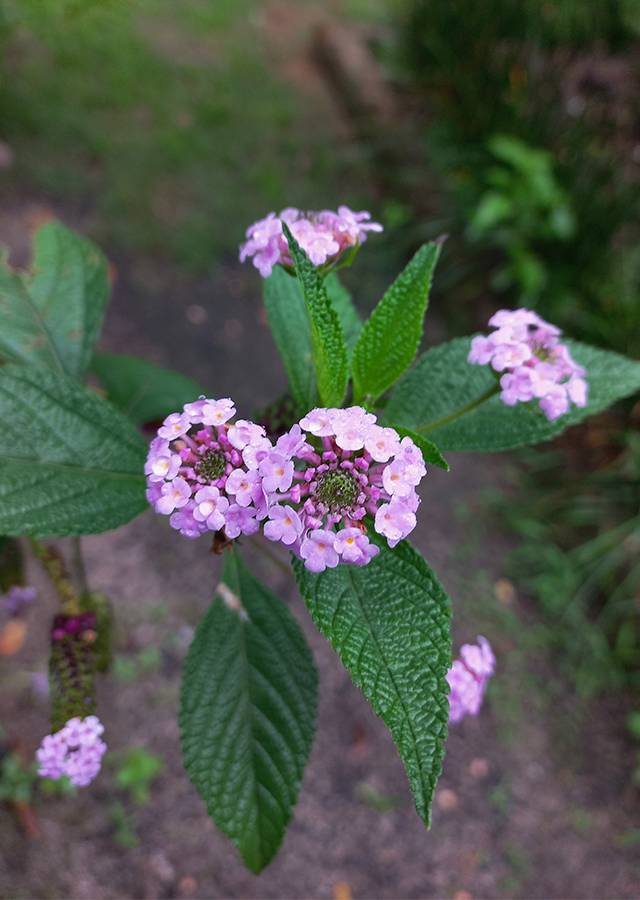
- Leaves arranged in whorls of three along the stem, green, oblong to lanceolate shaped with a toothed margin, tip and base acute, veins pinnate. Petiole covered with hairs and leaf surface rough to the touch.
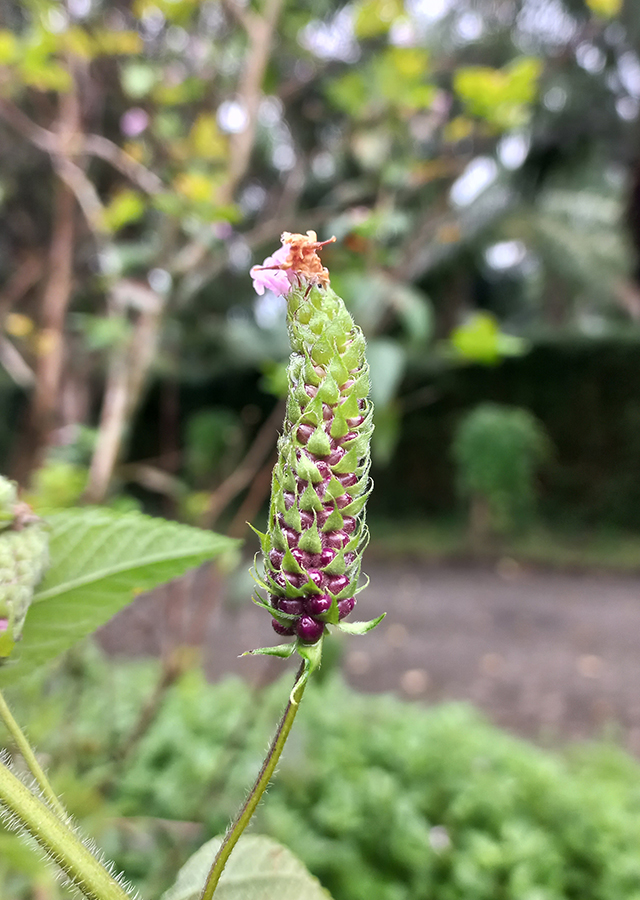
- Flowers bisexual, small, tube-shaped, 5-lobed, lavender colored, clustered. After the flowers fade, the flowering spike elongates forming a purple spike resembling popcorn.
- Fruit dark purple, fleshy, glossy and smooth surface, clustered.
- Seeds numbering about 1-5 per fruit.
Cultivation
Plant propagation is generative through seed and vegetative through stem cuttings.
Chemical Content
Kaempferol-3,7-dimethyl ether, verbascoside, apigenin, umuhengerin, ladanetin, and scutellarein-7-O-β-D-apiofuranoside.
Benefits
Treats rheumatism, body aches, digestive disorders, respiratory system disorders (colds, asthma and sinusitis, chronic rhinitis), ringworm, eczema, common cold, menstrual pain, epilepsy, nervous system disorders (madness), eye infections (trachoma, conjunctivitis), otitis (ear infection), toothache, stomachache, skin rashes (from measles and other skin rashes), reduces fever.
Simplisia
- Prepare verbena perdu and wash clean with running water.
- Dry under the sun or with an oven at 40°C until the moisture content reaches 10%.
- Grind using a blender until it becomes powder.
- Store in a clean, airtight place.
Local Names
Lantana popcorn.
Traditional Recipes
The following recipes reflect traditional knowledge passed down through generations, not a substitute for professional medical diagnosis or advice. Consult a healthcare provider before use.

1. Respiratory system disorders (chronic rhinitis)
- Take an adequate amount of verbena perdu leaves and wash until clean.
- Grind until it becomes a paste.
- Squeeze the leaf paste until it releases its juice.
- Drip 2-3 drops into the nose.
2. Menstrual pain
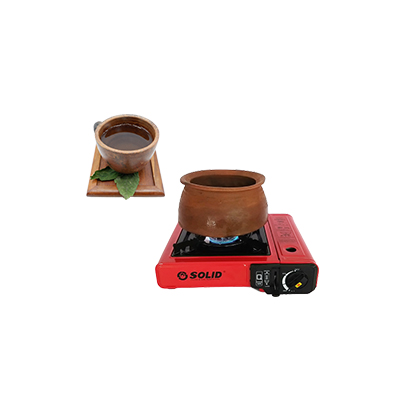
- Take an adequate amount of verbena perdu leaves and wash until clean.
- Boil until it boils.
- Let it cool to warm/cold.
- Strain then drink 500ml three times a day.
Reference Sources
- Royal Botanic Gardens, Kew. Plants of the World Online: Lantana trifolia L. https://powo.science.kew.org/taxon/urn:lsid:ipni.org:names:135333-2. 15-08-2022.
- Tropical Plants Database, Ken Fern. 2022. Lantana trifolia. http://tropical.theferns.info/viewtropical.php?id=Lantana+trifolia. 15-08-2022.
- Imbenzi P. S., He Y., Yan Z., Osoro E. K., Cheplogoi P. K. 2014. Chemical Constituents in Extracts from Leaves of Lantana trifolia and Their In Vitro Anti-oxidative Activity. Chinese Herbal Medicines, August 2014, 6(3): 242-246. https://www.sciencedirect.com/science/article/abs/pii/S1674638414600356. 15-08-2022.
- Flora Fauna Web. 2022. Lantana trifolia L. https://www.nparks.gov.sg/florafaunaweb/flora/5/8/5848. 15-08-2022.
- Nalubega R., Nyanzi S. A., Nakavuma J. L., Mugisha M. K. 2013. Ethnobotanical uses of Lantana trifolia L. and Sida cuneifolia Roxb. in Mukungwe and Wabinyonyi sub-counties of central Uganda. Journal of Intercultural Ethnopharmacology 2013; 2(3): 155-164. DOI : 10.5455/jice.20130809114525.