Lawsonia inermis L.
Summary
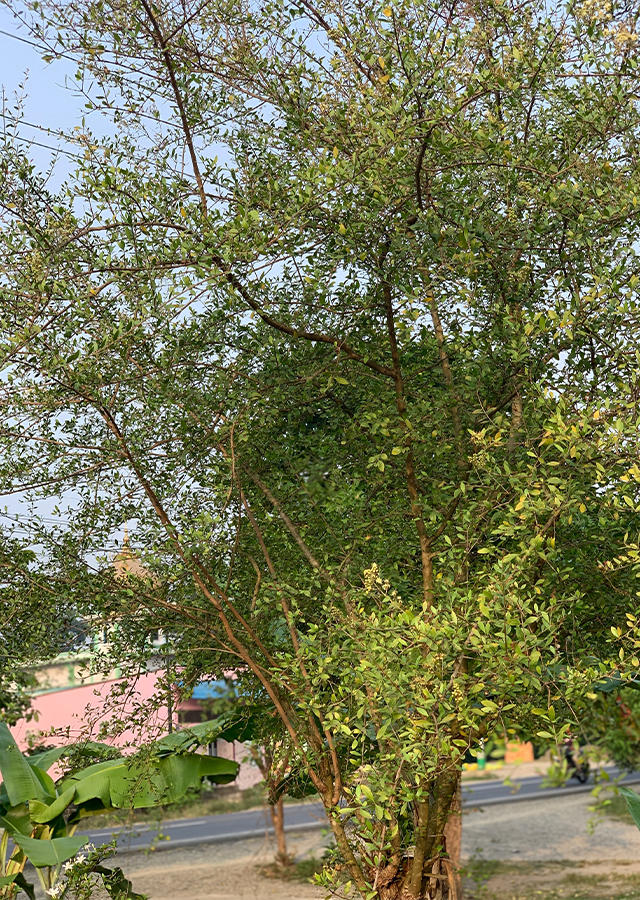
Pacar kuku or henna (Lawsonia inermis) is a shrub up to 7 meters tall of the Lythraceae family, native to the Arabian Peninsula and South Asia, distributed as far as North Africa and Australia. Its leaves, containing the compound eugenol, have long been used as a natural dye for hair, nails, and silk fabric. Pacar kuku is traditionally believed to boost body immunity and speed up wound healing.
Agroecology
A dry tropical and subtropical plant that grows at elevations up to 2,000 m above sea level, annual daytime temperatures between 19-27°C, average annual rainfall between 500-1,500 mm/year, soil pH between 5-7.
Morphology
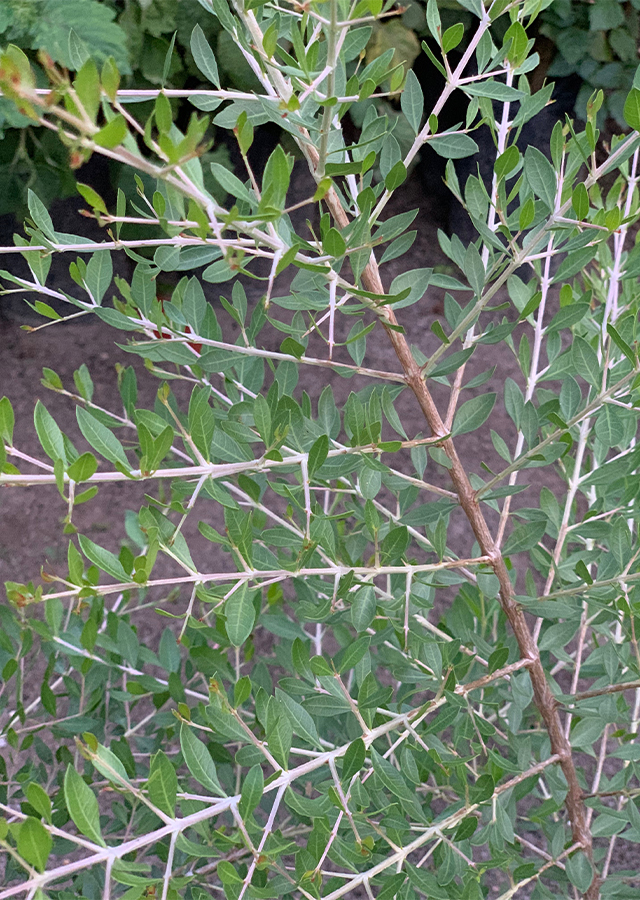
- Stem upright, branched. Twigs have thorns.
- Leaves single, opposite, oval-shaped, elongated, grayish-green in color, leaf buds red in color.
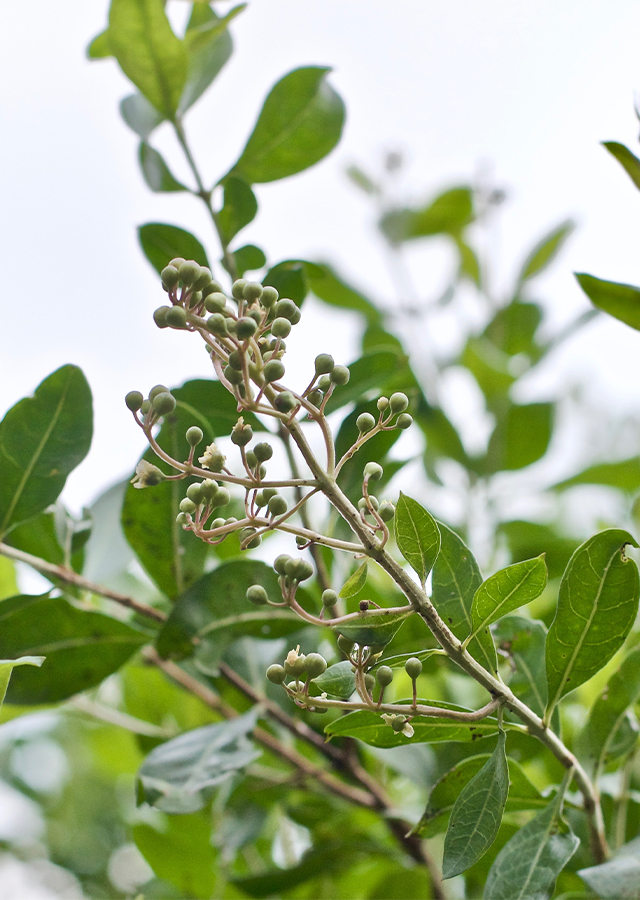
- Flowers panicle-shaped, pale yellow in color and fragrant.
- Fruit round-shaped, numerous, clustered.
- Seeds round and flat-shaped.
Cultivation
Propagated vegetatively (cuttings) and generatively (seed).
Chemical Content
Coumarin, naphthalene, naphthoquinone, xanthone, gallic acid, eugenol, luteolin, terpenoid, lawsoinermone, inermidioic acid, ethyl-2-methyl benzoate, linalool, phytol.
Benefits
Boosts body immunity, heals wounds, nail infections, inhibits cancer cells at the metaphase stage. Has anti-inflammatory, antiarthritic, analgesic, antidiabetic, hepatoprotective (liver protector), antioxidant activity.
Simplisia
- Collect mature pacar kuku leaves. Separate the leaves from their stalks.
- Air-dry the leaves in the shade on a tray.
- Grind with a blender to obtain fine powder then sift.
- Pack the simplisia in vacuum plastic then store.
Local Names
Inai parasi (Sumatra), Gaca, ineng (Aceh), Laka (Ambon), Kacar (Gayo), Ine (Batak), Inae batang (Minangkabau), Bunga laka (Timor), Kayu laka (Manado).
Traditional Recipes
The following recipes reflect traditional knowledge passed down through generations, not a substitute for professional medical diagnosis or advice. Consult a healthcare provider before use.
1. Nail infection
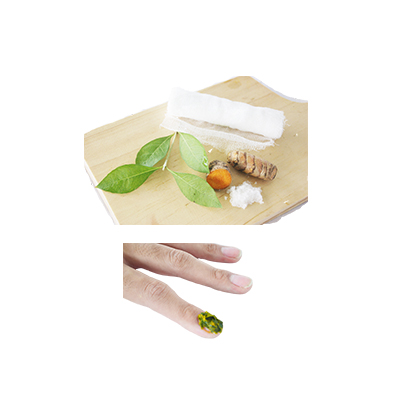
- Clean 1 handful of henna leaves and 1 finger-segment of turmeric. Pound until fine, add salt as needed.
- Apply the mixture to the affected area and cover with a bandage.
- Treatment is done daily until recovered.
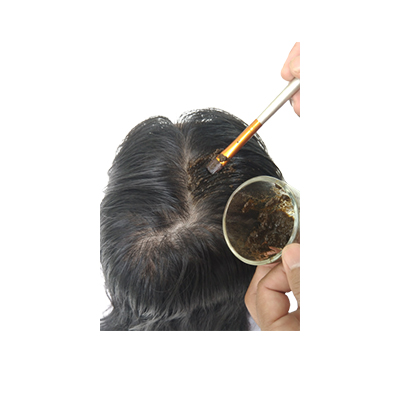
2. Coloring hair
- Mix ½ cup henna powder and ¼ glass warm water until reaching a thick consistency. Set aside for 12 hours until the color develops. If not, it can be applied to the hair directly.
- Apply from the roots to the tips of the hair. Leave for several hours then rinse.
Reference Sources
- Chaudhary G, S Goyal, P Poonia. 2010. Lawsonia inermis Linnaeus: a phytopharma cological review. I.J.P.S.D.R. 2(2): 91-98.
- Raja W, M Ovais, A Dubey. 2013. Phytochemical screening and antibacterial activity of Lawsonia inermis leaf extract. Intl. J. Microbiol. Res. 4 (1): 33-36.
- Semwal RB, Semwal DK, Combrinck S, Jones CC, Viljoen A, 2014. Lawsonia inermis L. (henna): Ethnobotanical, phytochemical and pharmacological aspects. Journal of Ethnopharmacology.
- Wardani DM. 2019. Pacar Kuku, Pewarna Kuku Berkhasiat Antibakteri. Satu Harapan.Com
- Satu Harapan.com. 2019. pacar-kuku-pewarna-kuku-berkhasiat-antibakteri. http://www.satuharapan.com/read-detail/read/pacar-kuku-pewarna-kuku-berkhasiat-antibakteri 12-10-2019
- Balittro. Balai Penelitian Tanaman Rempah dan Obat. Pacar Kuku http://balittro.litbang.pertanian.go.id/?page_id=5439 07-06-2019
- Ministry of Health. 2009. Guidelines For the Use of Herbal Medicines in Family Health Care. Ministry of health, republic of indonesia (Infeksi kuku)
- Merdeka.com. 6 Cara membuat henna bubuk daun inai dan cara menggunaknnya https://www.merdeka.com/jateng/6-cara-membuat-henna-bubuk-daun-inai-dan-cara-menggunakannya-kln.html?page=all 28/05/2020
- Innovareacademics. In A review on Lawsonia inermis: A potential medicinal plant. https://innovareacademics.in/journals/index.php/ijcpr/article/view/35695 18-01-2021