Leea guineensis G. Don
Summary
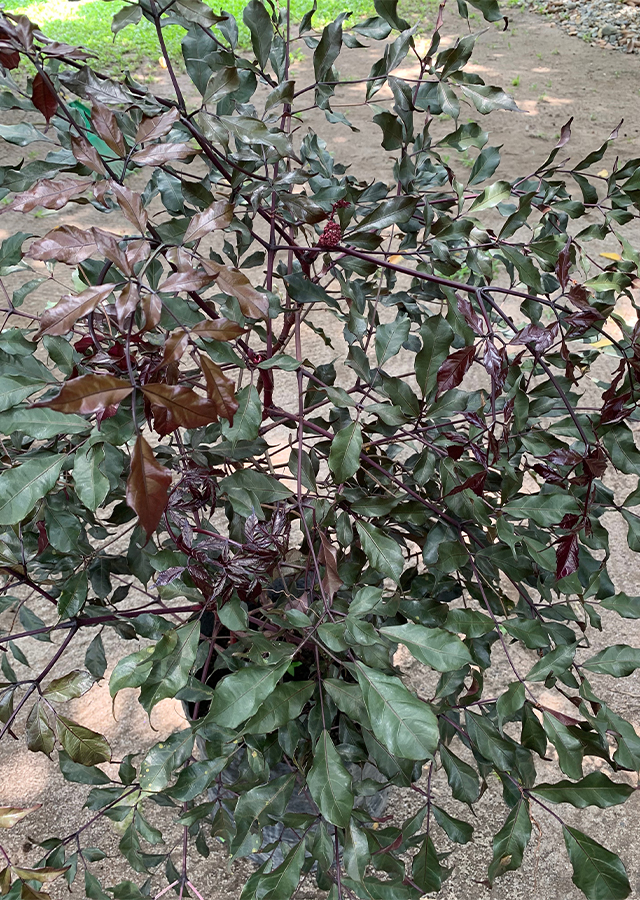
Leak bali (Leea guineensis) is a shrub or small tree up to 6 meters tall of the Vitaceae family, distributed from tropical Africa to Madagascar and Southeast Asia, thriving in moist regions. This plant has not been widely cultivated but has potential as an ornamental as well as traditional medicine. Leak bali is traditionally believed to relieve stomach cramps, rheumatism, and toothache.
Agroecology
This plant grows well up to elevations of 1,500 m above sea level. Suitable for planting in shaded environmental conditions, fertile, moist, and well-drained soil. Prefers places with partial shade positioning.
Morphology
- Root a taproot,
- Stem and branches semi-woody, sometimes has a creeping rootstock.
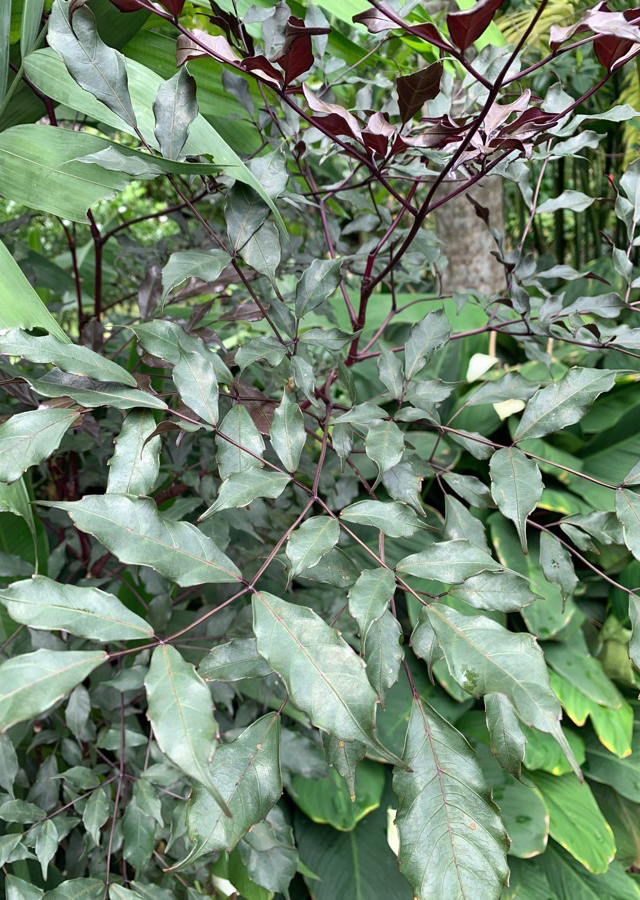
- Leaves compound, pinnate veins, many leaf roots, rachis length up to 50 cm, petiole length 5-15 cm, stipule obovate, smooth leaf surface, leaf shape ovate, lance-shaped to elliptical, leaf base inverted triangle to round-shaped, tapering leaf tip, serrated leaf edges.
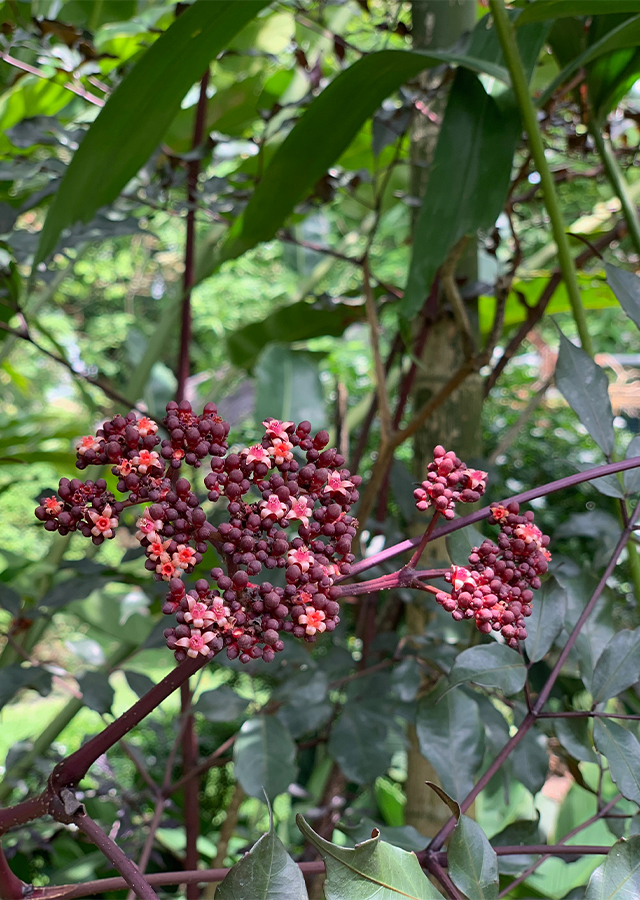
- Flowers have a stalk and red sepals, rounded when in bud.
- Fruit round-shaped, red in color and turning black when ripe.
Cultivation
Propagated generatively (seed) and vegetatively (stem cuttings and air layering).
Chemical Content
Alkaloid, flavonoid, tannin, saponin, cardiac glycoside, polyphenol, anthraquinone, essential oil, terpenoid, quercetin, kaempferol, mearnsitrin, gallic acid, ethyl gallate, phlobatannin, phytic acid.
Benefits
Treats stomach cramps, rheumatism, joint inflammation, muscle pain, treats edema wounds and abscesses, vertigo or headache, dysentery, toothache, epilepsy, diarrhea, hypertension, ulcers and has diuretic (urine promoter) activity.
Simplisia
- Choose fresh, undamaged leak bali leaves, wash thoroughly with running water then drain.
- Arrange the leaves on a tray, air-dry without direct sunlight exposure until dry (leaves easily crumble when squeezed).
- Once dry store in a closed container
Local Names
No information found. Further research needed.
Traditional Recipes
The following recipes reflect traditional knowledge passed down through generations, not a substitute for professional medical diagnosis or advice. Consult a healthcare provider before use.
1. Rheumatism
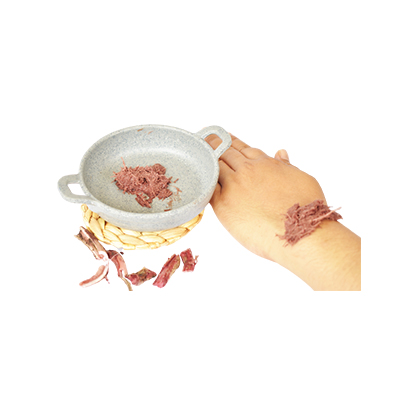
- Prepare leak bali root and wash thoroughly.
- Pound until mashed.
- Apply externally to the affected area.
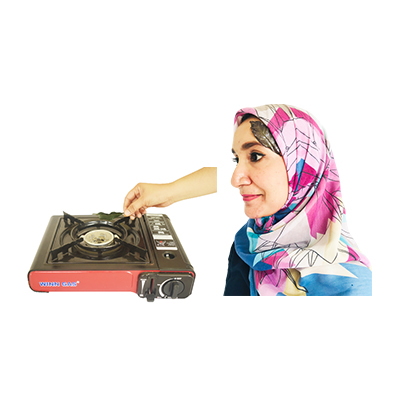
2. Remedy for vertigo or headache
- Take fresh leak bali leaves then wash thoroughly.
- Coat with oil then heat the leaves until slightly wilted.
- Apply directly to the affected area.
Reference Sources
- Royal Botanic Gardens. Plants of the World Online: Leea guineensis G.Don. https://powo.science.kew.org/taxon/urn:lsid:ipni.org:names:68307-1. 09-03-2022.
- Useful Tropical Plants Database. 2022. Leea guineensis. http://tropical.theferns.info/viewtropical.php?id=Leea+guineensis. 09-03-2022.
- Flora Fauna Web. 2022. Leea guineensis G. Don. https://www.nparks.gov.sg/florafaunaweb/flora/4/3/4371. 09-03-2022.
- Stuartxchange. 2015. Philippine Medicinal Plants: Abang-abang. http://www.stuartxchange.org/Abang-Abang. 09-03-2022.