Leea indica (Burm.f.) Merr.
Summary
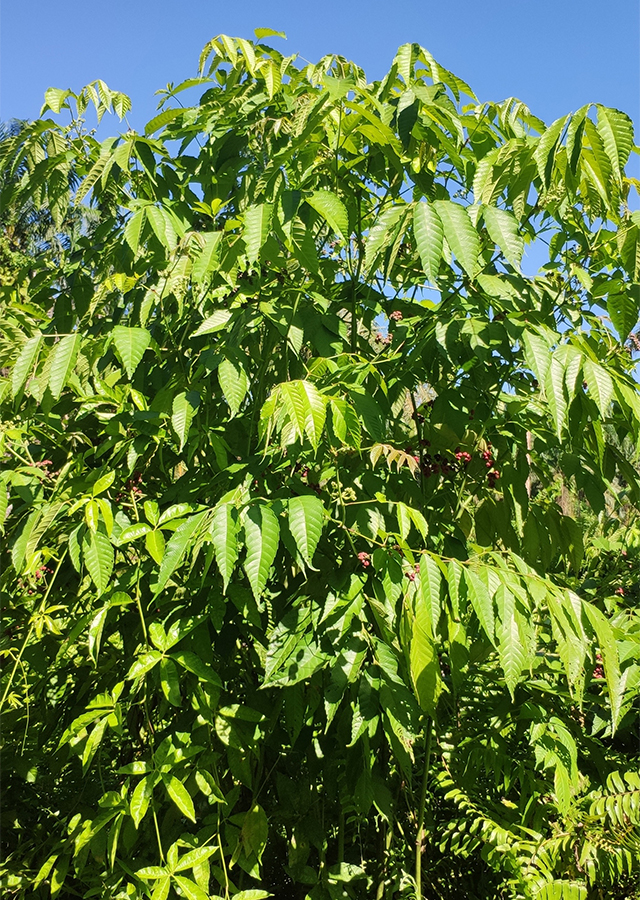
Girang (Leea indica) is a shrub up to 5 meters tall of the Vitaceae family, commonly found in secondary evergreen forests of Southeast Asia, distributed from Bangladesh and China to Northern Australia. Besides being grown as an ornamental, girang is also used as a green manure in agricultural land. Traditionally, this plant is believed to support pregnancy and postpartum care, and to address boils and snake venom.
Agroecology
Grows in terrestrial areas (primary rainforest, mountains, secondary rainforest, monsoon forest, coastal forest, freshwater swamp forest, savannah/scrubland grassland) at elevations up to 2,500 m above sea level. Grows well in full or partial sun, favoring moist, fertile, well-drained soil.
Morphology
- Roots single, light brown.
- Stem woody, branched, round, climbing and green when young.
- Leaves compound, lanceolate leaflets, short-stalked, toothed margins, pointed tip, rounded base, 6-25 cm long, 3-8 cm wide, hairy and green.
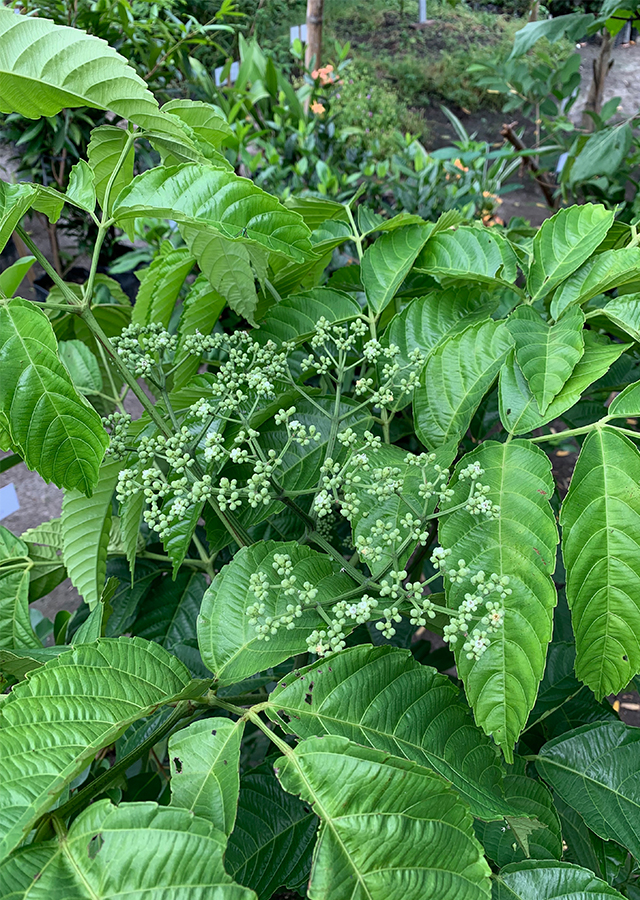
- Flowers compound, panicle-shaped, ovate calyx, 2-5 cm long, yellowish-white.
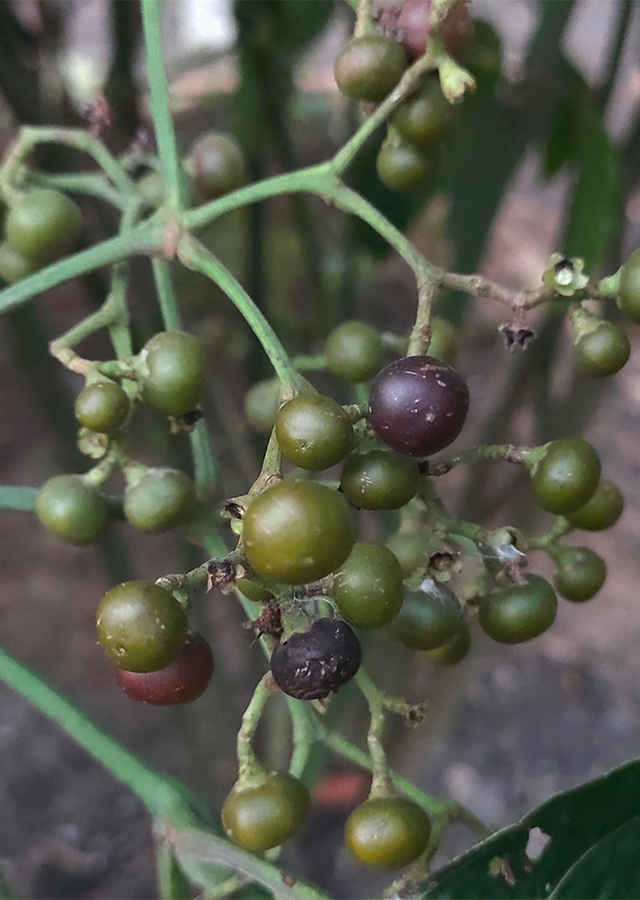
- Fruit round, ± 12 mm in diameter, green when young and blackish-purple when ripe.
- Seeds small, triangular, yellowish-white.
Cultivation
- This old-wood plant can be propagated generatively (by seed) or vegetatively (by stem cuttings).
Chemical Content
- Alkaloids, flavonoids, terpenoids, glycosides, saponins, steroids, quercetin, gallic acid, lupeol, ol-sitosterol, ursolic acid, and molicase arabinoside and mlikic acid xyloside.
Benefits
- Used during pregnancy; postpartum care; treats headaches, stomach ache, sprains; addresses skin problems; antimalarial, treats boils; snake venom antidote.
Simplisia
- Select fresh, non-rotten girang leaves. Remove any adhering debris. Wash thoroughly under running water and drain.
- Slice the leaves and place on a tray, then sun-dry for several days, covered with a thin dark cloth.
- Once dry, place in clean, tightly sealed, airtight plastic.
Local Names
Ginggiyang (Sunda), Jirang (Madura), Kayu ajer perempuan (Malay), Mali-mali (Makasar), Uka (Maluku), Ngeteda (Halmahera), Kayu tua.
Traditional Recipes
The following recipes reflect traditional knowledge passed down through generations, not a substitute for professional medical diagnosis or advice. Consult a healthcare provider before use.
1. Allergies and Itching
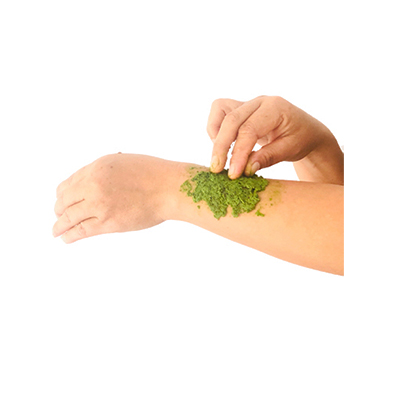
- Pound 1-2 handfuls of fresh girang leaves until fine.
- Apply to the allergic or itchy area.
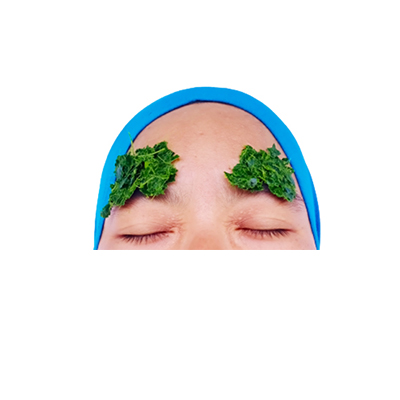
2. Headache Remedy
- Prepare 7 g of fresh girang leaves, washed thoroughly.
- Pound until smooth, then apply to the left and right temples.