Leonotis nepetifolia (L.) R.Br.
Summary
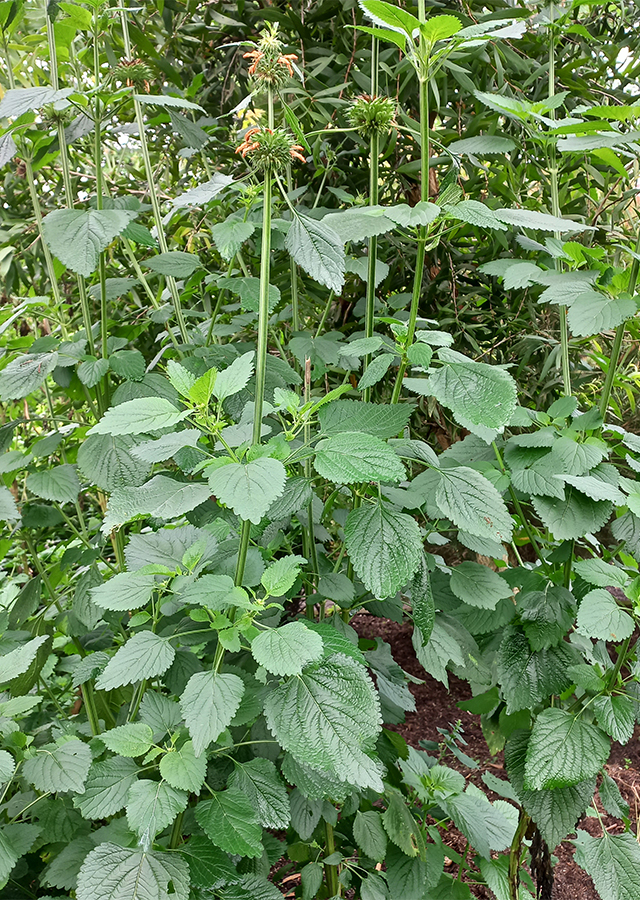
Klip dagga (Leonotis nepetifolia) is an upright annual herb 1-3 meters tall of the Lamiaceae family, native to tropical Africa and the Indian subcontinent, now spreading as a pantropical weed. In India, its root is an important medicine in Ayurveda, Unani, and Siddha, particularly for asthma, while its dried leaves are sometimes used as a marijuana substitute due to their psychoactive properties. Klip dagga is also traditionally believed to cleanse the womb and relieve menstrual pain.
Agroecology
Klip dagga can be found growing along roadsides, abandoned agricultural land, overgrazed grasslands, disturbed sites, waste areas, waterways and floodplains, at elevations up to 2,000 m above sea level. This plant prefers warm temperatures above 30ºC and well-distributed rainfall between 1,600-2,000 mm/year. Suitable for planting in sandy loam soil, with adequate humus content and a soil acidity degree (pH) ranging between 4.6-6.5.
Morphology
- Root a taproot.
- Stem sturdy, upright, bluntly square-shaped with thickened corners, branching at the upper nodes.
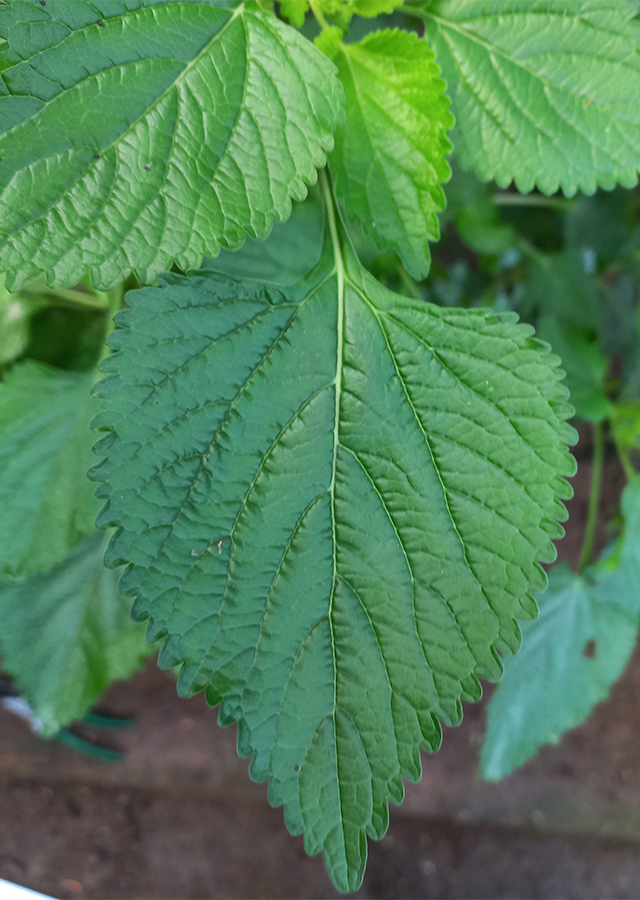
- Leaves arranged opposite each other, membranous, oblong-ovate shaped, pointed to tapering tip, coarsely serrated edges, rounded to blunt at the base, finely puberulent on both surfaces. Leaf petiole winged at the top.
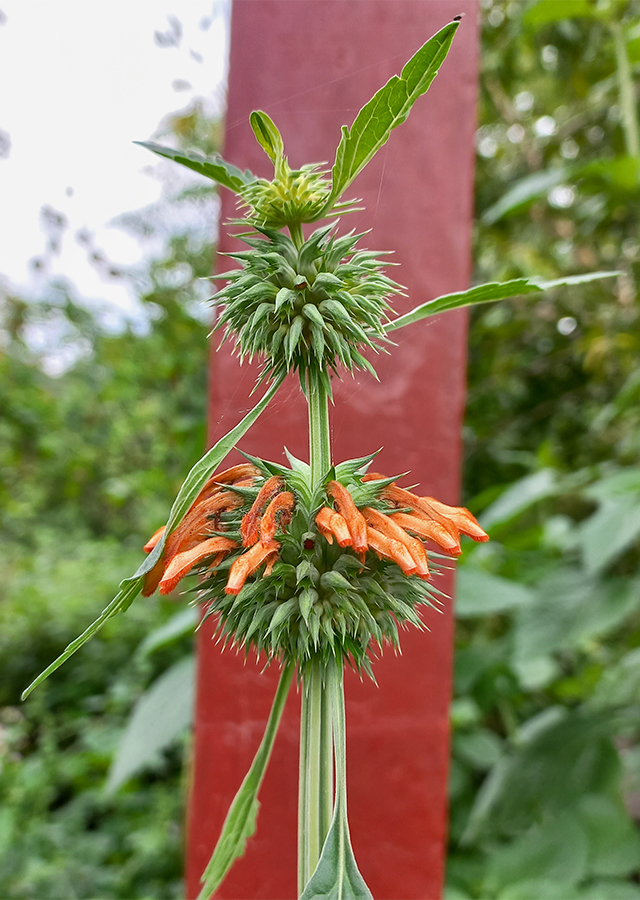
- Flowers compound, dark orange-red in color, with many florets in a whorl. Sepal funnel-shaped, 1.2-1.5 cm long. Stamens numbering 4, inserted in the corolla tube.
- Fruit a pod, each pod containing four seeds, dull black, hairless.
Cultivation
- Propagated generatively (seed). Optimal germination temperature is 28-32°C and soil moisture 40-60% for seeds 6 months old.
- This plant can flower year-round.
Chemical Content
Essential oil (β-caryophyllene, α-humulene, germacrene D, caryophyllene oxide, octene, (Z)-β-ocimene, β-copaene, linoleic acid, oleic acid), resinic acid, labdane diterpene (nepetaefolin), antioxidative phenylethanoid glycosides acteoside, martynoside, lavandulifolioside, coumarin 6-methoxysiderin, 4,6,7-trimethoxy-5-methylchrom-2-one, iridoid glycoside, and laballenic acid.
Benefits
Treats asthma and bronchitis, diarrhea, fever, influenza, cough, headache, malaria, canker sores, rheumatism, addresses swelling, wounds and burns, ringworm, itchy skin, cleanses the womb, addresses menstrual pain, tonic for strengthening the back, pneumonia, anthrax, syphilis, diabetes, hemorrhoid wash, kidney stones. Has antifungal, antibacterial, anticancer, anthelmintic, diuretic, and analgesic activity.
Simplisia
- Prepare klip dagga flower leaves, wash thoroughly with running water then drain.
- Dry in the sun or with an oven at 40°C until moisture content reaches 10%.
- Grind using a blender into powder.
- Store in a clean, airtight place.
Local Names
Nampong (Sunda).
Traditional Recipes
The following recipes reflect traditional knowledge passed down through generations, not a substitute for professional medical diagnosis or advice. Consult a healthcare provider before use.
1. Kidney stones
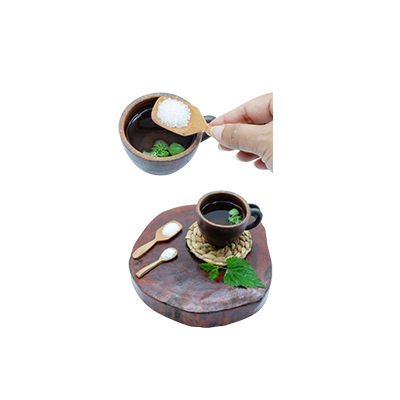
- Take fresh klip dagga leaves and flowers then wash thoroughly.
- Boil all ingredients until boiling.
- Add salt or sugar.
- Drink to dissolve kidney stones.
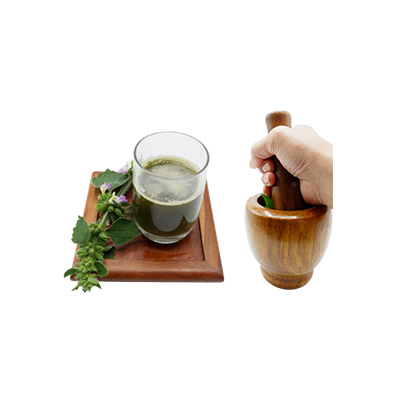
2. Canker sores
- Take fresh klip dagga leaves as needed then wash thoroughly.
- Grind/blend adding a little water.
- Strain then drink.
Reference Sources
- CAB International. 2021. Invasive Species Compendium: Leonotis nepetifolia (Christmas candlestick). https://www.cabi.org/isc/datasheet/110266#toenvironments. 05-09-2021.
- Tropical Plants Database. 2021. Useful Tropical Plants: Leonotis nepetifolia. https://tropical.theferns.info/viewtropical.php?id=Leonotis+nepetifolia. 05-09-2021.
- PROSEA. 2021. Leonotis nepetifolia (PROSEA). https://uses.plantnet-project.org/en/Leonotis_nepetifolia_(PROSEA). 05-09-2021.
- Vikaspedia. 2021. Leonotis nepetaefolia. https://vikaspedia.in/agriculture/crop-production/package-of-practices/medicinal-and-aromatic-plants/leonotis-nepetaefolia-1. 05-09-2021.
- Royal Botanical Garden. 2021. Plant of the World Online: Leonotis nepetifolia (L.) R.Br. http://www.plantsoftheworldonline.org/taxon/urn:lsid:ipni.org:names:127310-3. 05-09-2021.