Leonurus japonicus Houtt.
Summary
Leonurus japonicus or motherwort (honey grass) is widely distributed across temperate and tropical Asia, from China and Japan to Indonesia and India. This herb is considered one of the 50 fundamental herbs in traditional Chinese medicine and is widely used by women in China and Southeast Asia to address menstrual disorders and as postpartum recovery, while in Sarawak its leaves are also used as a cooking ingredient by the ethnic Chinese community.
Agroecology
L. japonicus grows in moist environments in temperate and tropical regions from sea level up to 3,400 m asl. This species can grow in semi-shaded areas, but prefers growing in areas with full sun exposure and soil with a pH ranging from 4 to 8. L. japonicus is a common weed in waste areas, disturbed sites, grasslands and gardens, along riverbanks, railway embankments, and also as a weed in fertile fields.
Morphology
- Roots a taproot with dense fibrous roots.
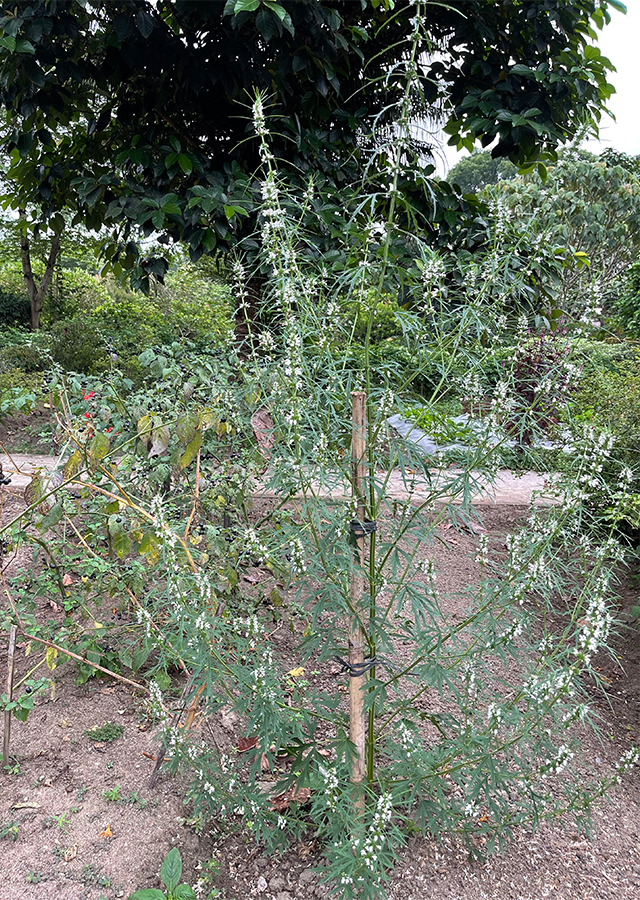
- Stem upright, 30-120 cm, 4-angled, grooved, puberulent or hairless, nodes and angles close together, with an unpleasant smell.
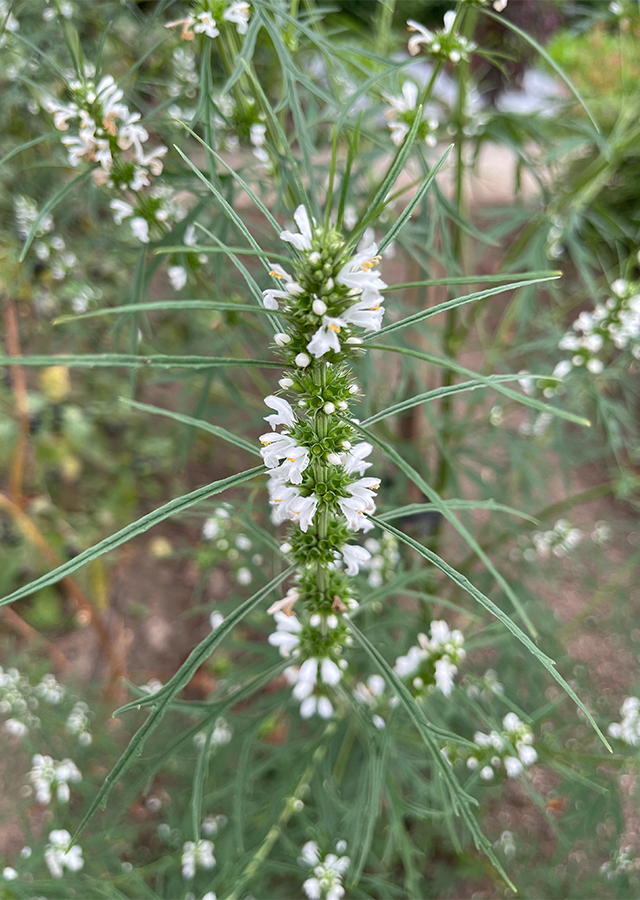
- Leaves decussate, green, lower stem leaf blades ovate or deltoid in outline, base broadly acute, lobes oblong-rhombic to ovate, upper leaf surface (adaxial) glabrescent to strigose, lower leaf surface (abaxial) finely hairy, upper leaves sessile. Middle stem leaf blades rhombic, lobes oblong-linear, base narrowly acute. Petiole narrowly winged at the tip.
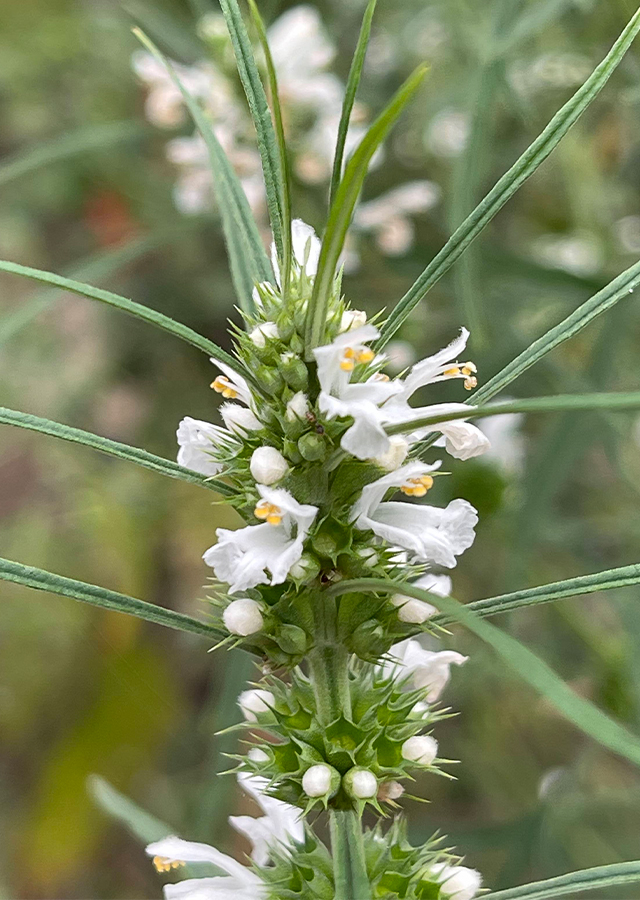
- Flowers bisexual, sessile, calyx urbinate-campanulate, 10-veined, 5-toothed, teeth broadly triangular, nearly equal, hairless or slightly puberulent to bristly. Corolla 2-lipped, tube slightly shorter than the calyx, when young with an oblique ring of hairs inside, ovate, upright, convex, villous, puberulent outside. Upper lip straight, concave, oblong, margin entire, ciliate. Lower lip slightly shorter, base slightly scaly, 3-lobed, midlobe very large, obcordate, puberulent, white, reddish, or purplish-pink in color. Stamens 4, in 2 pairs, filaments thinly hairy, ascending beneath the upper lip, anthers 2-celled.
- Fruit consisting of 4 dry schizocarpous nutlets enclosed within the persistent calyx, nutlets ellipsoid, about 2 mm long, truncate at the tip, base acute, surface smooth, brownish in color.
Cultivation
- Plant propagation is generative through seed and vegetative through stem cuttings.
- In Vietnam, the best time to sow is October-November, because seeds germinate best at temperatures between 20-25 degrees Celsius.
Chemical Content
Phenylethanoid glycosides, iridoid glucosides, cyclic peptides, triterpenoids, the alkaloid leonurine (4-guanidino-n-butyl syringate), stachydrine, labdane-type diterpenes preleoheterin, leoheterin, prehispanolone, hispanolone, galeopsin.
Benefits
Addresses menstruation-related women's health complaints (including reducing excessive menstrual flow or menstrual pain and inducing menstruation), restorative after childbirth, speeds up uterine contractions after childbirth and placenta expulsion, improves blood circulation, stops vaginal discharge, addresses night blindness and dizziness, heals skin diseases, reduces blood pressure, treats bladder stones, treats headache (as a poultice), malaria, reduces fever, relieves itching and painful herpes zoster (placed in bath water). Is aphrodisiac, diuretic, and antibacterial.
Simplisia
- Take an adequate amount of fresh motherwort leaves and wash until clean.
- Dry under the sun or with an oven at 40°C until the moisture content reaches 10%.
- Store in a clean, airtight container.
Local Names
Dendereman (Sunda), Si saratan (Sumatra), Ginjean.
Traditional Recipes
The following recipes reflect traditional knowledge passed down through generations, not a substitute for professional medical diagnosis or advice. Consult a healthcare provider before use.
1. Relieves itching and herpes zoster
- Take an adequate amount of fresh motherwort leaves and wash until clean.
- Boil the leaves until it boils.
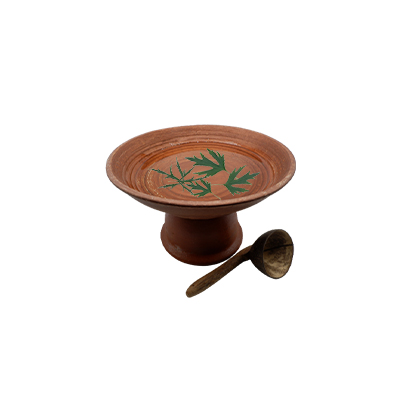
- Use the boiled water in bath water to relieve itching and painful herpes zoster.
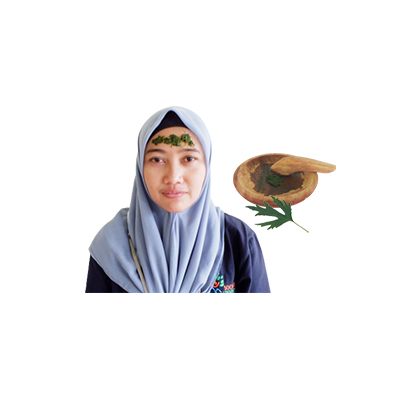
2. Headache
- Prepare an adequate amount of fresh motherwort leaves and wash until clean.
- Grind until it becomes a paste.
- Apply as a poultice on the head to use as a compress for headache.
Reference Sources
- Royal Botanic Gardens. Plants of the World Online: Leonurus japonicus Houtt.. https://powo.science.kew.org/taxon/urn:lsid:ipni.org:names:449195-1. 18-09-2022.
- Plant Resources of South-East Asia. 2016. Leonurus sibiricus (PROSEA). https://uses.plantnet-project.org/e/index.php?title=Leonurus_sibiricus_(PROSEA)&mobileaction=toggle_view_desktop. 18-09-2022.
- CAB International. 2022. Invasive Species Compendium: Leonurus japonicus (honeyweed). https://www.cabi.org/isc/datasheet/115194#toPictures. 18-09-2022.