Litsea cubeba (Lour.) Pers.
Summary
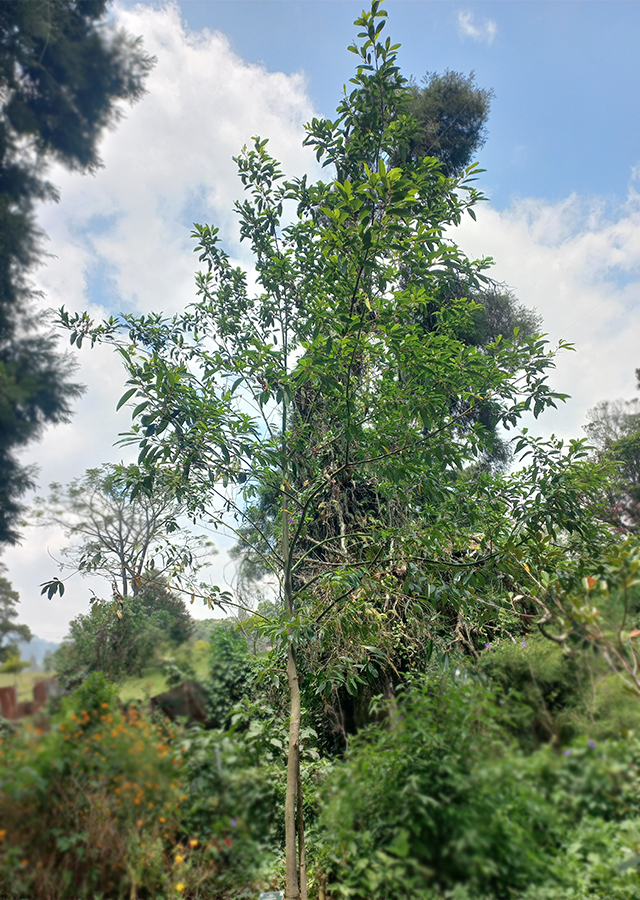
Litsea cubeba or antarasa grows spread across Southeast Asia and East Asia, including on the mountain slopes of Sumatra, Kalimantan, and Java. This plant's essential oil ranks among the world's top ten traded essential oils, widely used as an aromatherapy ingredient, food preservative, and in cosmetics, besides functioning as a shade tree and windbreak on plantations. In traditional Chinese medicine, antarasa has been used for more than hundreds of years as a body warmer and pain reliever, including for cough, rheumatism, and digestive disorders.
Agroecology
The habitat of L. cubeba is generally found in hilly areas, sunny slopes, thickets, sparse forests, roadsides, riverbanks, and it grows well at elevations of 700-2,300 m. In East Kalimantan, L. cubeba is found growing at elevations of 400-600 m. In Java, this species is found growing in fertile soil and also near sulfur lakes.
Morphology
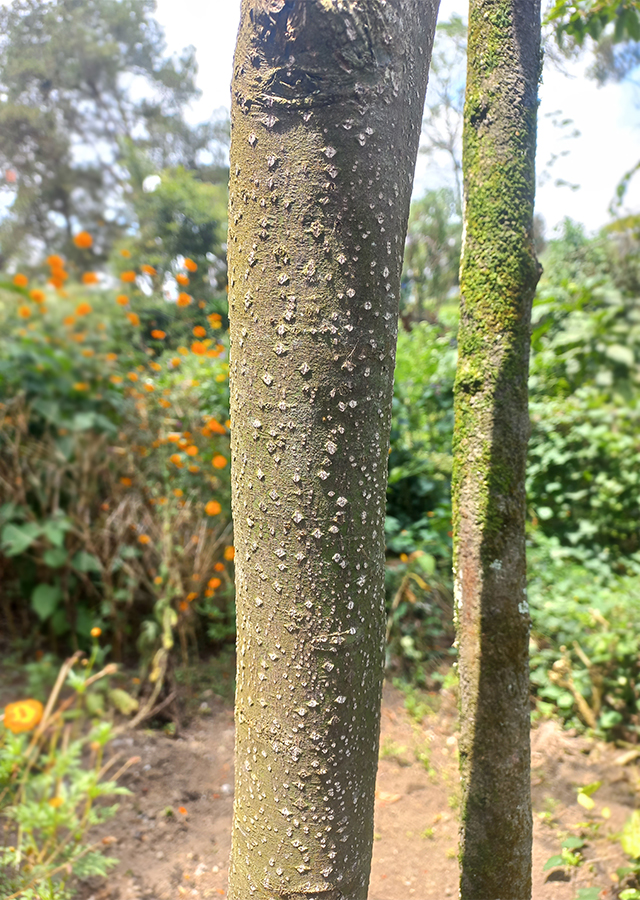
- Trunk short and straight, bark 1 mm thick, very hard, green outside, yellow inside, with large lenticels, lemon-like aroma and pungent taste. The trunk, especially at the tip, is short-haired, sparsely hairy sometimes smooth, black.
- Leaves simple, alternate, aromatic (leaves smell strongly of lemon when crushed), petiole 8-18 mm long, leaf shape lanceolate to oblong, base acute, tip long-acuminate, finely dotted, brownish green when young, glossy dark green above, glaucous below, both surfaces covered with a waxy whitish or bluish substance, lateral veins slender in 8-12 pairs.
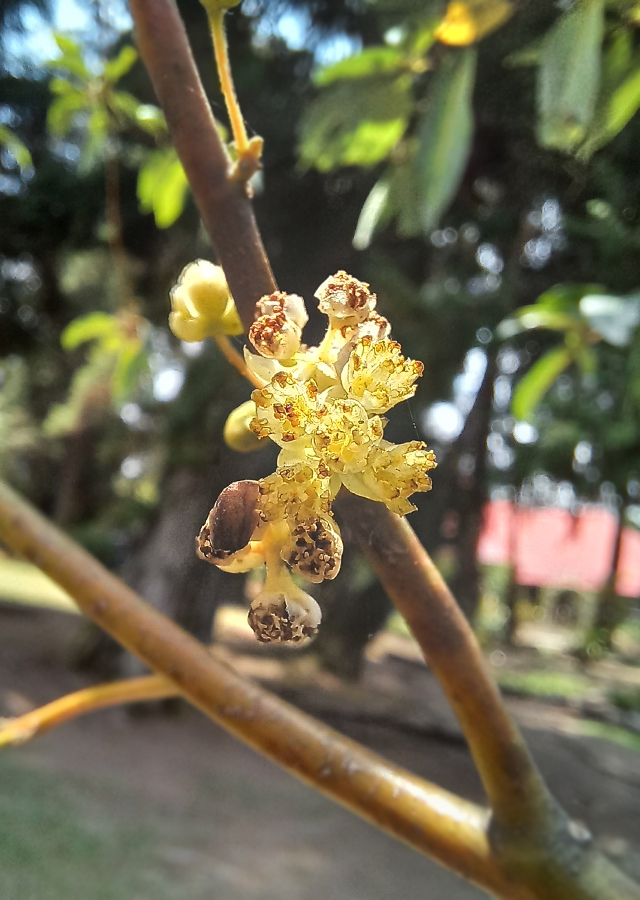
- Flowers 3-4 mm in diameter, yellowish white. Tepals 5-6, broadly ovate, hairless outside. Male flowers with 9 stamens in 3 whorls, filaments sparsely hairy, flowers from the 3rd whorl with 2 basal subsessile glands, square anthers. Female flowers with 9 staminodes, large hairless ovary with a very short style and a large multi-lobed stigma.
- Fruit a globose berry, 5-6 mm, apiculate when young, blackish when mature, sitting on a stalk 3-5 mm long that slightly thickens at the tip into a cup-shaped receptacle.
- Seeds round, white.
Cultivation
- Plant propagation is generative through seed and vegetative through stem cuttings and shoot cuttings.
- Seed that has been sown will germinate within 6-8 weeks and continue up to 5 months. Seedlings are ready to plant when 9-20 months old.
- Plants produced from cuttings can begin fruiting when only 2-3 years old.
Chemical Content
Alkaloids (laurotetanine, O-methyloblongine, oblongine, xanthoplanine, magnocurarine), essential oil (citral, limonene, methyl-heptenone, α-pinene, β-pinene, linalool, 1,8-cineole, citronellal, citronellol, sabinene, α-thujene, camphene, 2,6-dimethyl-hepten-5-al, α-terpinene, isolemonin, terpinolene, neo-isopulegol, isopulegol, 4-terpineol, terpineol, trans-carveol, geraniol, geranial, α-terpenyl acetate, α-copaene, methyl cinnamate, methyl eugenol, nerol, zingiberene, (E)-caryophyllene, α-farnesene, α-humulene, α-curcumene, zingiberene, Δ-cadinene, caryophyllene oxide), lauric acid, capric acid, monoterpenoic acid (litseacubebic acid) and monoterpene lactone (6R)-3,7-dimethyl-7-hydroxy-2-octen-olide, vanillic acid, trans-3,4,5-trimethoxycinnamyl alcohol and oxonantenin, cis-4-decenoic acid, cis-4-dodecenoic acid, and cis-4-tetradecenoic acid.
Benefits
A warming and pain-relieving agent, improves digestion, treats cough, bronchitis, colds, headache, diarrhea, stomachache, chest pain, muscle and vein cramps, rheumatism, body aches, reduces fever, addresses mental disorders (hysteria and forgetfulness), helps heal athlete's foot on the soles and skin diseases, menstrual pain, motion sickness, cardiac arrhythmia, vertigo, paralysis, and postpartum preparation. In aromatherapy, the oil is applied as a cooling agent against acne and dermatitis, and to relieve anxiety and stress. Has antiparalytic, diuretic, antioxidant, anticancer, antimicrobial, anti-inflammatory, and antitumor properties.
Local Names
Krangean, Kilemo (Jawa), Lado-lado (Sumatra), Baleng la, Balangla (Kalimantan Timur), Tenem (Kalimantan Utara).
Traditional Recipes
The following recipes reflect traditional knowledge passed down through generations, not a substitute for professional medical diagnosis or advice. Consult a healthcare provider before use.
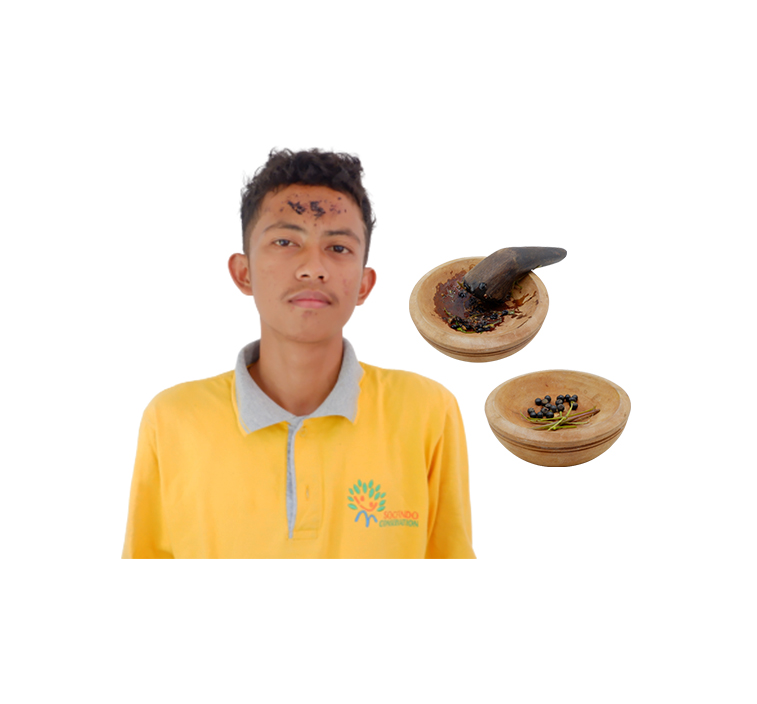
1. Fever
- Take an adequate amount of antarasa fruit and bark and wash until clean.
- Grind both ingredients until they become a paste.
- Apply the paste to the forehead.
Reference Sources
- Royal Botanic Gardens. Plants of the World Online: Litsea cubeba (Lour.) Pers.. https://powo.science.kew.org/taxon/urn:lsid:ipni.org:names:465621-1. 15-09-2022.
- Temperate Plants Database, Ken Fern. 2016. Litsea cubeba. https://temperate.theferns.info/plant/Litsea+cubeba. 15-09-2022.
- Plant Resources of South-East Asia. 2021. Litsea cubeba (PROSEA). https://uses.plantnet-project.org/en/Litsea_cubeba_(PROSEA). 15-09-2022.
- Widodo H., Widiyastuti Y. 2011. Krangean (Litsea cubeba (Lour.) Persoon): Aspek Agronomi, Penggunaan Secara Tradisional, Bioaktifitas dan Potensinya.
- Kuspradini, H., Putri, A.S. dan R. Diana. 2018. Potensi Tumbuhan Litsea. Mulawarman University Press. Samarinda.