Lonicera japonica Thunb.
Summary
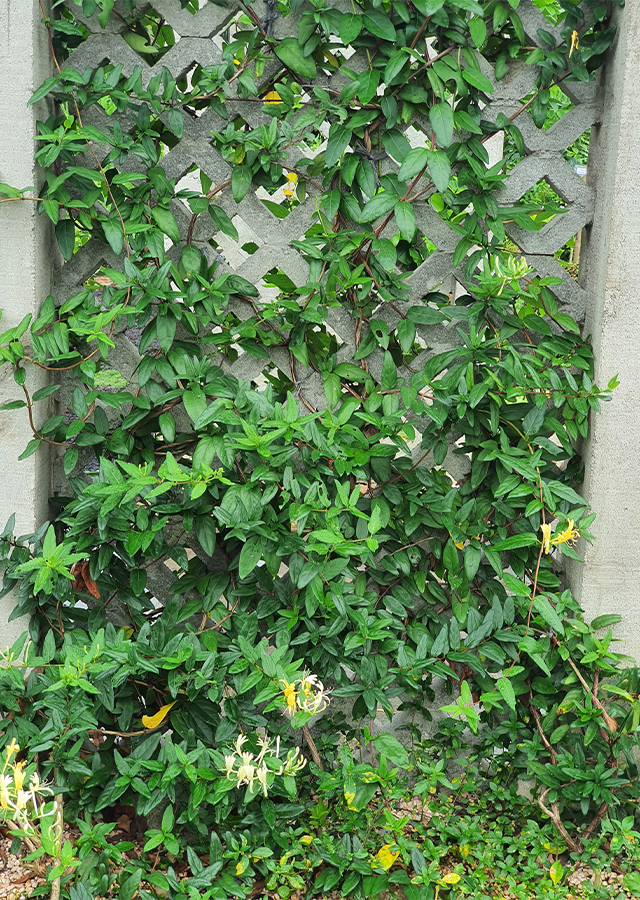
Japanese honeysuckle (Lonicera japonica) is a climbing plant 5-8 meters long of the Caprifoliaceae family; the genus Lonicera itself comprises around 180 species distributed across North America and Eurasia. Its fragrant flowers make it a favorite ornamental, though in a number of countries it is instead considered an invasive species. In traditional Chinese medicine, Japanese honeysuckle is used as an anti-inflammatory, fever reducer, and ingredient in health teas.
Agroecology
Japanese honeysuckle can grow outside the lowland-to-highland subtropical zone at elevations up to 743 m above sea level, annual rainfall of 1,000 mm/year, with high humidity and direct sunlight. This plant grows well in well-drained soil with a soil pH of 4-8.
Morphology
- Roots fibrous, blackish-brown.
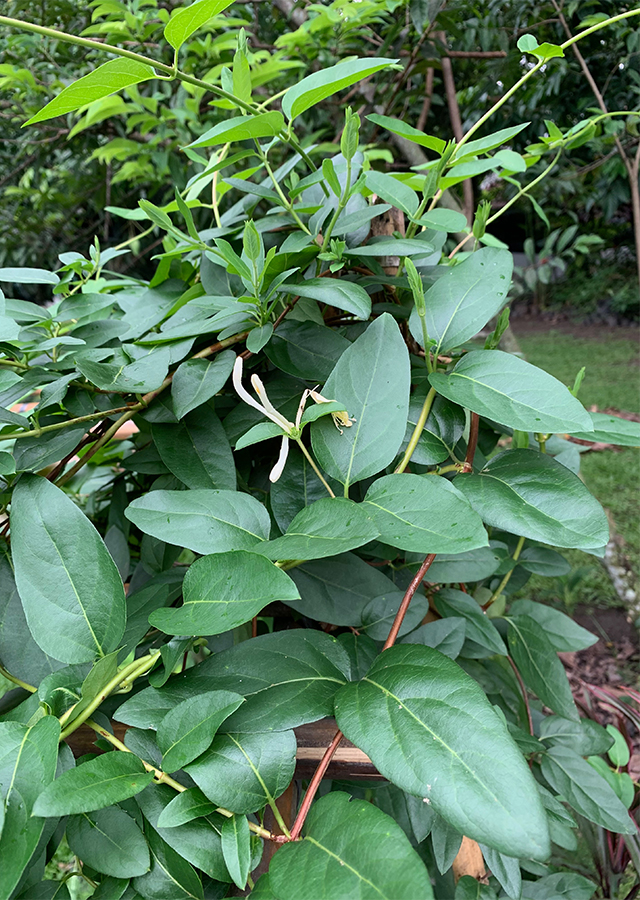
- Stem round, hard, tough, flexible, brown.
- Leaves opposite, simple oval shape, 1–10 cm long.
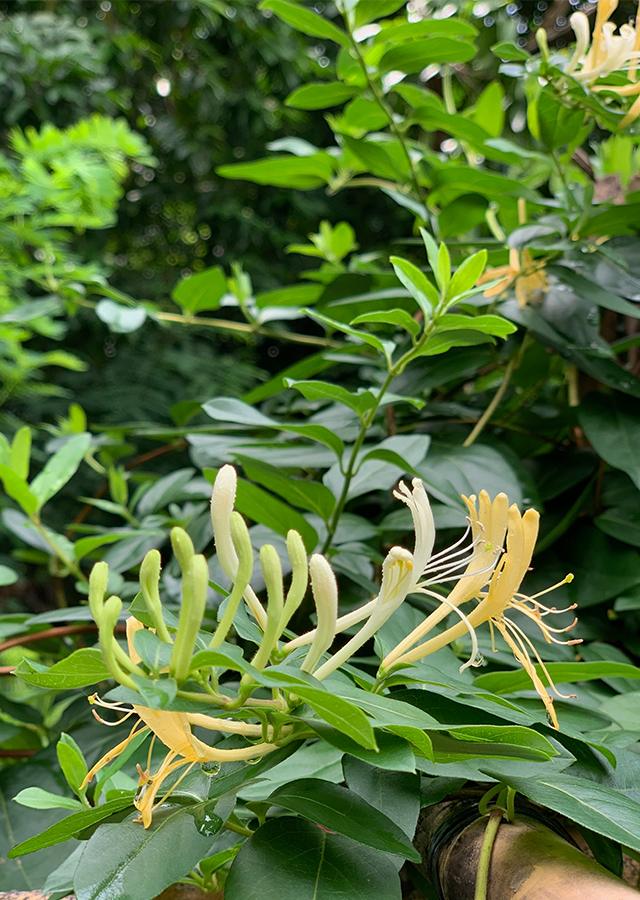
- Flowers fragrant, white, pink, red, or yellow. When the flowers fall, a round fruit cluster forms, colored red, purple, orange, or green.
- Fruit a round berry. Green when young, turning black when ripe.
- Seeds ovate to oblong, small, hard, brown, surface flat to concave in the middle.
Cultivation
- Propagated through seed, cuttings, and air layering.
- Best planted before the rainy season.
Chemical Content
Phenolic compounds, flavonoids, anthocyanins, sitosterol, α-amyrin, β-amyrin, campesterol, stigmasterol, oleanolic acid, ursolic acid, luteolin, luteoloside, quercetin, rutin, chlorogenic acid, stigmasta-3,5-dien-7-one, 24-methylenecycloartanol,
Benefits
Antioxidant, antitumor, antibacterial, anti-inflammatory, antimutagenic, antiatherosclerotic; lowers cholesterol; improves blood flow; treats flu; reduces fever; treats uterine inflammation; helps prevent coronary heart disease and angina (chest pain); boosts metabolism; and anti-aging.
Simplisia
- Select Japanese honeysuckle flowers about to bloom into a trumpet shape. Wash thoroughly and drain.
- Arrange in a container and place in a shaded location. Let the flowers dry until they become brittle and easily crumble.
- Grind the flowers into a powder. Store in an airtight container.
Local Names
Ranggis (Java).
Traditional Recipes
The following recipes reflect traditional knowledge passed down through generations, not a substitute for professional medical diagnosis or advice. Consult a healthcare provider before use.
1. Flu Remedy
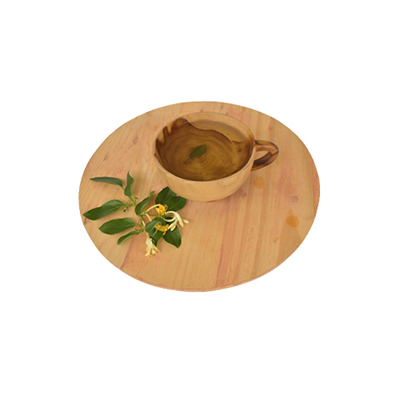
- Take 30 g of fresh Japanese honeysuckle leaves, washed thoroughly.
- Boil in 200 ml of water for 15 minutes, then strain.
- Once cool, drink all at once, 3 times a day.
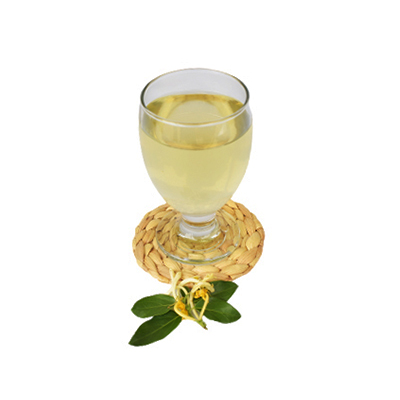
2. Uterine Inflammation Remedy
- Take 60 g of fresh Japanese honeysuckle leaves, then wash.
- Boil in 400 ml of water until boiling, or for 15 minutes, then strain.
- Once cool, drink twice a day (morning and evening).
Reference Sources
- Auzanneau N, Weber P, Kosińska-Cagnazzo A, Andlauer W. 2018. Bioactive compounds and antioxidant capacity of Lonicera caerulea berries: Comparison of seven cultivars over three harvesting years. Journal of Food Composition and Analysis. 66: 81-89.
- Becker R, PÄ…czkowski C, Szakiel A. 2017. Triterpenoid profile of fruit and leaf cuticular waxes of edible honeysuckle Lonicera caerulea var. Camtschatica. Acta Soc. Bot. Pol. 86(1): 3539-3548.
- Becker R, Szakiel A. 2018. Phytochemical characteristics and potential therapeutic properties of blue honeysuckle Lonicera caerulea L. (Caprifoliaceae). Journal of Herbal Medicine 16: 100237.
- Celli GB, Ghanem A, Brooks MSL. 2015. Optimization of ultrasound-assisted extraction of anthocyanins from haskap berries (Lonicera caerulea L.) using Response Surface Methodology. Ultrasonics Sonochemistry 27: 449-455.