Luffa aegyptiaca Mill.
Summary
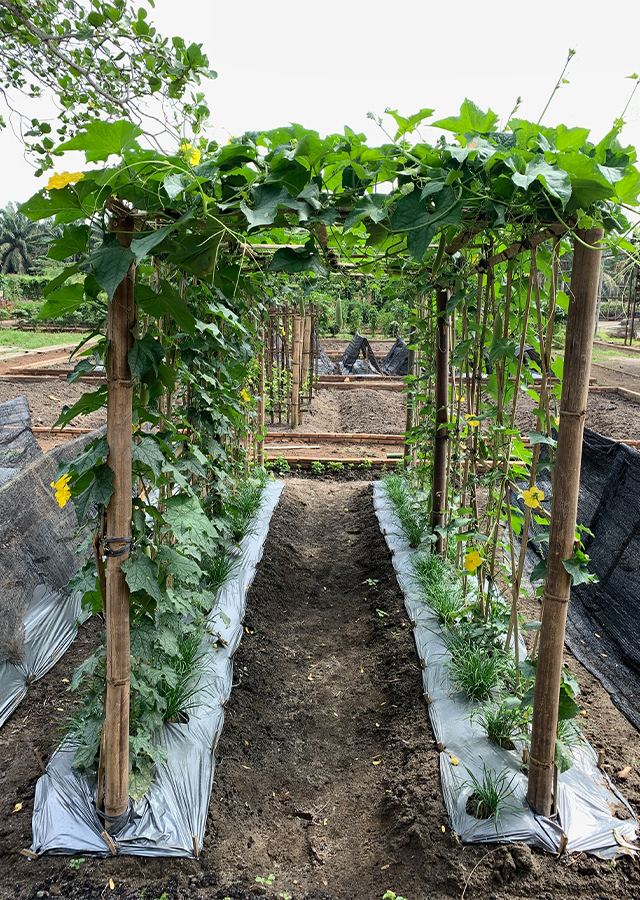
Blustru, or sponge gourd (Luffa aegyptiaca), is an annual climbing plant up to 10 meters long of the Cucurbitaceae family, believed to be native to China and now widely grown in gardens across Java and other parts of Southeast Asia. Its fruit, young leaves, and flower buds are commonly cooked as an everyday vegetable. Nearly every part of this plant is used as a traditional remedy, from the fruit for fever to the fibrous sponge for relieving rheumatism and body aches.
Agroecology
Blustru grows well in tropical regions. Lives at elevations of 500-1,500 m above sea level, requiring a dry climate with adequate water supply year-round. Required temperature is around 18-24°C with humidity of about 50-60%. Rainfall 50-100 mm/month, soil pH 5.5-6.5.
Morphology
- Roots taproot with fibrous roots.
- Stem climbing with tendrils, five-angled, green.
- Leaves simple, petiole 4-9 cm long, alternately arranged.
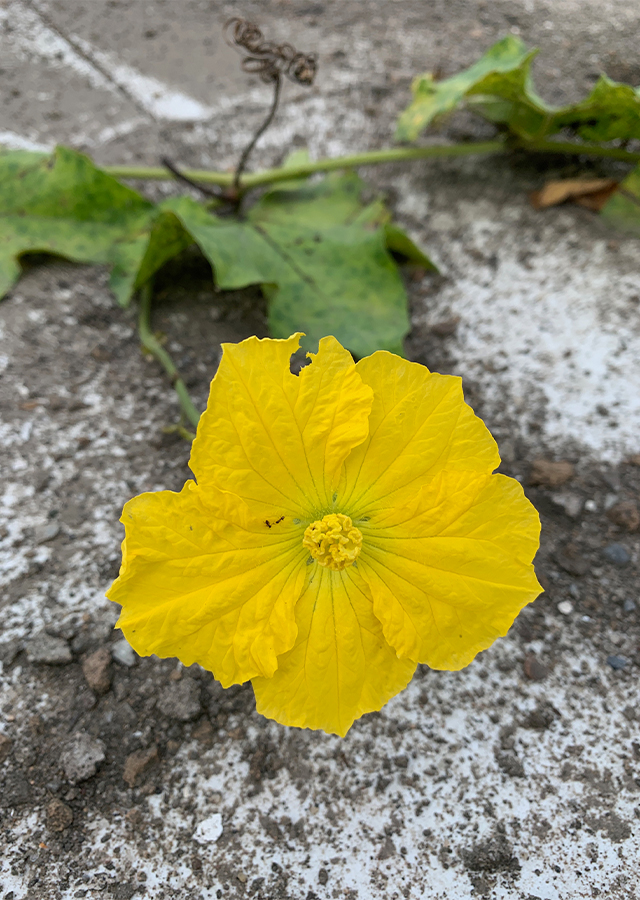
- Flowers unisexual, yellow corolla.
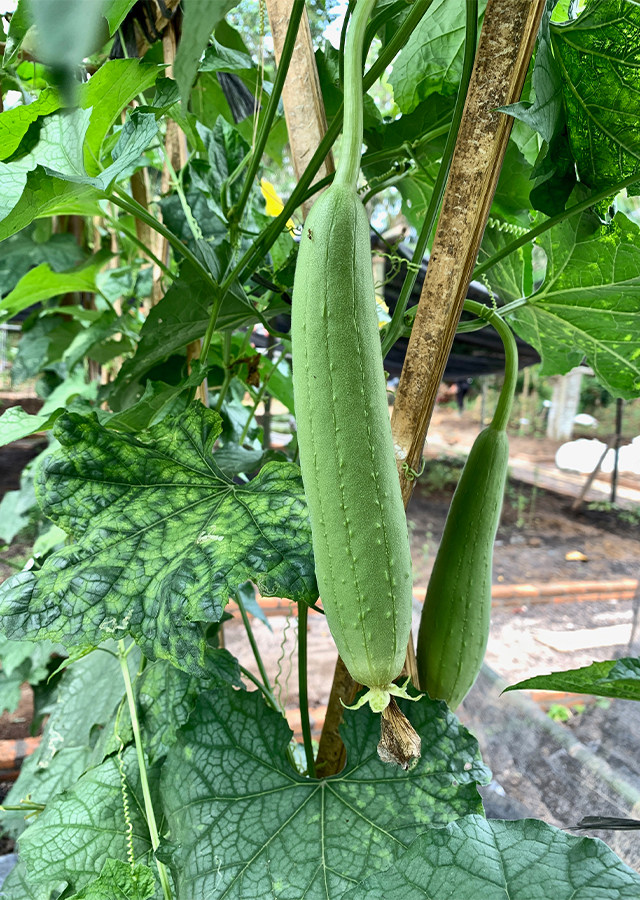
- Fruit cylindrical, 10-50 cm, containing a dense fibrous mesh inside.
- Seeds flat with winged edges, smooth, black.
Cultivation
- Propagated by seed.
- Plant seedlings in planting holes of 25 cm x 20 cm with a planting spacing of 50-60 cm x 200 cm.
Chemical Content
Saponins, coumaric acid, apigenin, luteolin, alkaloids, tannins, oleanolic acid, carotenoids, flavonoids, terpenoids, cardiac glycosides, phlobatannins, steroids.
Benefits
Fruit: fever, wheezing cough, vaginal discharge, irregular menstruation, poor milk flow, constipation, bleeding. Seeds: edema, urinary tract stones, intestinal worms, lower back pain. Leaves: shortness of breath, testicular inflammation (orchitis), burns, boils, hemorrhoids, ringworm, and snakebite. Fruit peel: rectal abscess and wounds. Flowers: wheezing cough, sore throat, sinusitis, hemorrhoids, and boils. Fibrous sponge: joint rheumatism, body aches, phlegmy cough, swollen breasts.
Simplisia
- Prepare and wash blustru roots thoroughly.
- Roast on a roof tile until dry
- Once dry, grind the roots into a powder and store in a tightly sealed, airtight package.
Local Names
Hurung jawa, Ketola, Timput (Palembang), Lopang, Oyong (Sunda), Bestru, Blestru (Java), Dodahala (Halmahera), Gambas belut.
Traditional Recipes
The following recipes reflect traditional knowledge passed down through generations, not a substitute for professional medical diagnosis or advice. Consult a healthcare provider before use.
1. Hemorrhoids
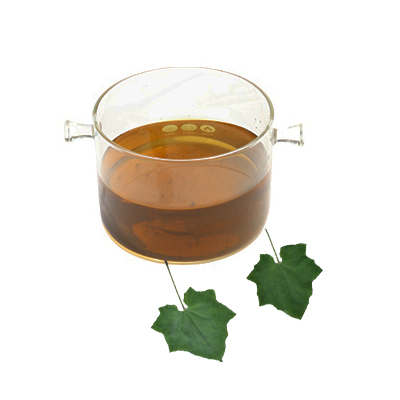
- Prepare 20 blustru leaves, wash and chop them. Add to 8 L of water and boil for 10 minutes, then strain.
- The hemorrhoid patient sits soaking in the decoction while still warm. Repeat several times until the hemorrhoids are completely gone.
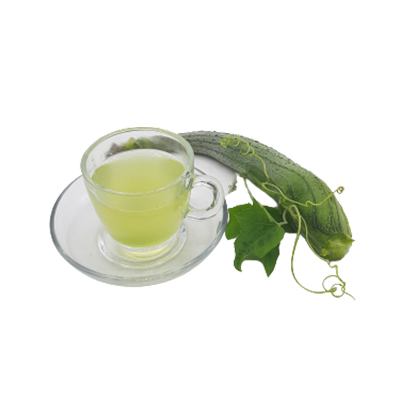
2. Irregular Menstruation
- Wash a 5 cm piece of blustru fruit thoroughly, then grate it.
- Add ½ cup boiled water and a pinch of fine salt while squeezing.
- Once well mixed, squeeze and strain the mixture.
- Drink the resulting liquid all at once.
- Do this 3 times a day.
Reference Sources
- Al-Snafi, A.E. (2019). Constituents and pharmacology of Luffa cylindrica- A review. IOSR Journal Of Pharmacy. Vol.9: 68-79.
- CABI. (No date). Invasive Species Compendium. Luffa aegyptiaca. https://www.cabi.org/isc/datasheet/31693. 20-07-2020
- Fern, Ken. (2014). Useful Tropical Plants Database. Luffa aegyptiaca. http://tropical.theferns.info/viewtropical.php?id=Luffa+aegyptiaca. 20-07-2020
- Lim, T.K. (2012). Edible Medicinal And Non-Medicinal Plants: Vol. 2, Fruits. Springer. pp.320-330.
- StuartXchange. (2018). Philippines Medicinal Plants: Patolang bilog. http://www.stuartxchange.org/PatolangBilog.html. 17-12-2020