Macaranga tanarius (L.) Müll.Arg.
Summary
Mara (Macaranga tanarius) is a tree up to 20 meters tall of the Euphorbiaceae family, native to Southeast Asia, distributed as far as Australia and the western Pacific. In the Philippines, its bark and leaves are used to make the fermented drink 'Basi'. Mara is also cultivated for its wood and traditionally believed to help treat dysentery and fever.
Agroecology
This plant is found in lowlands up to elevations of 2,100 m above sea level, growing well at an average annual temperature of 20-30°C, average annual rainfall of 800-1,200 mm/year. Prefers full sunlight, clay-loam soil types, sandy and rocky soil, well-drained, and has a pH of 5.5-7.
Morphology
- Stem round-shaped, smooth, somewhat grayish-green in color and sometimes has small buttress roots.
- Leaves single, alternate, round-oval shape with a pointed tip, 8-23 cm long, soft green color and somewhat white underneath.
- Flowers located at the stalk tip, greenish-yellow, flowers enclosed in bundles.
- Fruit a three-chambered capsule each containing a seed, with the outer skin covered with soft thorns.
- Seeds round, 4-4.5 mm in diameter, black in color.
Cultivation
- Propagated generatively (using seed).
- Seed sowing has a germination rate of 50% in 24-72 days.
Chemical Content
Tanarifuranonol, tanariflavonone, tannin, steroid, (mallotinic acid, corilagin, macarinin A, geranylin, mallotusinin), terpenoid, macatanarin D.
Benefits
Remedy for dysentery, hemoptysis, fever, healing of inflamed wounds, toothache, contraceptive, remedy for itching, diarrhea, vomiting.
Simplisia
- Take fresh mara leaves, sort and wash with running water.
- Dry in direct sunlight.
- Once dry, grind and sift to obtain a homogeneous powder.
- Store the powder in a well-closed container and protected from light.
Local Names
Kakat, Limboga, Singkobong (Kalimantan), Tutup merah, Sapat, Madau, Same, Karahan, Tutup, Mahang damar.
Traditional Recipes
The following recipes reflect traditional knowledge passed down through generations, not a substitute for professional medical diagnosis or advice. Consult a healthcare provider before use.
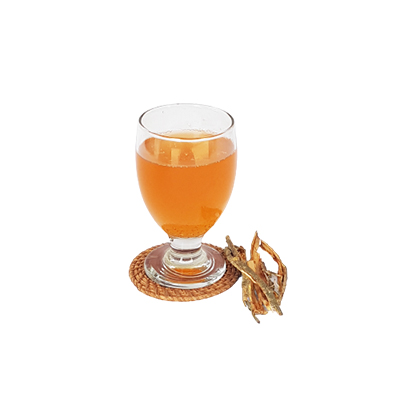
1. Reducing dysentery
- Take mara tree bark and wash thoroughly.
- Boil with water until boiling.
- Then drink once cool.
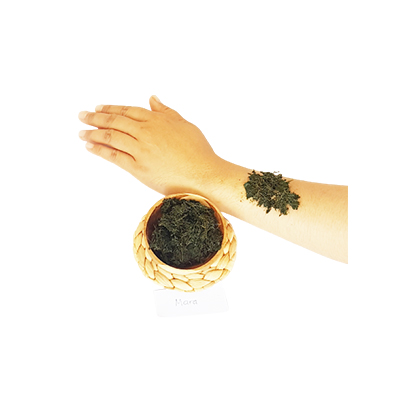
2. Wound remedy
- Prepare mara leaves as needed.
- Wash thoroughly with running water.
- Pound the leaves into a paste.
- Apply to the wounded area.
Reference Sources
- Tropical Plants Database, Ken Fern. tropical.theferns.info. Macaranga tanarius. http://tropical.theferns.info/viewtropical.php?id=Macaranga+tanarius 30-10-2020.
- ReseachGate. Chemical Constituents of leaves of Macaranga tanarius. https://www.researchgate.net/publication/7768330_Constituents_of_the_Leaves_of_Macaranga_t_anarius 3-02-2021.
- Hindawi. Journal Of Analitical Methods in Chemistry. Cytotoxic Phenolic Compounds from Fruit Glandular Trichomes of Macaranga tanarius. https://www.hindawi.com/journals/jamc/2019/2917032/ 03-02-2021.