Magnolia champaca (L.) Baill. ex Pierre
Summary
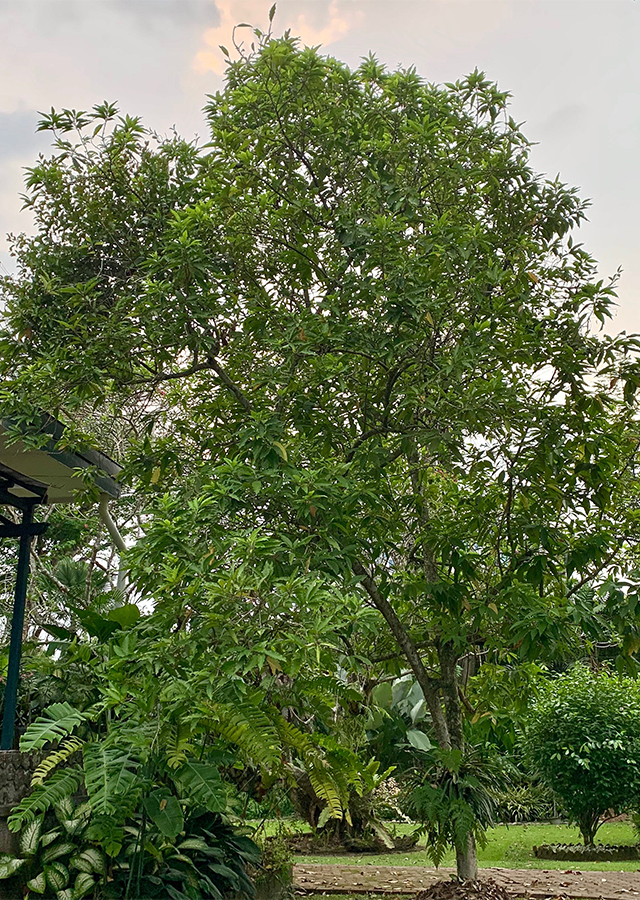
Cempaka kuning (Magnolia champaca) is a tree up to 50 meters tall of the Magnoliaceae family, originating from India and distributed to Java and the Lesser Sunda Islands. Its fragrant flowers are used in Hindu and Buddhist religious ceremonies, as well as perfume and hair oil ingredients. In Ayurvedic medicine, cempaka kuning has traditionally been used to reduce fever and relieve tonsillitis.
Agroecology
Grows in tropical climate regions in lowlands up to elevations of 1,600 m above sea level. Prefers open places with temperatures of 30-37 °C, rainfall 3,000-4,000 mm/year, soil pH 4.5-5.5, clay to sandy soil texture.
Morphology
- Roots taproot, brown in color.
- Stem round, straight, smooth grayish-brown bark, 80-120 cm diameter.
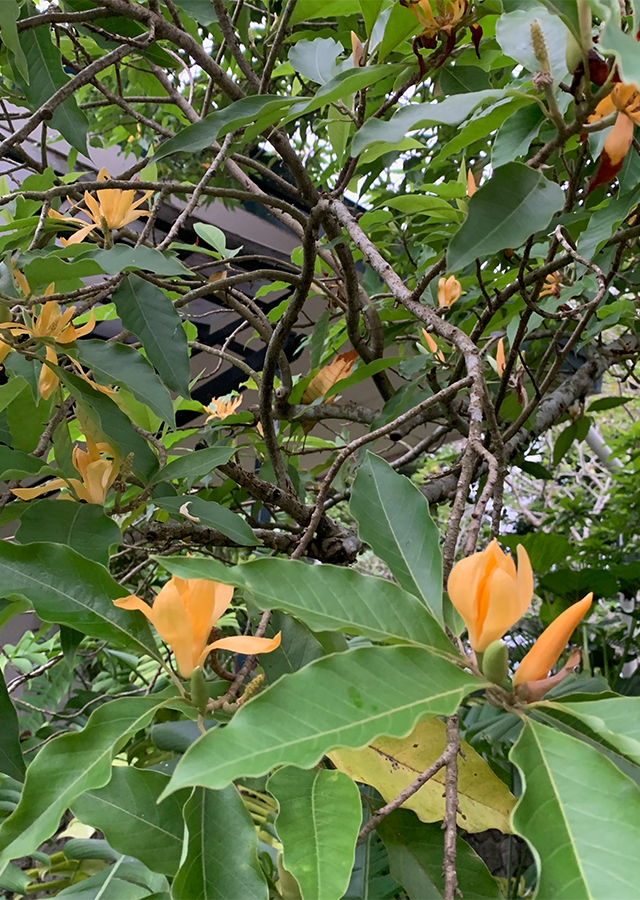
- Leaves elongated egg-shaped with tapering tip and base, about 10-28 cm long, 4.5-11 cm wide.
- Flowers solitary, orange-yellow in color, very fragrant scent.
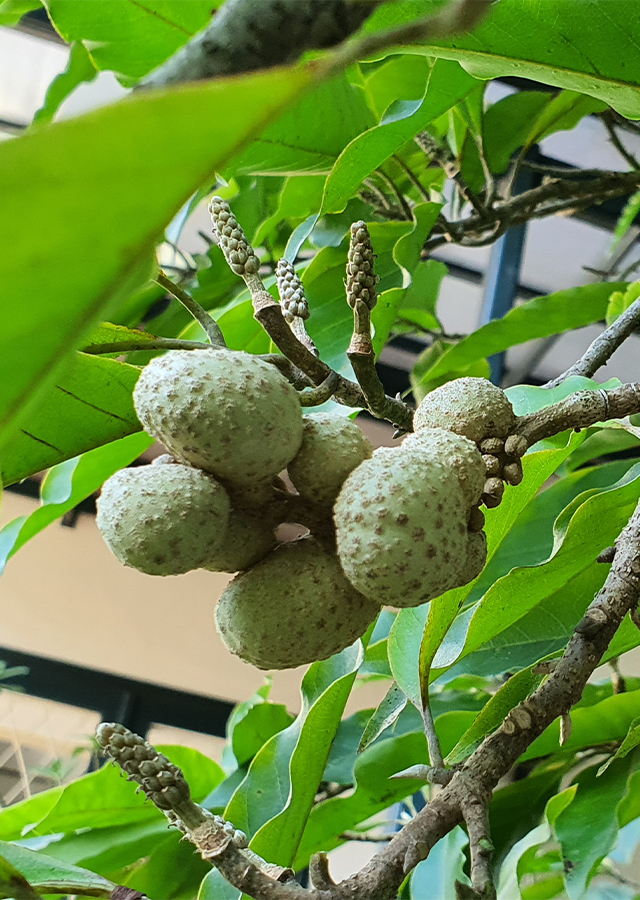
- Fruit elongated ball shape, slightly bent, initially green then turning pale gray.
- Seeds brown in color when fresh and dark red when mature.
Cultivation
- Propagated generatively (by seed) and vegetatively (cuttings and air-layering).
- Select a healthy parent tree, with abundant flowers, already more than 3 years old.
Chemical Content
Tannins, phlobatannin, saponins, flavonoids, anthraquinones, polyphenols, glycosides, triterpenoids, steroids and fatty acids.
Benefits
Treats kidney stones, fever, gonorrhea, bad breath, irregular menstruation, boosts appetite, vaginal discharge, cough, tonsillitis, rheumatism, skin softener (demulcent), diuretic, carminative.
Simplisia
- Wash cempaka flowers thoroughly using running water.
- Dry in direct sunlight until completely dry.
- Store the dried flowers in a clean, closed place.
Local Names
Bungong jeumpa (Aceh), Campaga (Minangkabau), Campaka koneng (Sunda), Kantil, Locari, Pecari, Cempaka, Cepaka (Java).
Traditional Recipes
The following recipes reflect traditional knowledge passed down through generations, not a substitute for professional medical diagnosis or advice. Consult a healthcare provider before use.
1. Gonorrhea
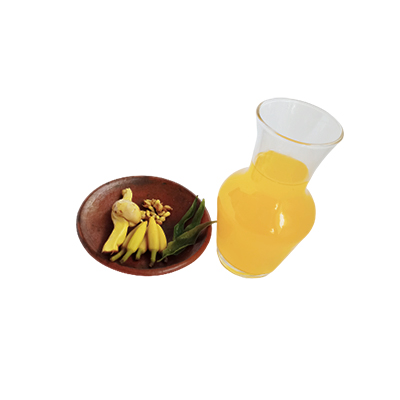
- Wash 18 cempaka kuning blooms, 2 coconut flower stalks, 30 g sambiloto leaves. Boil with 3 glasses of young coconut water until 1 1/2 glasses remain.
- Once cool, strain.
- Drink the decoction twice a day.
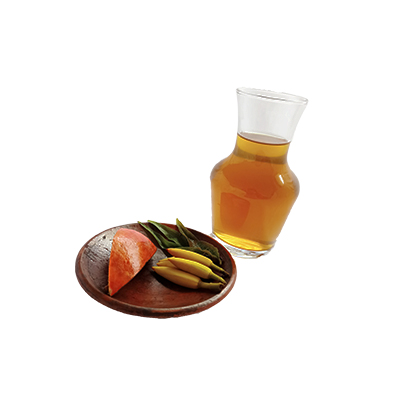
2. Vaginal Discharge
- Wash 10 cempaka kuning blooms, 30 g sambiloto, 30 g dried pomegranate peel thoroughly.
- Boil all ingredients with 3 glasses of water until 2 glasses of water remain, once cool, strain and divide into 2.
- Drink the decoction twice a day, 1 glass each time.
Reference Sources
- Tropical Plants Database, Ken Fern. tropical.theferns.info. Magnolia champaca. http://tropical.theferns.info/viewtropical.php?id=Magnolia+champaca 16-02-2021.
- National Parks. Flora & Fauna Web. Magnolia champaca (L.) Figlar. https://www.nparks.gov.sg/florafaunaweb/flora/3/0/3025 16-02-2021.
- Kesehatantanamanherbal.blogspot. Cempaka Kuning [Michelia champaca L.] - Khasiat & Manfaat. http://kesehatantanamanherbal.blogspot.com/2015/12/cempaka-kuning-michelia-champaca-l.html 16-02-2021.
- Sinta.Unud.ac.id. https://sinta.unud.ac.id/uploads/wisuda/1108505059-3-BAB%202.pdf 16-02-2021.
- Materipertanian.com. https://www.materipertanian.com/category/klasifikasi-dan-morfologi-tanaman/page/19/ 16-02-2021.
- Agrotek.id. Klasifikasi dan Morfologi Tanaman Cempaka. https://agrotek.id/klasifikasi-dan-morfologi-tanaman-cempaka/ 16-02-2021.
- National Parks. Flora & Fauna Web. Magnolia champaca (L.) Figlar. https://www.nparks.gov.sg/florafaunaweb/flora/3/0/3025 16-02-2021.