Manilkara kauki (L.) Dubard
Summary
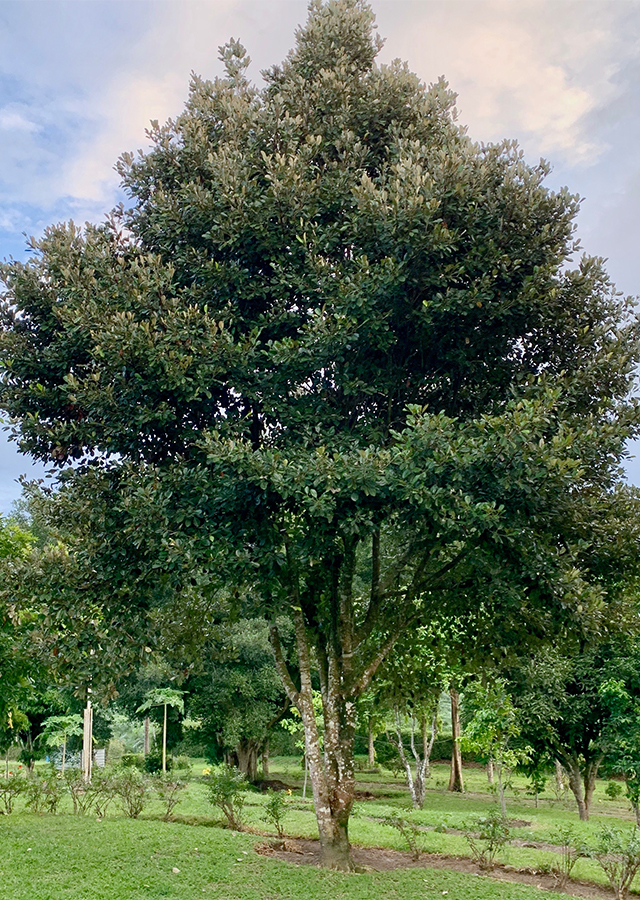
Sawo kecik (Manilkara kauki) is a tree up to 30 meters tall of the Sapotaceae family, originating from Southeast Asia, distributed from Burma to nearly all of Indonesia except Kalimantan. Its strong, dense wood is used for household tools and handicrafts, while its fruit is processed into syrup. Traditionally, sawo kecik is also believed to relieve diarrhea and help lower high blood pressure.
Agroecology
Grows well in lowlands up to elevations of 300 m above sea level with flat, gently sloping, or sloping contours, but not on steep slopes. Rainfall between 1,286-1,866 mm/year, soil pH between 6-7.
Morphology
- Roots taproot.
- Stem woody, round shaped.
- Leaves egg-shaped, blunt tip, tapering base, pinnate venation, whitish and smooth underside.
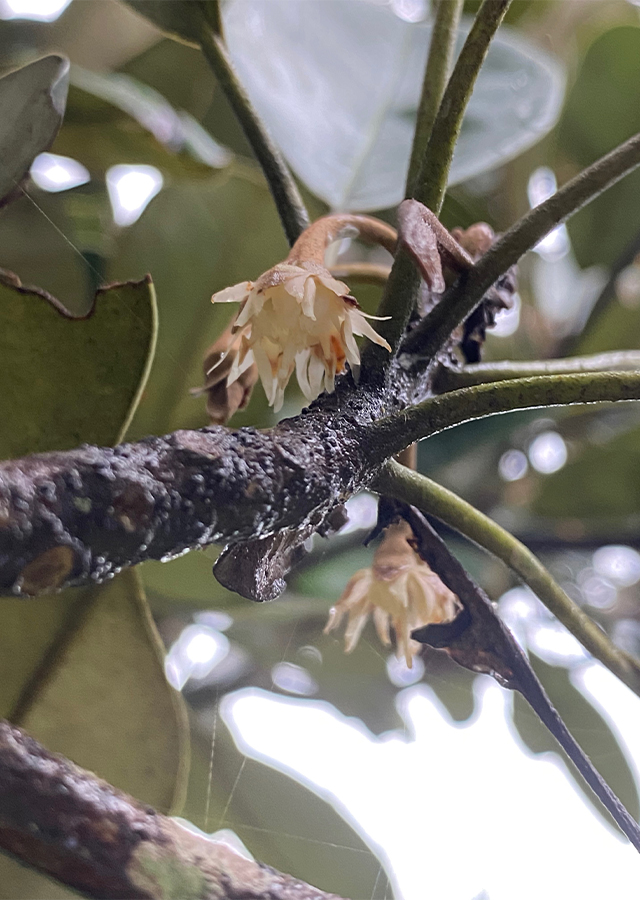
- Flowers compound, bisexual, egg-shaped buds.
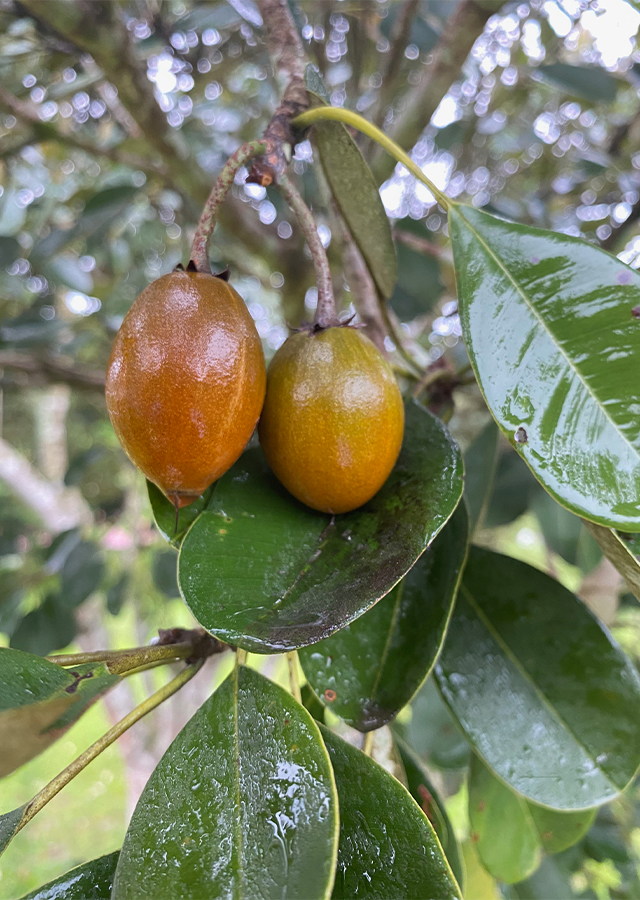
- Fruit egg-shaped, small size like a quail egg, very thin outer skin that is easily peeled, red and sweet when ripe but sometimes slightly astringent tasting.
Cultivation
- Propagated generatively (by seed) and vegetatively (air-layering).
- Before sowing, seeds are soaked in cold water for 4 x 24 hours (96 hours) beforehand to stimulate germination and break dormancy.
Chemical Content
- Leaves: myricetin, quercetin, kaempferol, monoterpenes, sesquiterpenes, riboflavin, saponins, alkaloids, tannins and niacin.
- Bark: triterpenoids, phenolics and flavonoids.
Benefits
- Relieves diarrhea, lowers high blood pressure, lowers cholesterol, promotes bowel movement, smooths skin, removes body odor, worm remedy, addresses mouth inflammation.
Simplisia
Not yet available
Local Names
Kayu sawo (Java), Sawo (Sunda), Sawo kecik sabo (Bali), Sabo (Nusa Tenggara).
Traditional Recipes
The following recipes reflect traditional knowledge passed down through generations, not a substitute for professional medical diagnosis or advice. Consult a healthcare provider before use.
1. Addressing Mouth Inflammation
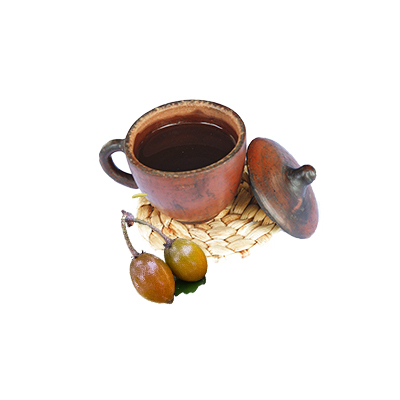
- Prepare sawo kecik fruit. Wash thoroughly with running water. Drain the fruit. Cut into small pieces.
- Boil the material with 2 glasses of water for 10 minutes.
- Use the concoction to gargle.
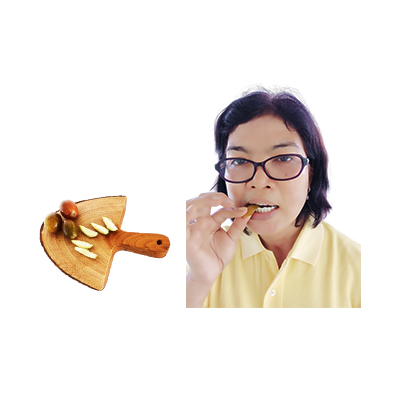
2. Diarrhea
- Wash sawo kecik fruit thoroughly.
- Cut 1 sawo fruit into small pieces.
- Eat with salt to taste or without salt.
Reference Sources
- De Almeida B, Fernandes F, Romao CP, Vanini W, Costa G, França HB, Santos HS, Tavares Carvalho MG, Falcão JC, Quintanilha D, Leandro R. 2016. Secondary Metabolites from Leaves of Manilkara subsericea (Mart.) Dubard. Pharmacognosy Magazine Suppl. 4, pS533-S537. 5p.
- Profil Kehati DIY. 2016. Pohon Sawo Kecik.http://kehati.jogjaprov.go.id/detailpost/sawo-kecik. 10-12-2019.
- Sari EN, Hastuti US, Prabaningtyas S. 2015. Pengaruh ekstrak daun sawo kecik (Manilkara kauki (L) Dubard) terhadap daya hambat pertumbuhan Fusarium solani secara in vitro. FMIPA-Universitas Negeri Malang. Jurnal-online-um.ac.id.
- Tropical Plants Database, Ken Fern. tropical.theferns.info. Manilkara kauki. http://tropical.theferns.info/viewtropical.php?id=Manilkara+kauki. 12-01-2021.
- Semanticscholar. In vitro antioxidant and antityrosinase activities of Manilkara kauki. https://www.semanticscholar.org/paper/In-vitro-antioxidant-and-antityrosinase-activities-Srisupap-Chaicharoenpong/19309e5a0842813a84a77a937692f604434d4689. 18-01-2021.
- Benefit Plant for Health. Manilkara kauki (Sawo kecik) a good fruit to traditional healing. https://benefitsplantforhealth.blogspot.com/2017/01/manilkara-kauki-sawo-kecik-benefits-for-health-Habitat-and-Distribution-Classification-traits-a-good-fruit-to-traditional-healing.html. 7-5- 2020.
- Herbalis nusantara. download 699 ebook tanaman obat indonesia. herbalisnusantara.com 07-05-2020.