Mapania cuspidata (Miq.) Uittien
Summary
Mapania cuspidata or parang hantu is widely distributed from the Nicobar Islands and Thailand to the Malesia region, the Solomon Islands, and the New Hebrides. Besides being valued as an ornamental, this plant is widely known in traditional medicine systems in Indonesia and Malaysia, especially as a postpartum tonic remedy to firm the skin and address swelling after childbirth.
Agroecology
M. cuspidata is usually found growing in lowland swamp forests to mountain forests, especially in riverbank and waterway areas on rocky or sandy soil up to an elevation of 900 m asl. This species is also found in moist and peaty areas.
Morphology
- Roots a short rhizome or stolon, rhizome diameter up to 11 mm.
- Stem short, flattened.
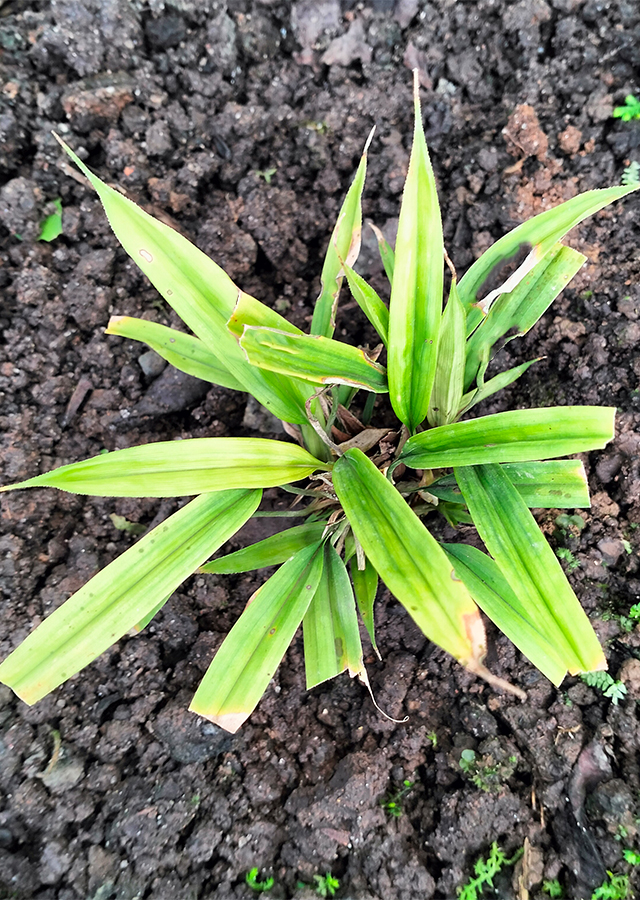
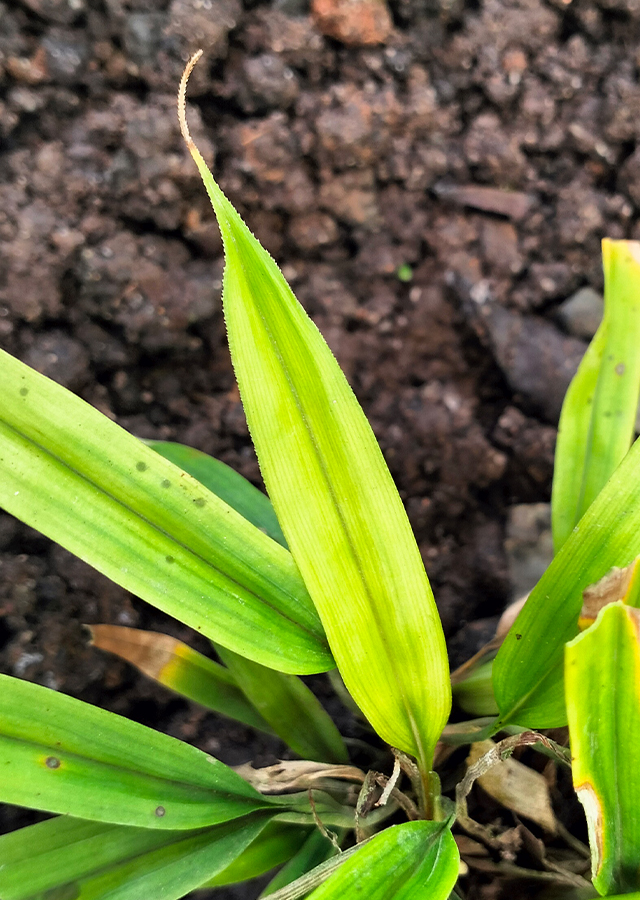
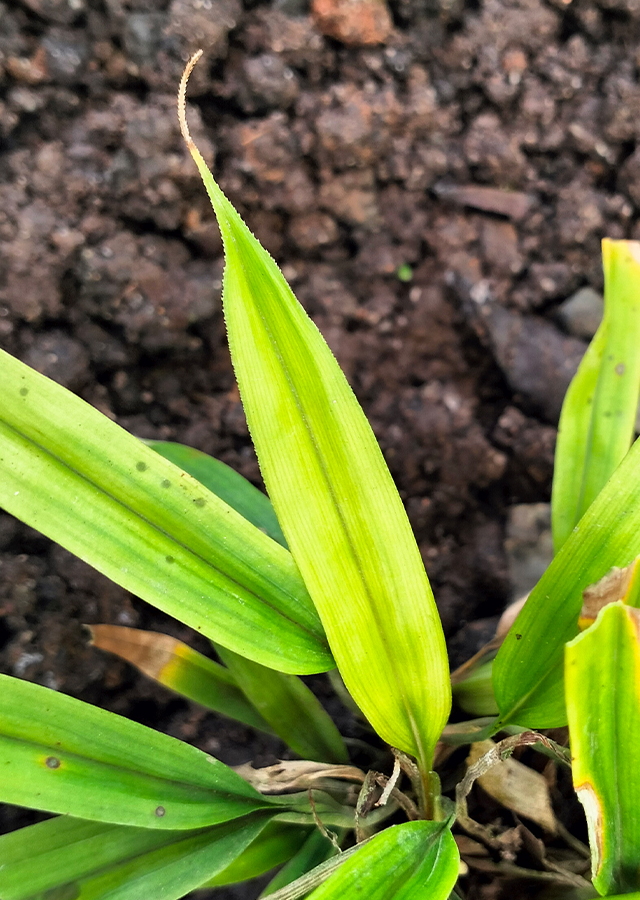
- Leaves arranged in 3 tiers, rosette-shaped, hairless, simple, dark green above and pale below, pinkish purple when young, linear, linear-oblong to oblong shaped, narrowing into a pseudopetiole up to 39 cm long at the base, cuspidate at the tip, margin entire to scabrous near the tip, rough, 3-veined, young leaves pink to reddish on the lower side. Sheath present at the base of the pseudopetiole.
- Flowers unisexual, sessile, arranged in the axils of bracts along the axis (spicoid), 3 lower male spicoid flowers, with 1 stamen, female flower terminal, with an elongated style ending in 3 stigma branches, each spicoid with 6 bracts (thus 2 without flowers). Inflorescence a cluster, located at the tip of the stem (terminal), ellipsoid to hemispherical spike up to 3 cm, on a lateral scape up to 29 cm; spike with several involucral bracts.
- Fruit like a small nut, obovoid to oblong, dull pale green to grayish brown, smooth, with a succulent exocarp and stony endocarp.
Cultivation
Plant propagation with seed and offshoots.
Chemical Content
Ten groups of flavonoid compounds (5-deoxyisoflavones, isoflavones, chalcone, flavanones, anthocyanins, flavone glycosides, flavones, flavonols, glycosylflavones, and aurones).
Benefits
Reduces fever, a postpartum tonic, addresses swelling after childbirth, firms the skin and breasts, an antidote, treats diarrhea, dysentery, venomous caterpillar stings, helps treat liver ailments. Has antibacterial and antidiarrheal activity.
Local Names
Parang hantu putih, Daung sangkor, Sohlenat (Sunda), Serapat pandan, Siak-siak rimba, Sempit, Selingsingan (Sumatra), Kihadio (P. Seram).
Traditional Recipes
The following recipes reflect traditional knowledge passed down through generations, not a substitute for professional medical diagnosis or advice. Consult a healthcare provider before use.
1. Treats diarrhea
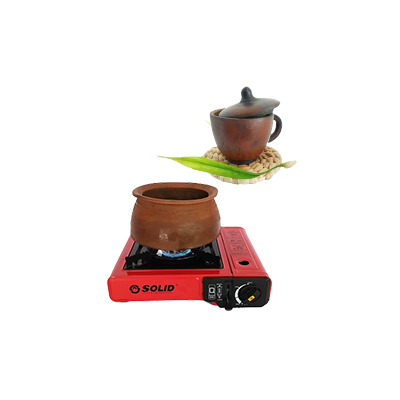
- Take an adequate amount of fresh parang hantu leaves and wash until clean.
- Boil until it boils.
- Let it cool to warm/cold.
- Strain then drink.
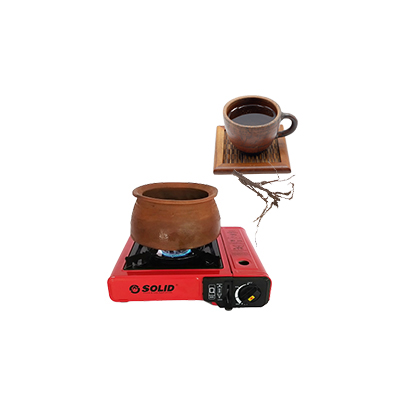
2. Antidote
- Take an adequate amount of fresh parang hantu root and wash until clean.
- Boil until it boils.
- Let it cool to warm/cold.
- Strain then drink.
Reference Sources
- Royal Botanic Gardens. Plant of the World Online: Mapania cuspidata (Miq.) Uittien. https://powo.science.kew.org/taxon/urn:lsid:ipni.org:names:310467-1. 26-07-2022.
- Plant Resources of South-East Asia. 2016. Mapania cuspidata (PROSEA). https://uses.plantnet-project.org/en/Mapania_cuspidata_(PROSEA). 26-07-2022.
- Stuartxchange. 2017. Malalubigan. http://stuartxchange.com/Malalubigan. 26-07-2022.
- Munawaroh E., Yuzammi, Solihah S. M., Suhendar. 2017. Koleksi Kebun Raya Liwa, Lampung: Tumbuhan Berpotensi sebagai Tanaman Hias. Jakarta: LIPI Press.