Melaleuca linariifolia Sm.
Summary
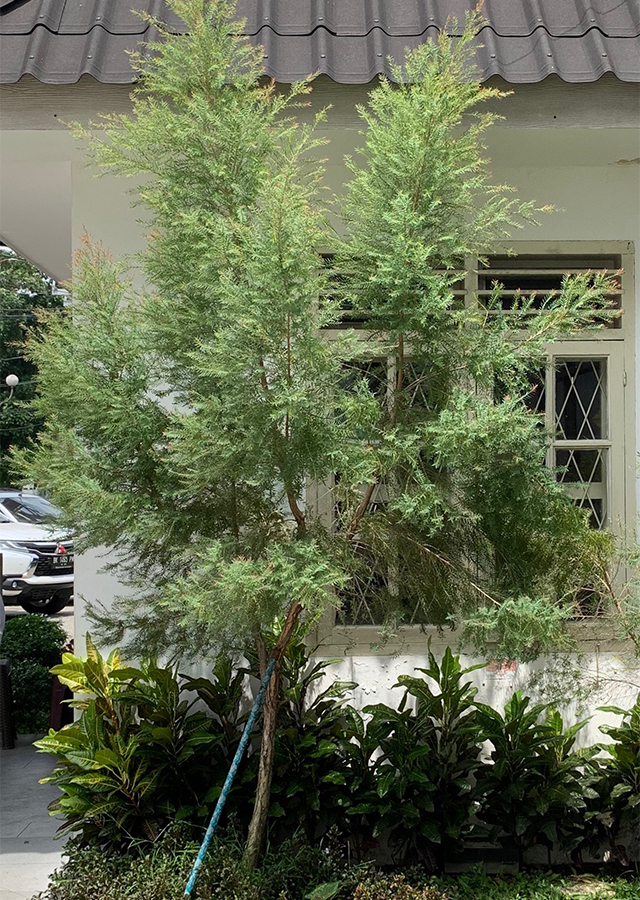
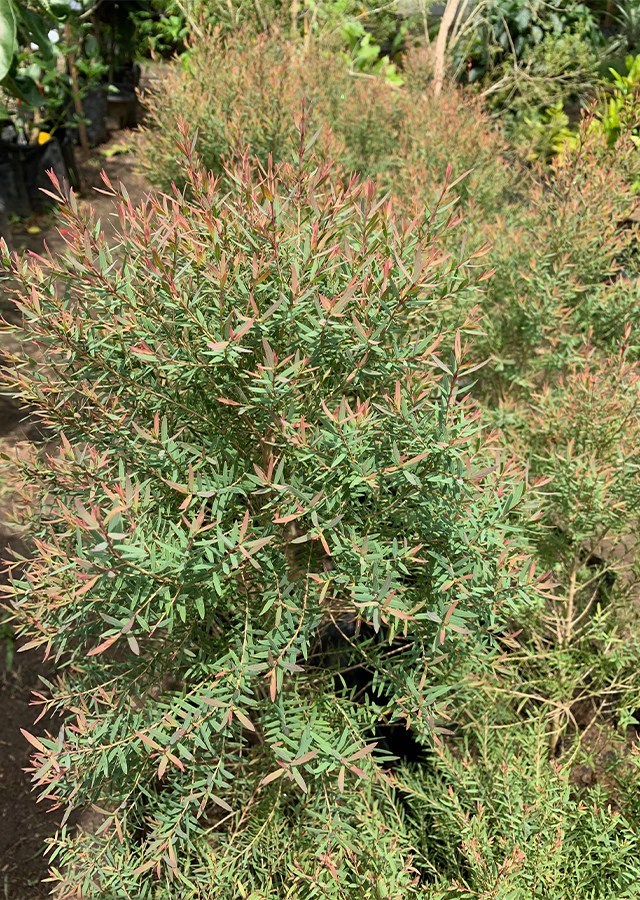
Tea tree (Melaleuca linariifolia) is a shrub up to 10 meters tall of the Myrtaceae family, a wild plant native to Australia from Queensland to New South Wales. Its distinctive essential oil is a world-famous ingredient in soap and skincare products. Tea tree is believed to be antibacterial and effective in addressing acne, skin infections, and insect bites.
Agroecology
Grows well up to elevations of 300 m above sea level with a pH of 4.5-7, average maximum summer temperature 27-31ºC, average minimum temperature 17-19ºC, average rainfall of 1,000-1,600 mm/year. Fertile lime-free soil, dry, not too much nitrogen and a position in full sunlight are conditions preferred by this plant.
Morphology
- Stem upright, bark white-cream in color, peeling, low canopy.
- Leaves alternate, linear-shaped, blue-green or green, coated with visible oil glands.
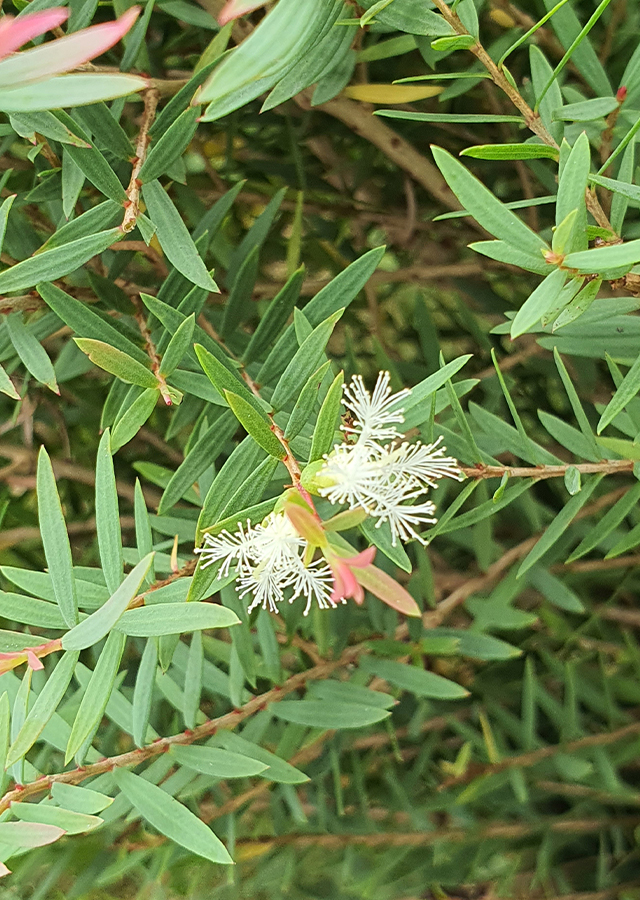
- Flowers fragrant, white or white-cream in color, sepals 3 mm with corolla length 2-3 mm. Stamens numbering 30-60, white in color.
- Fruit a capsule, 2-3 mm in diameter, brown or gray in color.
Cultivation
- Propagated generatively (seed) and vegetatively (cuttings).
- Seeds take about 12 months to develop after planting.
Chemical Content
Terpinen-4-ol, gamma-terpinene, 1,8-cineole, limonene, pinene, a-terpinene, p-cymene, sesquiterpene, cineole.
Benefits
Remedy for acne, headache, has antibacterial activity, burns, wounds, skin infections, canker sores, insect bites, warts, vaginal infections.
Simplisia
- Choose fresh, undamaged leaves. Wash the leaves with clean running water then drain.
- Dry the leaves on a dark-colored cloth base or using an oven (temperature 50-60°C).
- Dry-sort out unwanted foreign material. Store the simplisia in a container/plastic bag, at room temperature, well-aerated, away from direct sunlight, not in direct contact with the floor.
Local Names
No information found. Further research needed.
Traditional Recipes
The following recipes reflect traditional knowledge passed down through generations, not a substitute for professional medical diagnosis or advice. Consult a healthcare provider before use.
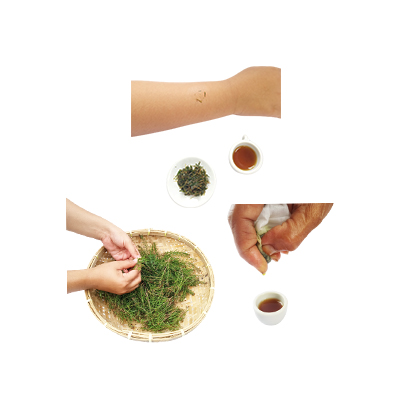
1. Treating insect bites
- Crush tea tree leaves to produce an oil extract.
- Apply the tea tree leaf oil to the part of the body bitten by the insect.
Reference Sources
- Badan penelitian dan pengembangan kesehatan.1999. Inventaris tanaman obat indon.esia (V); Gigitan serangga . Departemen kesehatan dan kesejahteraan social RI.
- Tropical Plants Database, Ken Fern. tropical.theferns.info. Melaleuca linariifolia. http://tropical.theferns.info/viewtropical.php?id=Melaleuca+linariifolia. 12-01-2021.
- Chineseherbshealing.com. Tea Tree Constituents. https://www.chineseherbshealing.com/essential-oils/tea-tree-constituents.html. 18-01-2021.