Melampodium divaricatum (Rich.) DC.
Summary
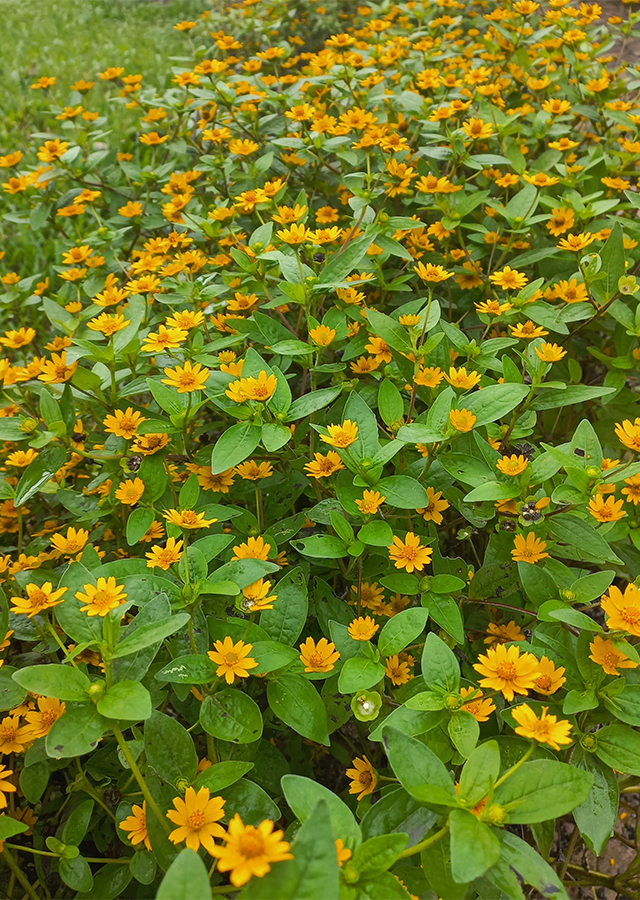
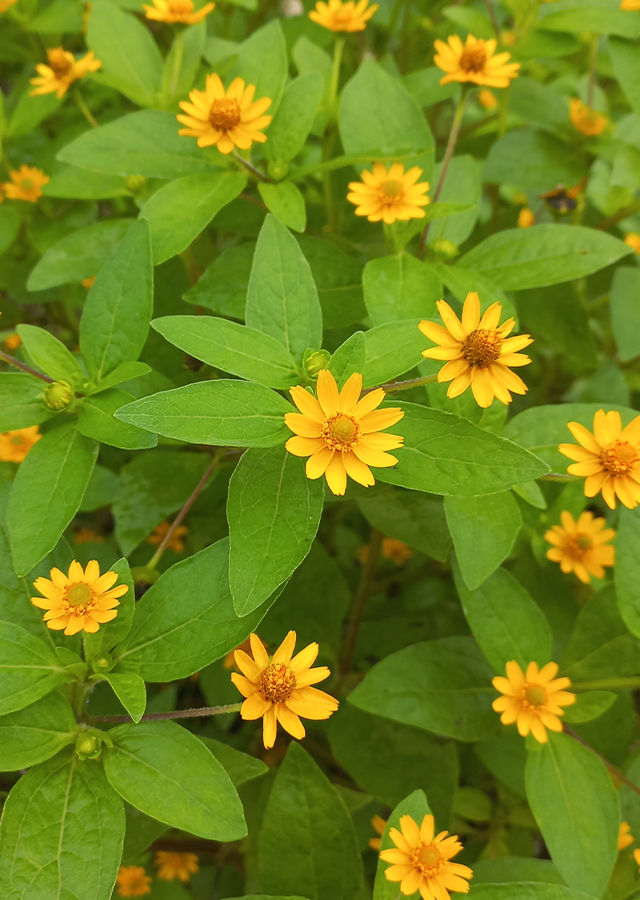
Bunga matahari kecil (Melampodium divaricatum) is an annual herb up to 120 cm tall from the Asteraceae family that originates from Mexico and Central America. Indonesian communities pound its leaves to apply to wounds, while in Guatemala it is used to treat malaria and stomach pain. Bunga matahari kecil is also popular as an ornamental plant in gardens and pots.
Agroecology
Easily grown in all soil types, preferring loamy, evenly moist, well-drained soil, in full sun. Requires consistent moisture, but prefers relatively dry soil. The plant is fairly tolerant of hot, humid summer weather, but taller stems tend to flop in summer.
Morphology
- Stem dichotomously branched, slender, stalked, purple-spotted, pulvinate at the nodes, hairless or finely hairy on young branches, slightly grooved with distinct nodes and internodes.
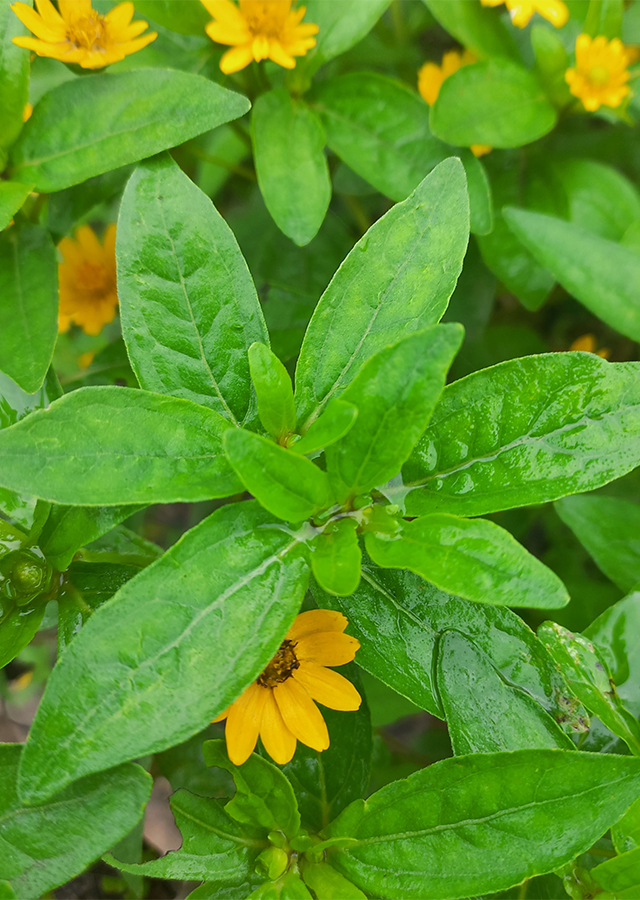
- Leaves simple, opposite, usually on dichotomous stems, entire, elliptical, oblong or oblong-lanceolate, approximately 2.5-7 x 0.5-3.5 cm, hispid on both surfaces, three-branched, sessile or tapering into a small petiole; petiole 2-8 mm long.
- Flowers heterogamous, heads branching into two or more, ray florets bright yellow, disc florets yellow to somewhat dark, arranged conically or convexly.
- Fruit achenes often enclosed in the subtending involucral bract, slightly compressed, curved, strongly ornamented, approximately 3.5 x 2 mm, epappose.
Cultivation
Can be easily propagated from seed, which can be harvested in large quantities. Or better still, sow first to grow vigorously under optimal growing conditions, then plant the seedlings wherever desired.
Chemical Content
(E)-Caryophyllene, germacrene D, and bicyclogermacrene.
Benefits
Heals wounds, fever, malaria, bloating, stomach ache, colic, joint pain, muscle pain, heart palpitations, vertigo, rheumatism, jaundice, anuria. Has diuretic and carminative properties.
Local Names
Singampir.
Traditional Recipes
The following recipes reflect traditional knowledge passed down through generations, not a substitute for professional medical diagnosis or advice. Consult a healthcare provider before use.
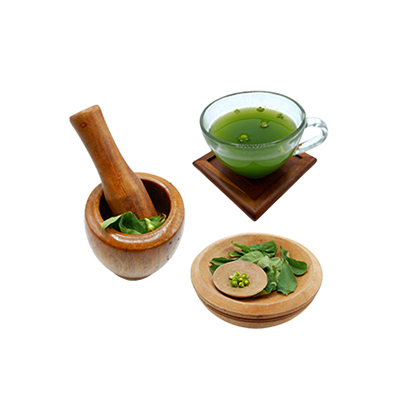
1. Wounds
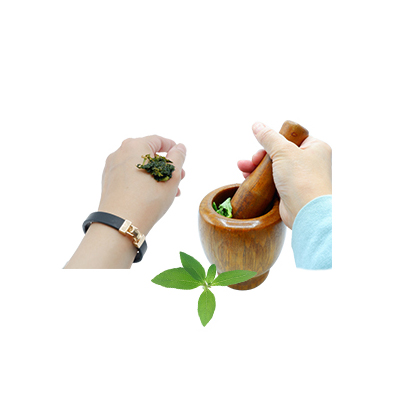
- Prepare bunga matahari kecil leaves as needed and wash until clean.
- Mash into a paste.
- Apply the leaf paste to the wound.
2. Fever
- Take 7 sunflower buds and belimbing wuluh leaves as needed, wash until clean.
- Mash both ingredients.
- Squeeze and take the extract.
- Drink.
Reference Sources
- Royal Botanic Gardens. 2021. Plants of the World Online: Melampodium divaricatum (Rich.) DC.. http://www.plantsoftheworldonline.org/taxon/urn:lsid:ipni.org:names:156179-2. 20-09-2021.
- Missouri Botanical Garden. Melampodium divaricatum https://www.missouribotanicalgarden.org/PlantFinder/PlantFinderDetails.aspx?taxonid=277348&isprofile=0&. 20-09-2021.
- Jagtap D. G., M. Y. Bachulkar-Cholekar, S.M. Patil and S. B. Bhamburdekar. 2017. Melampodium divaricatum (Asteraceae-Melampodiinae): A new record for India. Bioscience Discovery, 8(1):50-54, Jan. -2017. https://www.researchgate.net/publication/313440862_Melampodium_divaricatum_Asteraceae-Melampodiinae_A_new_record_for_India. 20-09-2021.
- Rizki Rizki, Oki Fernando, Nursyahra Nursyahra. 2019. ETNOFARMAKOLOGI TUMBUHAN FAMILIA ASTERACEAE DI KABUPATEN PASAMAN BARAT. Program Studi Budidaya Tanaman Hortikultura, Politeknik Pertanian Negeri Payakumbuh 2Program Studi Pendidikan Biologi, STKIP PGRI Sumatera Barat. INA-Rxiv Paper. https://ethnobiomed.biomedcentral.com/track/pdf/10.1186/1746-4269-3-18.pdf. 22-09-2021.
- Juliane Schüngel and Claus M. Passreiter. New Diacylated 2-Hydroxythymol Derivatives from Melampodium divaricatum. Institut für Pharmazeutische Biologie, Heinrich-Heine-Universität, Universitätsstr. 1, D-40225 Düsseldorf, Germany. Fax: +492118111923. E-mail: passreit@uni-duesseldorf.de. https://www.jaycjayc.com/melampodium-divaricatum-butter-daisy/#.YUtWCLgzbIU. 22-09-2021.
- Al Farishy, dkk. 2019. Asteraceae Universitas Indonesia. UI Publishing. Jakarta.