Mentha arvensis L.
Summary
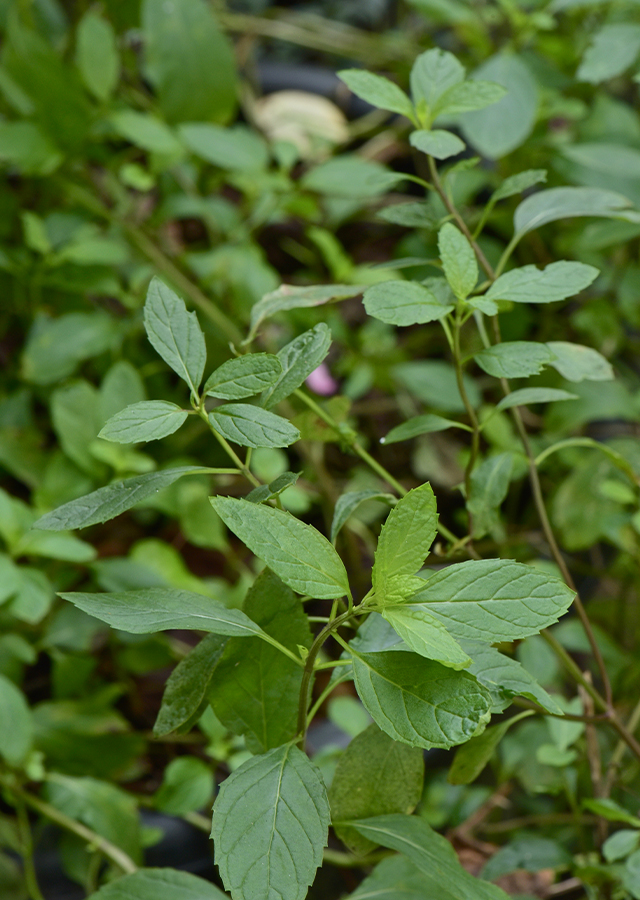
Peppermint (Mentha arvensis) is a herb 0.5-1 meter tall of the Lamiaceae family, originating from Europe and the Middle East around the Mediterranean, brought by the Spanish to the Malay Peninsula and Singapore. Its refreshing leaves have been a popular tea and salad seasoning ingredient since the 16th century. Peppermint is also traditionally believed to relieve headaches, sinusitis, and menstrual cramps.
Agroecology
Grows well in places at elevations of 100-700 m above sea level. Prefers humid areas, rainfall 2,000-4,000 mm/year, full light intensity, temperature 20-30 ºC, loose soil conditions, well-drained, soil pH 5.5-7. Not tolerant of drought and waterlogged conditions.
Morphology
- Roots strong fibrous.
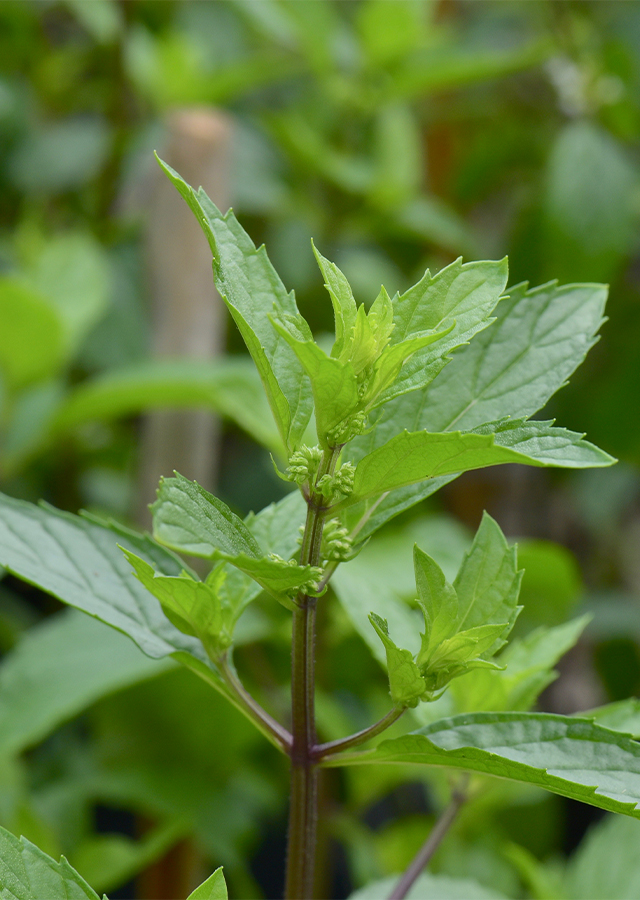
- Stem square shaped, purplish-green, sympodial branching.
- Leaves egg-shaped or elliptical, dark green with reddish veins, tapering tip and base leaf edges serrated and rough surface.
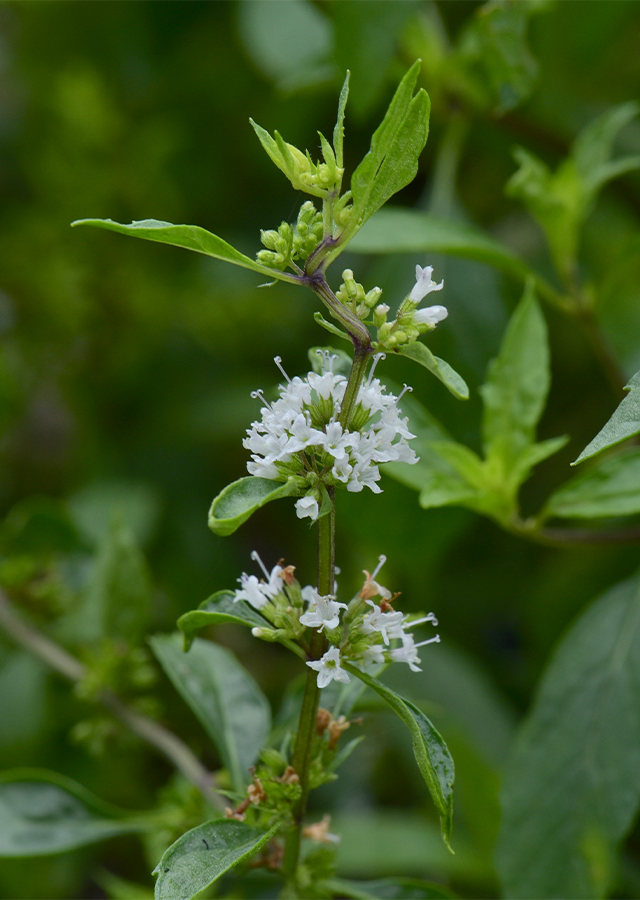
- Flowers small, bell-shaped, growing in clusters, circling at leaf axils. Has 4 corolla lobes, light purple or white in color.
- Seeds small and black in color. In Indonesia, rarely produces seeds.
Cultivation
Propagated vegetatively through cuttings (tip cuttings, stem cuttings, and stolon cuttings).
Chemical Content
Menthol, menthone, methyl acetate, phenolics, rosmarinic acid, flavonoids (eriocitrin, luteolin and hesperidin), isomenthone, neomethylacetate, piperitone, pulegone, limonene.
Benefits
Relieves itching from allergies, sinusitis,headache, sore throat, addresses bloating, maintains dental health, relieves menstrual cramps, has analgesic, cytotoxic, anti-inflammatory, antioxidant, anticancer, antimicrobial activity.
Simplisia
- Take several mint leaves, wash thoroughly with running water and drain.
- Place the leaves on a tray, cover with a black cloth and dry in the sun until evenly dry (leaves crumble easily when crushed).
- Once dry, grind the leaves into powder form.
- Store in a closed, airtight container and place in a cool location
Local Names
Wild mint
Traditional Recipes
The following recipes reflect traditional knowledge passed down through generations, not a substitute for professional medical diagnosis or advice. Consult a healthcare provider before use.
1. Sore Throat or Mouth Antiseptic
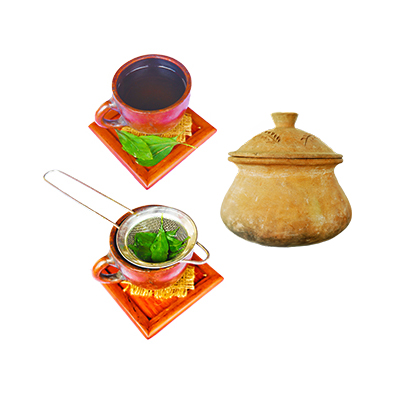
- Boil 1-3 g peppermint leaves with 2 glasses of water until it boils and 1 glass of water remains. Cool, strain and drink all at once.
- Drink 3 times a day.
Reference Sources
- Iscan G, Kirimer N, Kurkcuoglu M, Baser KHC, Demirci F. 2002. Antimicrobial screening of Mentha piperita essential oils. J. Agric. Food Chem. 50: 3943-3946.
- Kay McDL, Blumberg JB. 2006. A review of the bioactivity and potential health benefits of peppermint tea (Mentha piperita L.). Phytother. Res. 20: 619–633.
- Sastrohamidjojo H. 2004. Kimia Minyak atsri. Universitas Gajah Mada Press, Yogyakarta 185.
- Sun Z, Wang H, Wang J, Zhou L, Yang P. 2014. Chemical composition and anti-Inflammatory, cytotoxic and antioxidant activities of essential oil from leaves of Mentha piperita grown in China. PLoS ONE 9(12).
- Sunarjono H. 2010. Bertanam 30 Jenis Sayur. Penebar Swadaya, Jakarta79
- Widyaningrum H. 2011. Kitab Tanaman Obat Nusantara. Penerbit Media Pressindo, Yogyakarta.
- honestdocs (2020, Januari 21), Peppermint: Manfaat, Dosis, & Efek Samping. https://www.honestdocs.id/peppermint 01-02-2020
- Kurniawan, Freddy. Klasifikasi dan Morfologi Daun Mint (Mentha piperita). http://fredikurniawan.com/klasifikasi-dan-morfologi-daun-mint-mentha-piperita/ 01-02-2020