Microsorum punctatum (L.) Copel.
Summary
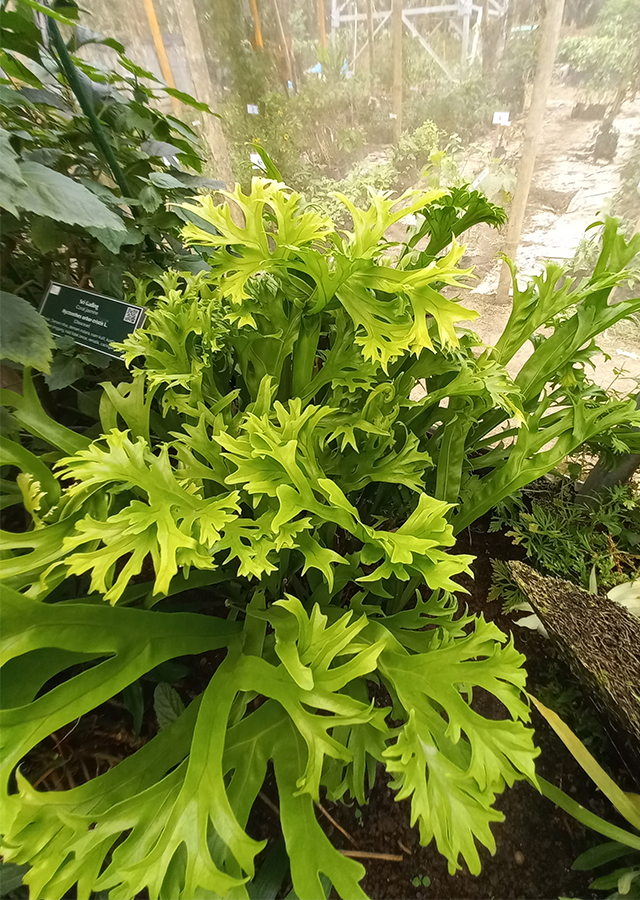
Microsorum punctatum or fishtail fern is widely distributed across tropical and subtropical regions of the Old World, from West Africa and India to Tahiti, southern China, and the Pacific. Besides being cultivated on a large scale in the Philippines as an ornamental and cut foliage plant, in the Dhemaji and Lakhimpur districts this fern is used in making the traditional rice beer Apong, and holds ritual value for calming spirits. Traditionally, fishtail fern is also believed to cure coughs and wounds.
Agroecology
M. punctatum usually grows as an epiphyte on tree trunks and branches, but can also be terrestrial in various forest types (primary rainforest, secondary rainforest), inland cliffs, agricultural land, disturbed or open areas, sometimes in savanna but also in wet locations, most common in lowlands but occurring up to elevations of 2,800 m asl. M. punctatum is also often found growing on rocks near rivers in forests. This species grows well in shaded conditions (partially or fully shaded), but can tolerate conditions in full sunlight. Its growth also prefers areas with good moisture or humidity levels, but can tolerate (short) periods of drought in the root zone.
Morphology
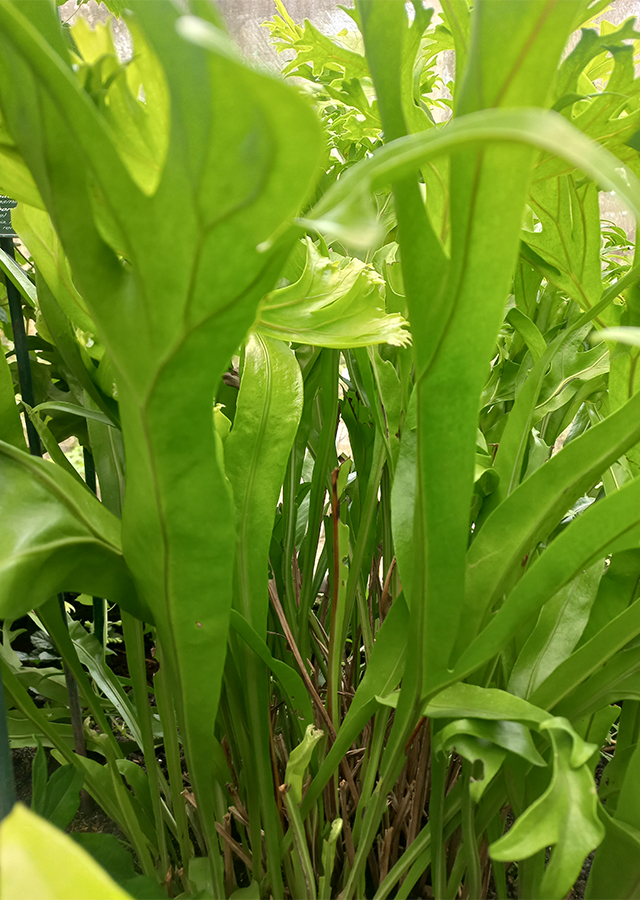
- Rhizome rapidly creeping, erect, short, thick, white and waxy, without a circumvascular sheath, about 8 mm in diameter. Densely scaled at the tip, pseudopeltate, ovate to triangular shaped.
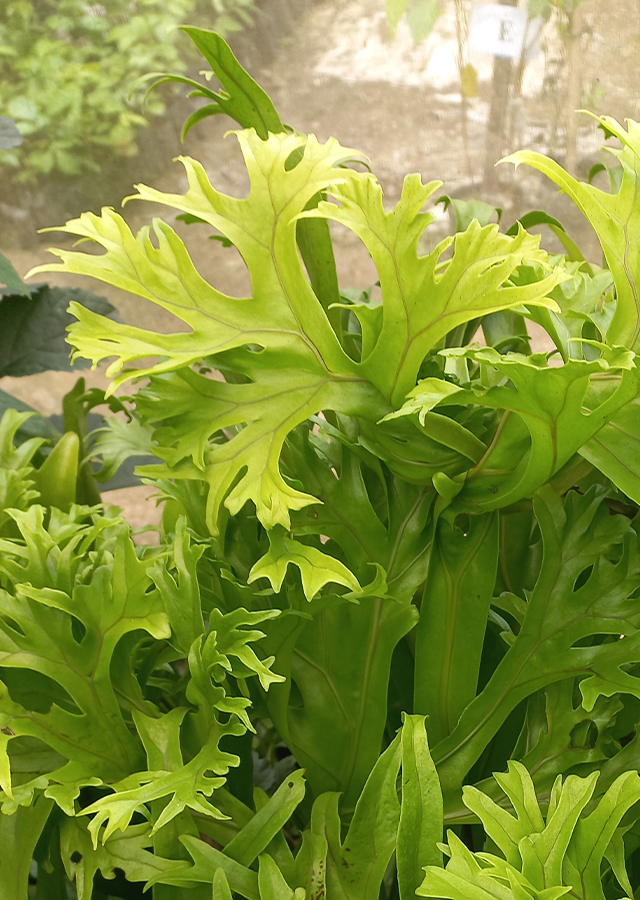
- Leaves simple, subcoriaceous, rough surfaced, pale light green, narrowly oblong to lanceolate shaped, leaf length up to 1.6 m with a width of about 15 cm, somewhat fleshy. Base curving into a wing along the petiole, margin entire to wavy or irregularly lobed, leaf tip rounded to acuminate, branching into various segments at its tip resembling a fishtail. Venation netted, midrib raised on both leaf surfaces, light green. Other veins somewhat dim or unclear. Fertile leaves not found.
- Sori small and round, numerous, scattered irregularly on the underside of the frond, about 0.2 cm long. Spores monolete, bilateral, hyaline or yellowish, exine smooth.
Cultivation
- Plant propagation through spores, rhizome cuttings, and division of offshoots.
- Rhizome cuttings should be planted no deeper than 5 cm.
- Spores are scattered on sterilized medium and stored at very high relative humidity. Sporophytes are transplanted in groups when about 1 cm tall and transplanted again individually once taller than 3 cm. In the Philippines, M. punctatum spores germinate about 6-7 weeks after planting and sporophyte formation begins after 7 weeks.
Chemical Content
Alkaloids, flavonoids, terpenes, phenols, polyphenols, sterols, anthraquinones, phenolates, saponins, terpenoids, formic acid, and oxalic acid.
Benefits
Treats coughs, heals wounds, reduces fever, acts as a laxative and diuretic. Has antimicrobial and anti-inflammatory activity.
Local Names
Teke (Timor), Wassanke (Alor), Saugtikel (Manggarai, Flores), Pakis sarang burung.
Traditional Recipes
The following recipes reflect traditional knowledge passed down through generations, not a substitute for professional medical diagnosis or advice. Consult a healthcare provider before use.
1. Cough
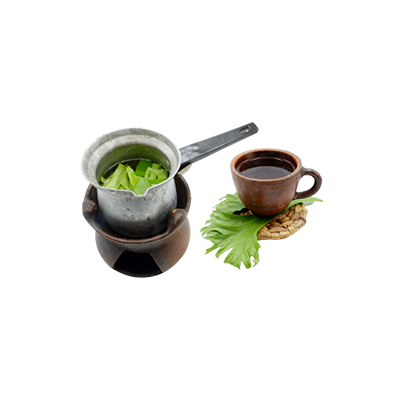
- Take fresh fishtail fern leaves and wash until clean.
- Boil the leaves until it boils.
- Let it cool to warm/cold.
- Strain then drink.
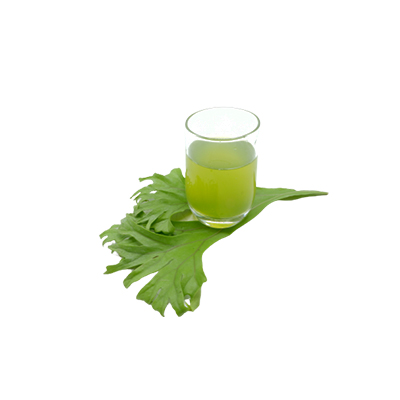
2. As a laxative
- Prepare fresh fishtail fern leaves and wash until clean.
- Blend until smooth and becomes juice.
- Strain then drink.
Reference Sources
- Royal Botanic Gardens, Kew. Plants of the World Online. Microsorum punctatum (L.) Copel. https://powo.science.kew.org/taxon/urn:lsid:ipni.org:names:17341250-1. 07-09-2022.
- Stuartxchange. 2020. Philippine Medicinal Plants. Climbing bird's nest fern. http://www.stuartxchange.org/ClimbingBirdNestFern. 07-09-2022.
- Flora Fauna Web. 2021. Microsorum punctatum (L.) Copel. https://www.nparks.gov.sg/florafaunaweb/flora/5/9/5933. 07-09-2022.
- Tropical Plants Database, Ken Fern. 2022. Microsorum punctatum. http://tropical.theferns.info/viewtropical.php?id=Microsorum%20punctatum. 07-09-2022.
- Plant Resources of South-East Asia. 2016. Microsorum (PROSEA). https://uses.plantnet-project.org/en/Microsorum_(PROSEA). 07-09-2022.