Mimosa pudica L.
Summary
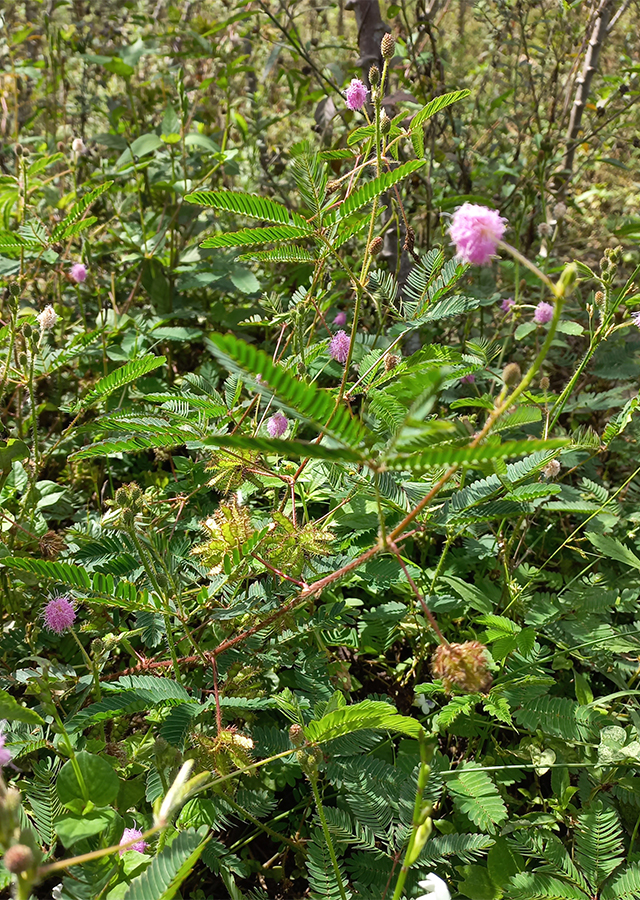
Putri malu besar (Mimosa pudica) is an annual or perennial creeping herb up to 100 cm long from the Fabaceae family, a sensitive plant native to South America that is now a serious weed throughout the tropical world. Its leaves, which close when touched, make it a unique plant while also serving as an important pollen source for honey bees. Putri malu is traditionally used to treat insomnia and acts as a poultice for swelling.
Agroecology
Mimosa pudica is usually found growing along roadsides, vacant land, grasslands, in dump sites, disturbed areas in many tropical regions, from sea level to an elevation of about 1,300 m asl. This plant can also grow in various soil types including low-fertility soil, able to tolerate waterlogging and is drought-resistant, with soil acidity (pH) in the range of 6-7 and tolerating 5-7.5. Prefers a full-sun position (about 6-8 hours per day), but not tolerant of shade. Able to grow well in areas with average annual rainfall in the range of 1,000-2,000 mm, annual daytime temperatures in the range of 22-28 °C, but can tolerate 10-32 °C.
Morphology
- Roots taproot, yellowish-white, long, strong. Has a distinctive smell resembling jengkol fruit.
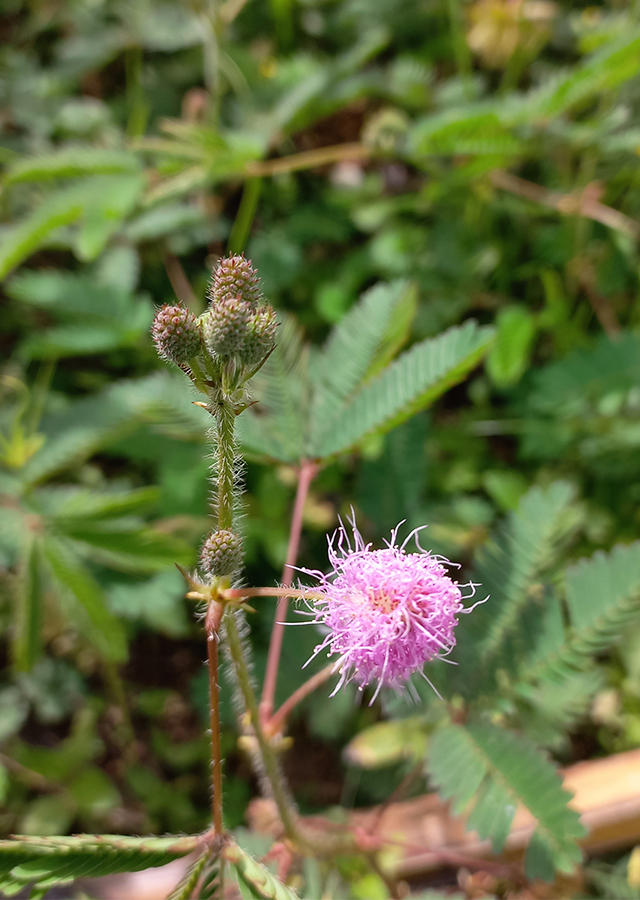
- Stem cylindrical, many-branched, hairy, thorny along the segments, woody at the base, reddish-brown or purple. Thorns about 3-4 mm long, dense, slightly curved, hard and very sharp.
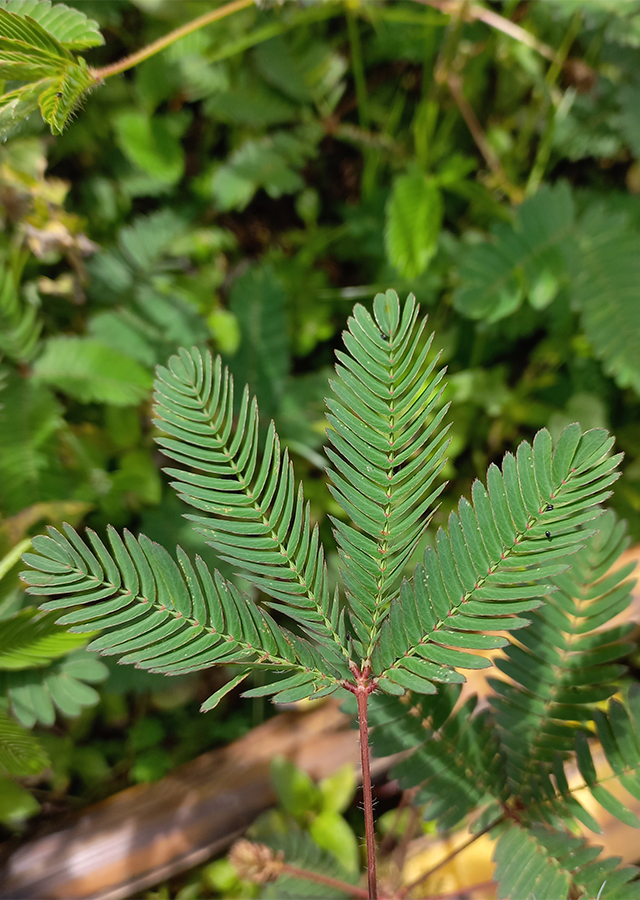
- Leaves compound, bipinnate, each leaf composed of 15-20 pairs of leaflets, alternately arranged, dark green, hairy, linear-oblong, smooth margin. When touched the leaflets quickly close (sensitive) and also close at night.
- Flowers round like a pompom, composed of hundreds of thin petal-like strands, purplish-pink with four prominent stamens. The calyx is small and the corolla is four-lobed and about 2 mm long. Stalk 12-25 mm long, emerging from the leaf axil, densely hairy and bearing thorns. Flowers clustered (5-8 flowers found in the leaf axils).
- Fruit a flattened oblong pod, indented, thorny margin, containing 1-5 seeds, green and turning brown when ripe.
- Seeds light brown, flattened, 2.5-3 mm in diameter and finely granular surface.
Cultivation
- Propagation is done generatively using seeds.
- Before sowing, soak seeds for 12-24 hours in warm water to speed up germination.
Chemical Content
C-glycosylflavones (2-O-rhamnosyl-orientin and 2-O-rhamnosyl-isoorientin), mimosine (N-(3-alanyl)-3-hydroxy-4-pyridone), flavonoids, phytosterol, alkaloids, amino acids, tannins, glycosides, tubulin, crocetin dimethyl ester, turgorine, terpenoids, quinones, phenols, saponins, coumarin, cardiac glycosides, coumarin glycosides.
Benefits
Treats insomnia, seizures, diarrhea, dysentery, tumors, wound healing, bruises, snake bites, cancer treatment, diabetes, hepatitis, hemorrhoids, jaundice, hypertension, obesity, urinary tract infections, boils, chickenpox, arthritis, swelling, relieves asthma, expectorant, sore throat and hoarseness, mouthwash to reduce toothache, has emetic, antidepressant, diuretic, aphrodisiac, anthelmintic, antioxidant, and immunomodulatory properties.
Local Names
Si hirput, Si kerput (Batak), Sikajuik (Minangkabau), Jukuk ancing (Lampung), Bujang kagit, Jukut borang, Jukut gehgehran, Jukut riyud, Rondo kagit (Sunda), Kucingan, Randelik, Pis kucing, Ri sirepan (Java), Rebha lo-malowan, Rebha dus-todusan (Madura), Padang getap (Bali), Daun kaget-kaget (Manado), Si kejut, Daun rebah bangun (Malay).
Traditional Recipes
The following recipes reflect traditional knowledge passed down through generations, not a substitute for professional medical diagnosis or advice. Consult a healthcare provider before use.
1. Insomnia (difficulty sleeping)
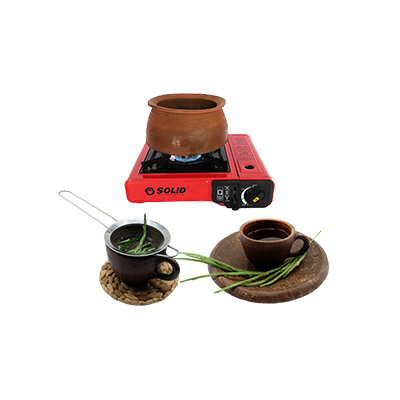
- Prepare 30-60 g putri malu besar leaves.
- Wash until clean then boil.
- Strain the decoction.
- Drink.
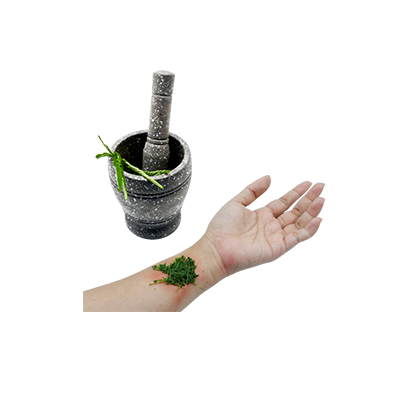
2. Pus-filled skin inflammation
- Take fresh putri malu besar plant and wash clean.
- Mash into a paste.
- Apply the paste to the affected and pus-filled skin.
Reference Sources
- Stuartxchange. 2020. Philippine Medicinal Plants: Makahiya. http://www.stuartxchange.com/Makahiya.html. 09-09-2021.
- Flora Fauna Web. 2019. Mimosa pudica L. https://www.nparks.gov.sg/florafaunaweb/flora/2/2/2225. 09-09-2021.
- PROSEA. 2020. Mimosa pudica (PROSEA). https://uses.plantnet-project.org/en/Mimosa_pudica_(PROSEA). 09-09-2021.
- Useful Tropical Plants Database. 2021. Mimosa pudica. https://tropical.theferns.info/viewtropical.php?id=Mimosa+pudica. 09-09-2021.
- CAB International. 2021. Invasive Species Compendium: Mimosa pudica (sensitive plant). https://www.cabi.org/isc/datasheet/34202#toPictures. 09-09-2021.
- Royal Botanic Gardens. 2021. Plants of the World Online: Mimosa pudica L. http://powo.science.kew.org/taxon/urn:lsid:ipni.org:names:313242-2. 09-09-2021.